
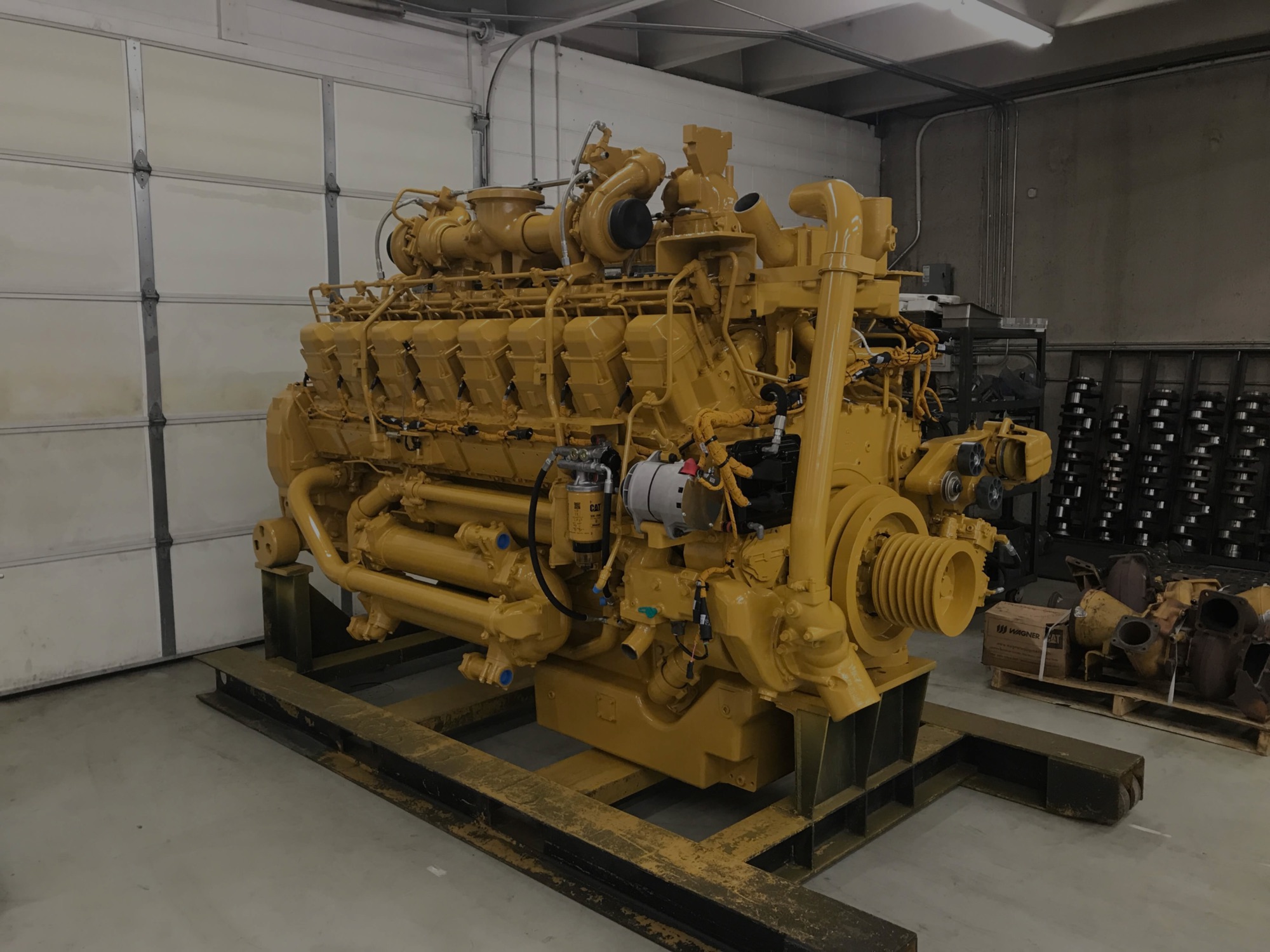
Turbos come to us off marine main and auxiliary engines, generator sets, fire pump engines, trucks and plant. Holset and Garrett units make up a large share of what arrives, because of what they are fitted to. Send a photograph of the nameplate with your enquiry and you will be told before you move the unit whether it is one we take.
We repair and rebuild turbochargers on our own bench behind Yerevan Steel Factory in Industrial Area 15, Sharjah — strip, inspect, measure, replace the core components, reassemble and balance. A great many workshops in this market either fit a new unit or send yours out. Owning the bench is why turbo repair here is a repair rather than a resale, and why the answer comes back in days rather than after a shipment.
Why turbochargers fail
A turbocharger very rarely fails on its own. Nearly all failures trace back to something the engine did to it, which is why fitting a replacement without finding the cause tends to produce a second failure.
Oil starvation. The rotor sits on a film of pressurised oil with no metal-to-metal contact. Interrupt that supply — blocked feed pipe, coked oil gallery, low oil pressure, a dry start after standing — and the shaft contacts the bearing, heats, and can seize to the housing. This is the single most common cause we see, and it shows in the bearing journals and the shaft's blueing pattern.
Oil contamination. Dirty or degraded oil carries abrasive particles through the bearings. The bearing surfaces score, radial clearance opens up, the wheels eventually touch their housings.
Foreign object damage. Anything drawn into the compressor or blown through the turbine — a nut, a washer, a gasket fragment, a valve or piston failure upstream — nicks or breaks blade tips. The rotor goes out of balance immediately, and a rotor out of balance destroys its bearings quickly.
Overspeed and surge. Restricted air intake, a badly matched or over-fuelled engine, or repeated hard throttle-off against a closed throttle drives the compressor into surge and the shaft toward its speed limit. The signature is bearing and thrust wear well ahead of hours.
Heat and coking after shutdown. Shutting a hard-worked engine straight down leaves the turbo hot with static oil in the bearing housing, which cokes. Weeks of that narrows oil passages until the next cause on this list happens by itself.
Wastegate and actuator faults. A seized wastegate or a failed actuator diaphragm gives over- or under-boost with a mechanically sound rotor. Worth checking before condemning the turbocharger.
Symptoms
- Loss of power under load, and rising exhaust temperature for the same output
- Black smoke — the engine is fuelling for air it is not getting
- Blue smoke, particularly on overrun, from failed shaft seals
- Oil in the charge air cooler or intake pipework
- A whistle, a siren-like howl, or a rhythmic chuffing (surge) that was not there before
- Boost pressure below specification, or unstable
- Oil consumption rising with no external leak
Confirm which of these you actually have before spending — diesel engine diagnostics covers the boost and back-pressure readings that separate a turbo fault from a fuel or compression fault.
The rebuild process
- Receive and record. Turbo photographed as received, with the engine and application logged, plus whatever is known about the failure.
- Initial inspection before strip. Shaft axial and radial play measured, rotor spun by hand, wheels checked for rub marks and blade damage, oil drain condition noted.
- Strip and clean. Complete disassembly, then cleaning to bare components so damage is visible.
- Inspection and measurement. Shaft journal diameters, bearing bores, thrust faces, seal ring grooves, turbine and compressor wheel condition, housing bores, wastegate and actuator function.
- Root cause. We tell you why it failed, not just that it did. If the cause was oil supply, fixing the turbo alone will not keep it alive.
- Component renewal. Bearing kit, thrust bearing and collar, seal rings, O-rings, retaining hardware. Wheels or shaft replaced where damaged beyond limits.
- Reassembly.
- Balancing. The rotor assembly is balanced in house before the unit goes back together. This is the step that decides whether a rebuild lasts: an unbalanced rotor spinning at turbocharger speeds will destroy new bearings in hours, so a "rebuild" that is really a bearing change with no balancing is a short-term repair sold as a long-term one.
- Final checks. Play re-measured, free rotation confirmed, wastegate or actuator set and the readings recorded.
What you get back
- The rebuilt turbocharger, with the parts renewed listed
- The measurements taken before and after — shaft play, journal and bore sizes, and the balance result
- A statement of the failure cause, so the engine fault gets fixed too rather than eating the rebuilt unit
- A written warranty position on the invoice, stated for the work actually done rather than as a slogan
Rebuild or replace — decided by measurement
The honest answer depends on what the strip finds, and "what the strip finds" means numbers: shaft journal diameters, bearing bore sizes, axial and radial play, wheel blade condition, housing bore wear and whether the shaft runs true. Those readings decide the question, not a photograph and not a phone call.
A rebuild is usually the better buy when the shaft, wheels and housings are serviceable and the damage is confined to bearings, seals and thrust components — which is the majority of oil-related failures caught before seizure.
Replacement is usually better when the compressor or turbine wheel is damaged beyond repair, the shaft is bent or scored past limits, or a housing is cracked. At that point a rebuild becomes a new turbo with a used housing, and the price advantage disappears.
Replacement is also better when the unit is a current, cheap, mass-market part with genuine availability in the UAE, and downtime cost exceeds the saving.
A turbo cannot be quoted properly from a photograph, which is why we quote after strip and inspection. The low-commitment first step is therefore not a quotation: bring the unit in, let it be stripped and measured, and take the decision on the readings. If the rebuild is not worth doing we will tell you that, which is a cheaper thing to hear at that stage than after the parts are on order.
Engines and applications
Turbochargers off marine main and auxiliary engines, generator sets, fire pump engines, trucks, buses, excavators, loaders and industrial diesels. Holset turbochargers are a Cummins product and a large share of the units on Cummins engines here — see Cummins engine repair.
A turbo failure that put debris into the engine is no longer a turbo job. If metal has been ingested, the intake, charge air cooler and often the cylinders need attention too — that is an engine overhaul conversation, and the charge air cooler needs cleaning and pressure testing before the rebuilt unit goes on.