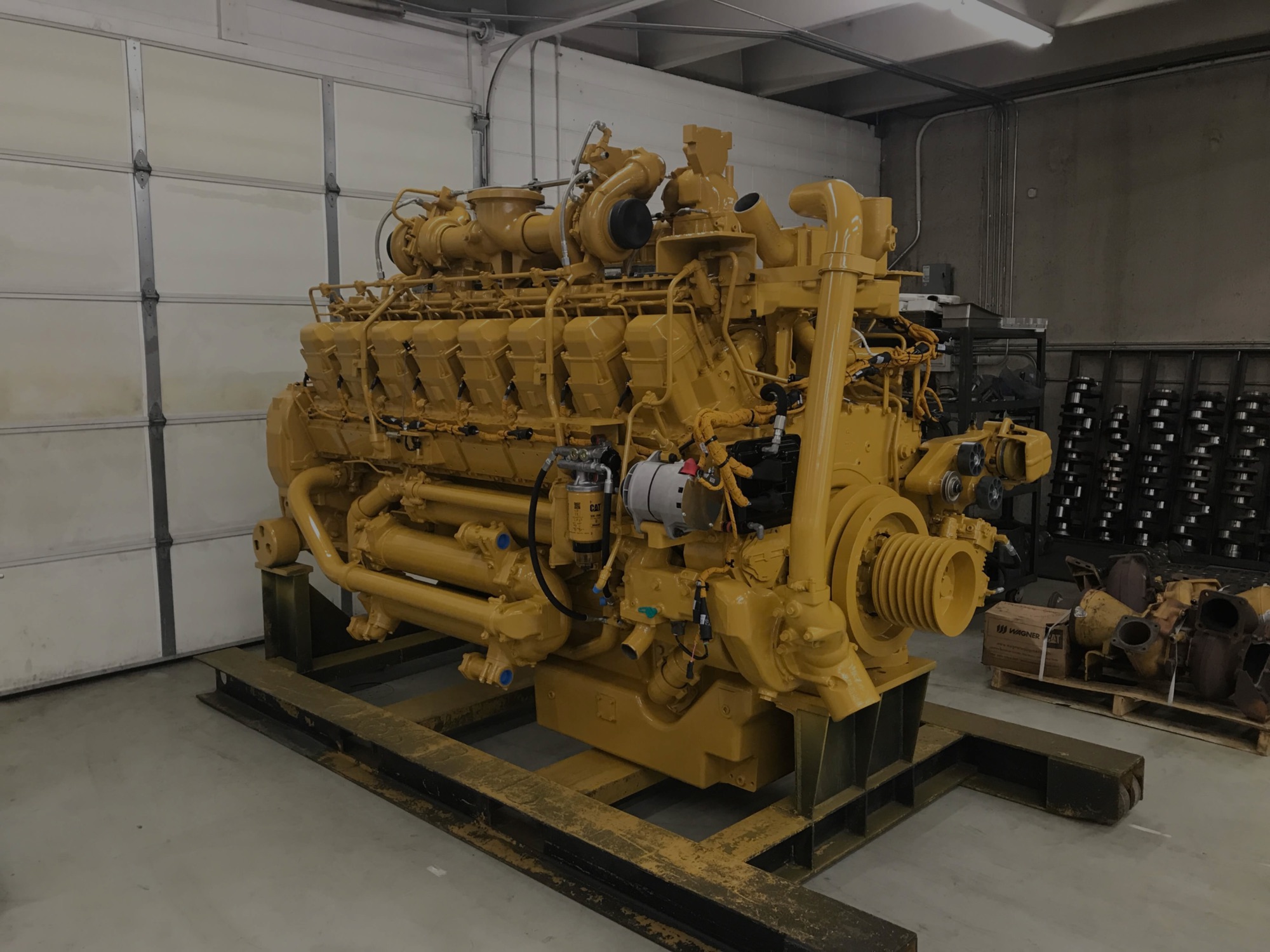
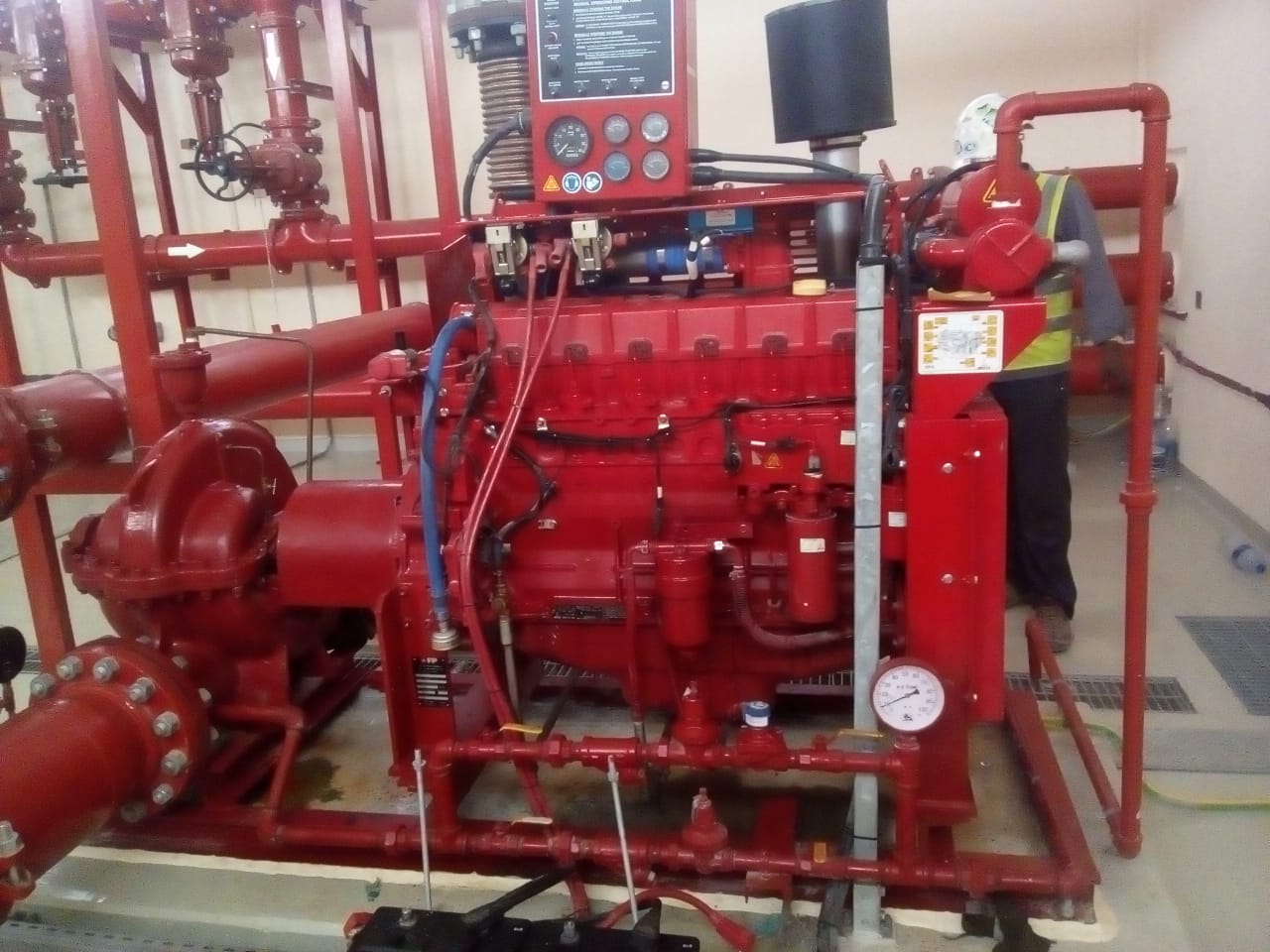
We attend diesel engine breakdowns across Sharjah, Dubai, Ajman, Abu Dhabi and Fujairah from our workshop behind Yerevan Steel Factory in Industrial Area 15, Sharjah. Generator sets that will not start or will not hold load, marine main and auxiliary engines, fire pump engines that failed a run test, truck and plant engines stopped on site.
Breakdown calls are taken outside workshop hours. Phone, describe the machine, and you will get a straight answer about when an engineer can be with you — including when the honest answer is first light rather than tonight.
Call, do not email
If the machine is stopped, phone. Email response time is not an emergency response time and we would rather say that than have you sit waiting for a reply.
+971 50 767 9050
Have this ready when you call
It shortens the visit and it decides which parts travel with the engineer:
- Engine make, model and serial number — a photograph of the data plate is faster than reading it out
- What the machine is — genset, main engine, fire pump, truck, excavator — and what it drives
- What happened and when — did it stop suddenly, fail to start, shut down on an alarm, or lose power gradually
- Any alarm text or fault code on the panel or display, photographed
- Gauge readings — oil pressure, coolant temperature, battery voltage, fuel level
- Whether it has been attempted already and by whom, and what was changed
- Exact location and access — emirate, area, whether a vehicle can get to the machine, whether there is a gate pass, permit or site induction requirement
- Your on-site contact's name and mobile number
What we can usually resolve on site
- No-start faults: fuel supply, air in the system, starting circuit, cranking voltage
- Shutdown on alarm: low oil pressure, high coolant temperature, overspeed — cause found before the machine is restarted
- Injector and injection pump faults, including changing units for calibrated ones
- Turbocharger removal and refit
- Cooling faults: pump, thermostat, hoses, blocked heat exchanger, failed impeller
- Starting and charging faults
- Belt, hose, sensor and wiring failures
- Fuel contamination and water in fuel
- Cylinder head and top overhaul work where access allows
The on-site and in-situ repair page sets out the full honest boundary between what happens at your machine and what has to come to Sharjah. In short: anything needing a machine — crankshaft grinding, reboring, honing, head surfacing — travels to the workshop.
Before you restart it
Two things we would ask any operator to do while waiting, because they routinely turn a repairable fault into an unrepairable one:
Do not keep cranking. Repeated cranking on a no-start flattens the batteries, overheats the starter, and on a fuel-contamination fault pushes the contamination further into the system.
Do not restart an engine that shut down on low oil pressure or high temperature until the cause is known. A shutdown is the engine protecting itself. Overriding it converts a bearing problem into a crankshaft problem, and a crankshaft problem into a new engine.
If the machine stopped with an unusual noise, leave it stopped and tell us what the noise was.
Response and coverage
Distance from Industrial Area 15 is the honest constraint on response time, and we would rather set that out than promise a number we cannot hit.
| Area | Realistic position |
|---|---|
| Sharjah industrial areas, Hamriyah, SAIF Zone | Closest — our own workshop location |
| Ajman | Adjacent emirate, short run |
| Dubai — Al Quoz, Ras Al Khor, DIP, Jebel Ali, the marinas | Regular callout territory, see Dubai on-site coverage |
| Abu Dhabi and Mussafah | A long drive. Realistic for planned mobilisation, not for a fast emergency |
| Fujairah and Khor Fakkan | Mobilised attendance, not fast callout |
You are given a real time on the phone, for your location and the hour you are calling at, before you commit to anything. Attendance is charged separately from the repair and the basis is stated on that same call, so nothing about the bill arrives as a surprise afterwards.
The second advantage of the geography is the one that matters after the engineer arrives: when a component has to come off, the machine shop is a short run away rather than a shipment away. The part travels back with the engineer, goes onto a machine, and returns with the engineer who refits it.
After the callout
The engine is either running before we leave, or you get a written position: what is wrong, what it needs, whether it can be repaired on site or has to come to the workshop, and what the options cost. Where a component has to travel to Sharjah, we take it with us rather than making a second trip.
If the fault is not resolved on the spot, the next step is normally a full diagnostic rather than parts changing.