
One site · Industrial Area 15, Sharjah
Everything under one roof
The machine shop, the fuel injection benches, the winding bay and the engine bays sit in one building. A crankshaft that arrives here is measured, crack tested, ground, polished and re-measured without leaving it.
Why it matters
One building beats any machine in it
Most UAE workshops quoting an engine overhaul are quoting a job they will split. Every handover is a company boundary — and each one costs you.
One datum, one set of hands
A block needing line boring, a deck skim and its cylinders bored is fixtured and cut here against one reference, in a planned order. Split it across two shops and the second starts by guessing what the first did.
No queue you cannot see
Subcontracted, your lead time is your supplier's workload plus somebody else's plus two transport legs — and nobody will tell you what it is. Here, “where is my crankshaft?” is a walk across the floor.
Fewer handling legs
A crankshaft is long, heavy and easy to damage in a sling. A machined deck marks if it is set down wrong. Components that never leave the building never take those journeys.
Nobody to point at
Four suppliers means four quotations, four schedules and four parties entitled to blame the other three. Here it is one job, one approval, one date, one invoice.
What is under the roof
Four areas, one job card
Bay 01
The machine shop
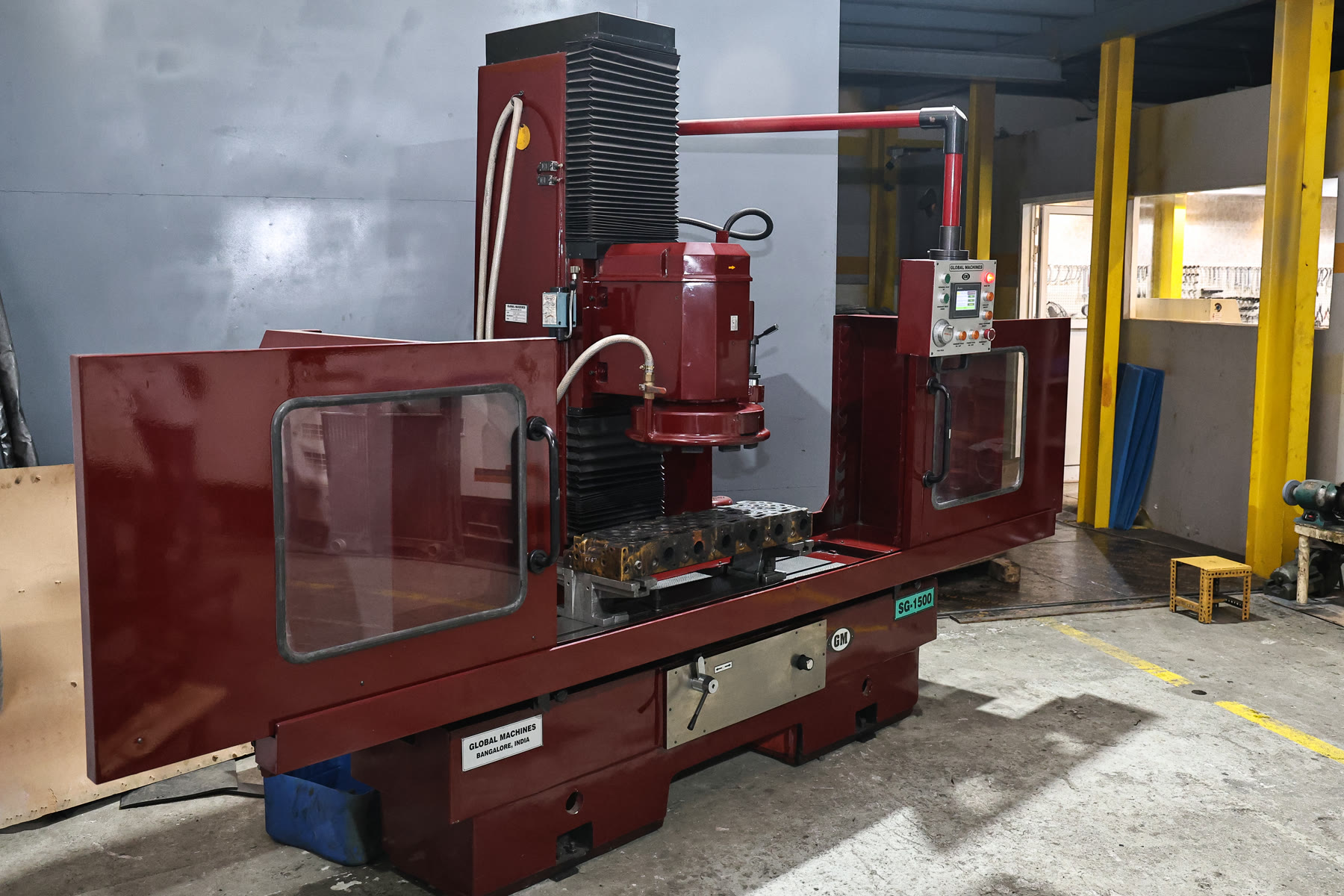
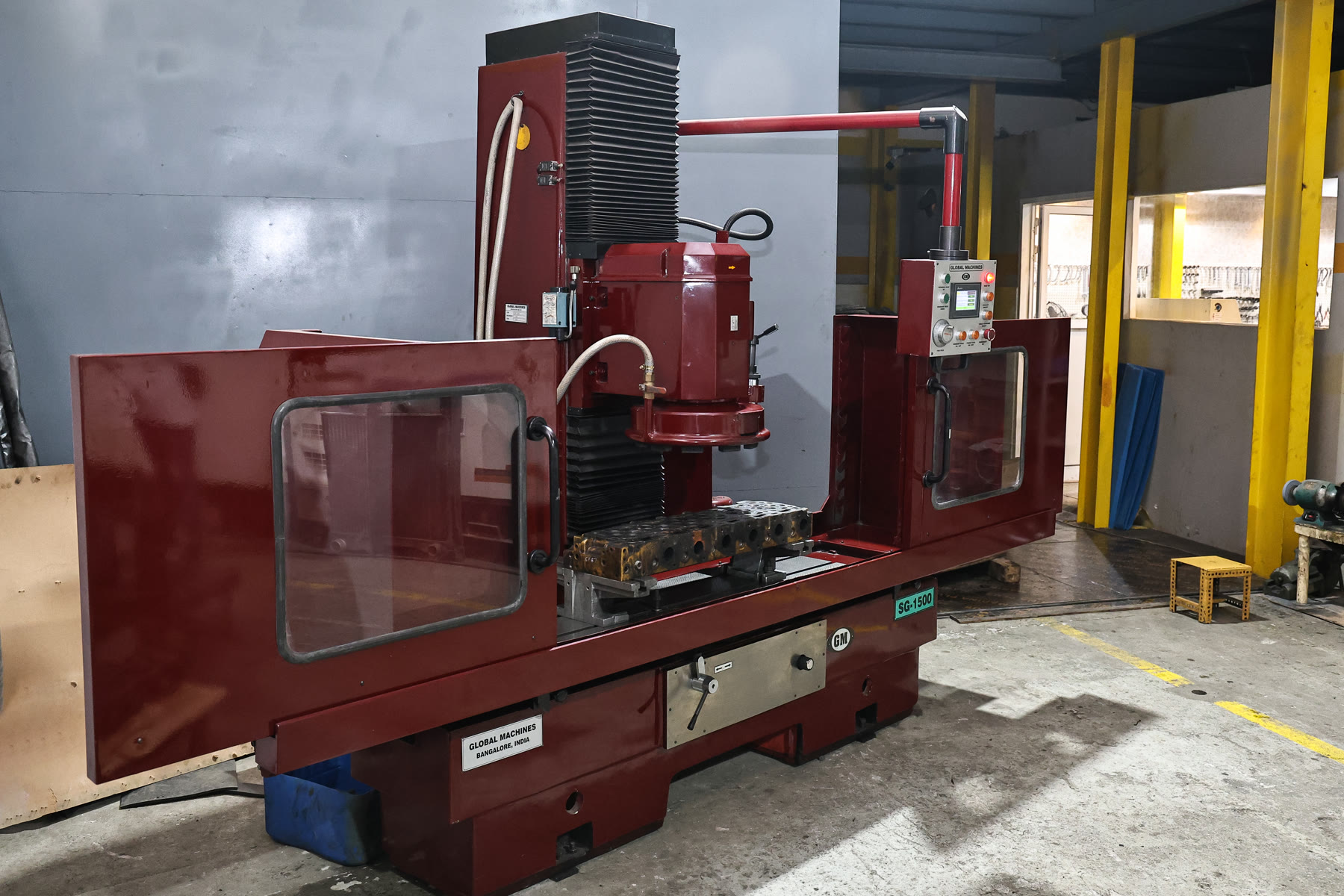
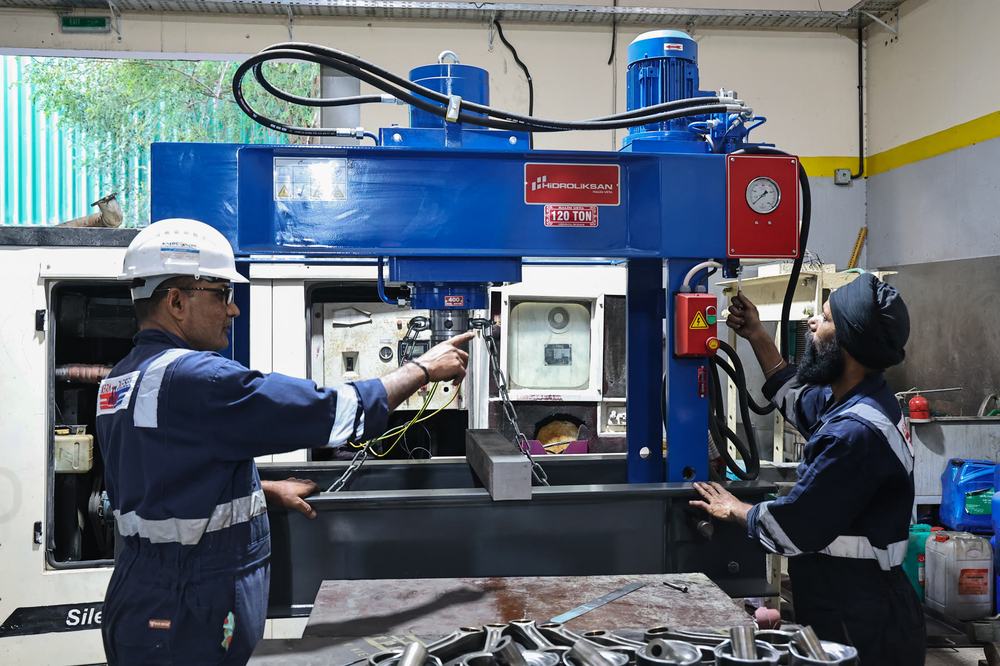
The heart of the site, and the reason most of our work arrives. Crankshaft grinding, straightening and polishing; line boring; cylinder boring and honing; deck and head surfacing; rod boring and resizing; valve seat and guide work; camshaft work; milling, turning and press work.
What it changes for you. Whether a worn crank, a distorted head or a scored bore is repairable is a measurable condition, not an opinion. A workshop with the machines and the instruments takes those numbers in a morning. A workshop that brokers the work defaults to telling you to buy new — and a replacement crankshaft or large marine head is rarely a stock item in the UAE. It is a factory order, and the engine earns nothing across all of it.
Bay 02
Fuel injection & calibration
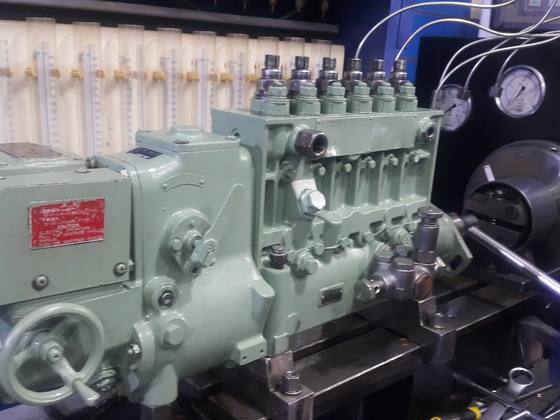
Injection pumps, injectors, nozzles and governors are stripped, tested and calibrated on our own benches — industrial and marine alike.
What it changes for you. A fuel fault is easy to argue about on a running engine and impossible to argue about on a bench. A pump either delivers the right quantity at the right moment or it does not, and the printout says which. A great many engines arrive here described as “worn out” and leave after calibration rather than an overhaul.
Bay 03
Generator, alternator & electrical
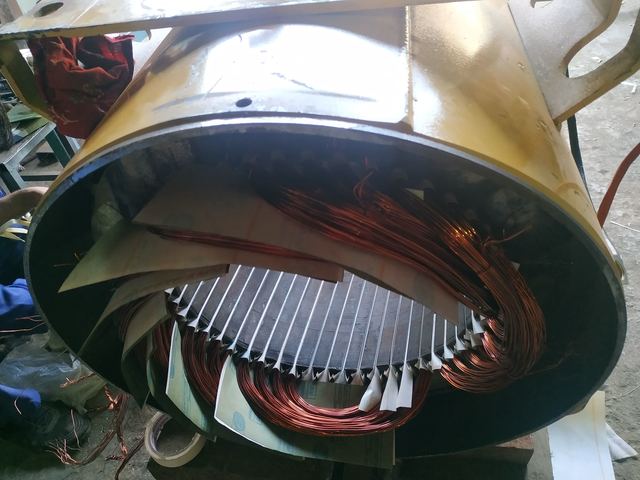
A generator set is two machines on one bedframe. The engine side goes to the engine bays; the alternator and control side has its own: stator and rotor rewinding, rotating diodes, AVRs, control panels, AMF and ATS work, starters and charging alternators.
What it changes for you. A burnt stator on a sound engine is a rewind, not a new generator — and that difference is a capital decision. A firm with only a service van has to condemn the alternator. A firm with a winding bay saves it. With both halves on one site, nobody gets to point across a boundary.
Bay 04
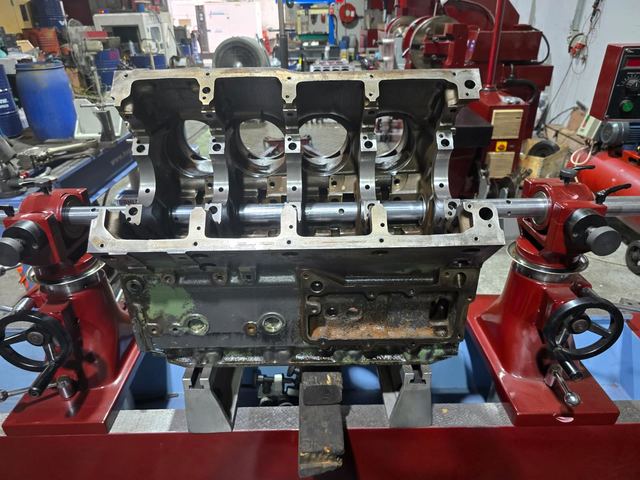
The engine bays
Complete strip, measure, rebuild and test — plant and truck engines, marine main engines and auxiliaries, fire pump engines and large genset engines. Turbochargers are stripped, rebuilt and balanced here too, with the failure cause stated rather than glossed over.
What it changes for you. The person who measured your crankshaft, the person who calibrated your injectors and the person assembling the engine work off the same job card in the same building. When machining finds something, assembly knows before it becomes a problem — and the machine is thirty steps away, not a week.
The whole site at once
One engine, four faults
An engine arrives with a scored crankshaft, a bowed head, two dead injectors and an alternator that has been overheating.
In a subcontract market that is four suppliers, four quotations, four schedules and four people entitled to blame the other three.
Here it is one job. One inspection, one set of measurements, one scope, one approval, one date, one invoice, and one number to call. That is the whole argument of this page, and it is worth more to a customer with a machine standing idle than any single capability listed above.
- Arrival & identificationMake, model, serial and the failure as you describe it.
- CleaningNothing is measured dirty.
- Inspection & crack detectionMagnetic particle on steel and cast iron; dye penetrant where geometry suits it.
- Measurement & reportAgainst the manufacturer's service limits, not our opinion.
- Scope & quotation in writingIncluding an honest “replace it” where that is the answer.
- You approveNothing is cut until you say yes.
- The workIn the sequence the components require.
- VerificationSame measurements, same instruments, after machining.
- Test & returnWith the measurement sheet.
Come and look
We would rather show you than tell you
Customers who have spent years being told machining happens “somewhere else” tend to want to see the machine. That visit does more than any page can.
- Arrive with a component and no appointment
- Ask to see a job in progress — that is fine
- Give a driver Yerevan Steel Factory, not a plot number. We are directly behind it
- Call ahead if anything needs lifting off a vehicle, so the bay and the lifting are free when the truck arrives
Common questions
About the workshop
Do you actually own the machines, or subcontract the machining?
We own them, and they are on this site. You are welcome to come and see the machine your job is going on — that offer is the whole point.
Can I visit and watch my job being done?
Yes. Customers do it regularly, and we would rather you did than take our word for it.
What can you handle in terms of size?
Practically everything within reason, from small plant engines to large marine and genset components. Send a photograph of the part and the data plate and you will get a straight answer the same day.
Do you take work from other workshops?
Yes. A good deal of our machining arrives from other repairers who do not own machine tools, and that work is handled on the same terms as any other.
Can I bring one component rather than a whole engine?
Yes — a single crankshaft, head, rod or pump is a normal job. It is often the fastest way to get an answer about the rest of the engine.
Do you work on petrol engines?
No. Diesel only.