
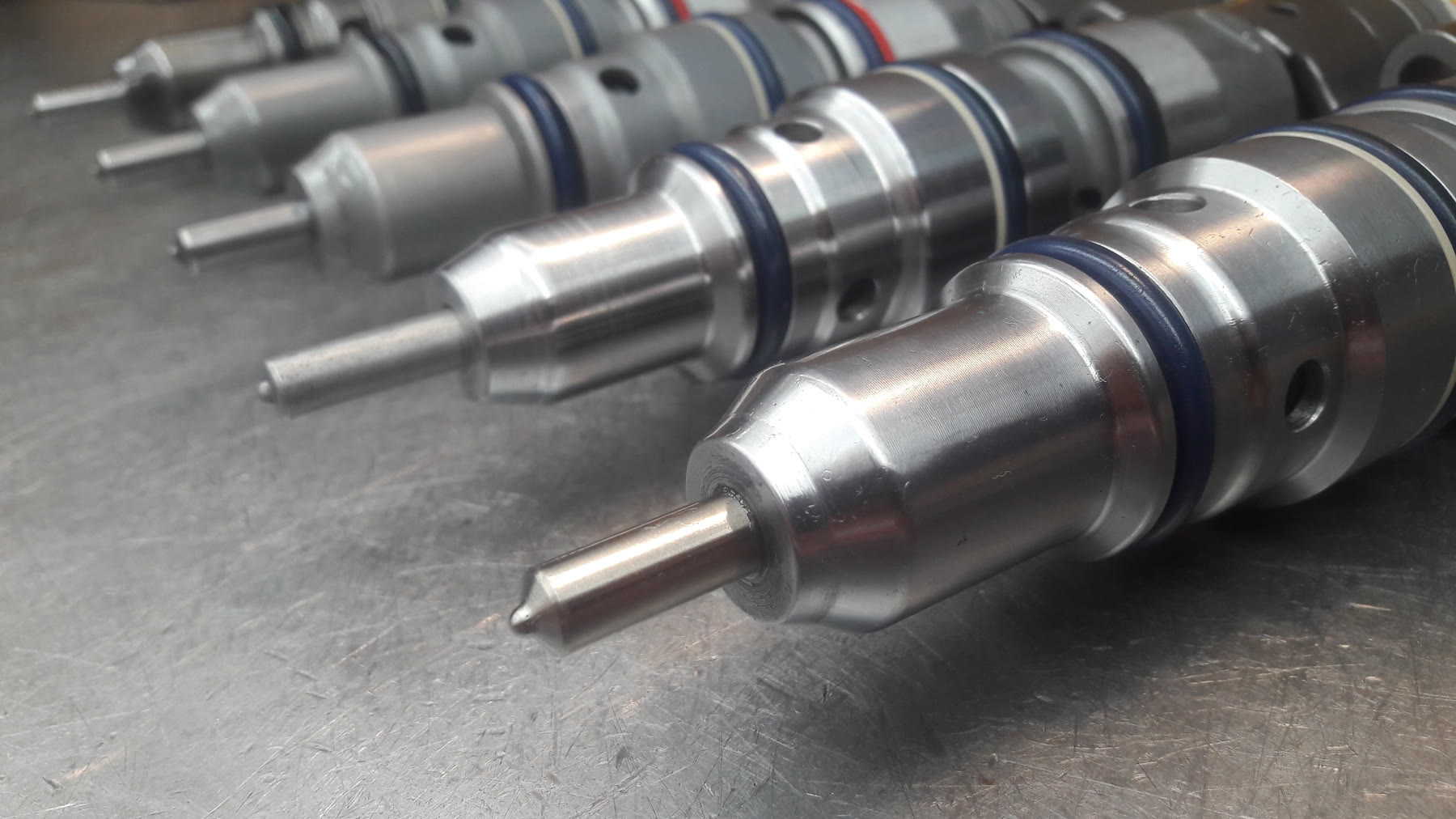
An injector has one job — deliver an exact volume of fuel, atomised, at the right instant, and then seal completely. Three separate things can go wrong independently, which is why all three are tested separately.
Why a set comes back matched, not just acceptable
The injector testing is done in house. That sounds like a detail and it is the whole difference between a set of injectors and six individual injectors.
A set is balanced against itself, not just against a limit. Six injectors can each sit inside the manufacturer's window and still be spread apart from one another — and an engine feels the spread, not the window. Because the bench is ours, a set is worked until the units match each other as closely as they can be made to, rather than being signed off the moment each one individually passes.
The set is tested together, as a set, in one session. Same bench, same settings, same operator, same afternoon. Results from six injectors run on different days by different people are not comparable, and comparability is the entire point of a set report.
Re-testing after adjustment costs nothing but a walk. Shim, run, measure, shim again. A workshop paying a third party per test does not do this, and it is exactly where the quality is.
The incoming test always happens, because it is free to us. That is what lets us tell you whether all six are tired or one has failed — before you have committed to anything.
Your injectors and your pump can be set against each other, in the same building, in the same week. Delivery balanced at the pump means nothing feeding uneven nozzles.
Injector types serviced: mechanical, electronic solenoid, unit injector, and common rail. Every job returns a test sheet per injector.
The three tests, and why each one matters
Opening (pop) pressure. The pressure at which the needle lifts off its seat, set by the spring. It drifts down as the spring relaxes and the seat and shim wear. Too low and injection starts early and at poor atomisation; too high and delivery is late and short. Pop pressure is set by shimming or by adjuster, to the manufacturer's figure.
Spray pattern and atomisation. A good nozzle produces a fine, even, symmetrical mist from every hole, with a sharp cut-off — and gives a characteristic chatter as the needle oscillates on opening. A worn or coked nozzle streams, sprays unevenly, dribbles at the end of injection, or produces one visibly heavy hole. Streaming fuel does not burn cleanly; it washes the bore and lands on the piston crown.
Back leakage and seat tightness. Under sustained pressure just below opening, the nozzle must hold dry. Leakage past the seat means fuel dribbles into the cylinder after injection ends — the classic cause of a smoking, carboned engine. Back leakage past the needle guide, meanwhile, tells you the internal clearance has opened up; on an electronic injector, excessive return flow is often what triggers a "low rail pressure" code even though the pump is fine.
On electronically controlled injectors we add delivery testing across the operating range — pilot, main and post injection quantities are measured separately, because an injector can be correct at full delivery and badly wrong on a pilot quantity of a few cubic millimetres.
The operations we perform on an injector
Incoming test as received · external carbon removal with brass tooling only · full strip to component parts · ultrasonic cleaning · nozzle seat and needle tip inspection · body sealing face inspection · spring condition assessment · nozzle and needle replacement as a matched pair · spring and shim replacement · spacer and dowel check · reassembly to specified torque · opening pressure set · spray pattern and chatter verification · seat tightness and back-leak measurement · delivery measurement across the operating range where applicable · matching across the set · copper washer, O-ring and seal renewal · per-injector test sheet.
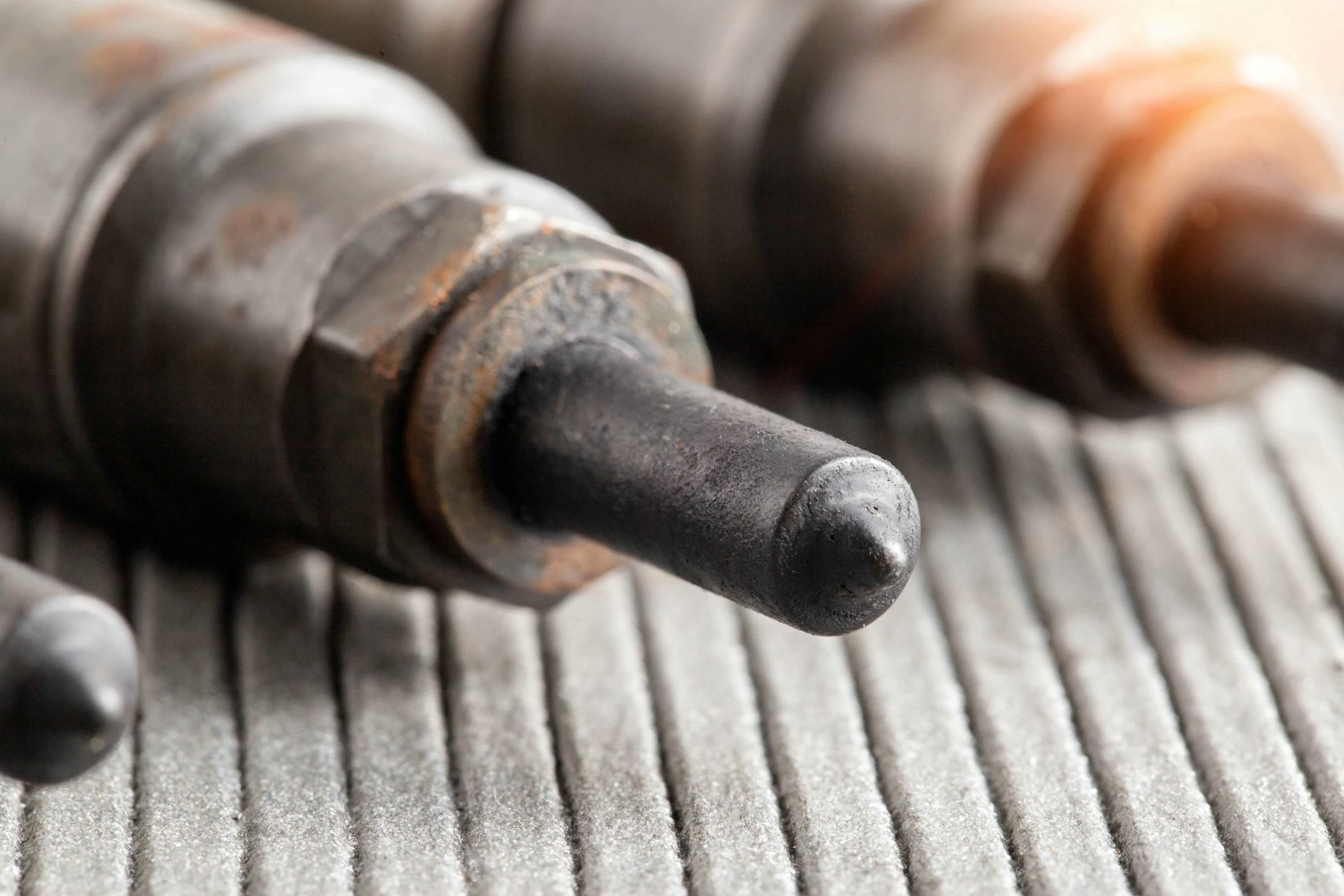
What we do
- Incoming test. The set is run as received and the results recorded. This tells you whether all six are tired or one has failed.
- Strip. Nozzle nut, nozzle and needle, spring, shims, spacer, body. Carbon removed from the nozzle tip with brass tooling only — never steel, never abrasives, because the hole geometry is the injector.
- Ultrasonic clean and inspect. Nozzle seat, needle tip, body sealing faces and the spring examined for wear, pitting and corrosion.
- Replace what is worn. Nozzle and needle are a lapped matched pair and are always replaced together, never separately. Springs, shims, seals and copper washers as needed. If the set only needs deposits removed rather than parts, that is injector cleaning and flow testing and it is a much smaller job — the incoming test is what tells the two apart.
- Reassemble to torque. Nozzle nut torque is a specification, not a feel — over-tightening distorts the nozzle body and closes the needle clearance.
- Set and verify. Pop pressure set, spray pattern checked, seat tightness and back-leak measured, delivery recorded. Results printed per injector.
- Match the set. The units are compared against each other and worked until the spread is as tight as they can be made to hold — not merely until each one passes on its own.
- Codes recorded. Electronic injectors carry a calibration code that the ECU needs when an injector is changed or reset. The codes are read, recorded and issued with your paperwork, so whoever refits them has what the engine requires. More on how this works under common rail injector and pump service.
Symptoms that point at injectors
- Knocking or a hard metallic rattle from one cylinder, worst under load
- Rough idle that smooths as the engine warms
- Black smoke that does not clear, with normal fuel pressure
- White smoke at idle from a dribbling nozzle
- Rising fuel consumption with no loss of power — often excess return flow
- Hard starting with a healthy battery and healthy pump
- One cylinder running noticeably hotter on exhaust temperature readings
- A cylinder that goes quiet when its injector is cut on a balance test
If the set is dirty rather than worn, cleaning may be enough and costs far less. Start at injector cleaning and flow testing — we measure first and tell you which it is.
Engine and injector coverage
Injector types: mechanical, electronic solenoid, unit injector (mechanically actuated, electronically controlled), and common rail.
Component brands: Bosch, Denso, Delphi, Stanadyne. Engine makes: Caterpillar, Cummins, Perkins, Yanmar, Scania (including XPI), MAN, Volvo Penta, Mitsubishi, John Deere.
| Engine family | Models we see | Injector type |
|---|---|---|
| Caterpillar C-series | C7, C9, C12, C13, C15, C18, C32 | Electronic unit injector / common rail depending on build |
| Caterpillar 3400-series | 3406, 3408, 3412 | Mechanical and electronic unit injectors |
| Cummins N and K series | NTA855, KTA19, KTA38, KTA50 | Cam-actuated PT / unit injectors |
| Perkins industrial and generator sets | Mechanical and common rail builds | Mechanical and common rail |
| Yanmar marine main and auxiliary | Marine and industrial builds | Mechanical |
Send the injector part number with the engine serial and you will get a straight answer on your specific units before you arrange transport. The table above describes the work that comes through the door most often, not the limit of it.
Repair or replace is a measurement, not a guess
This is the question most people arrive with, and it is genuinely answerable — but only after a test.
For mechanical injectors the answer is almost always repair: the body is a durable forging, and the nozzle, spring and seals that wear are all available. A rebuilt and correctly set mechanical injector performs identically to a new one, at a fraction of the cost and without an import lead time.
For common rail and piezo injectors it is a real calculation, and the deciding factors are measurable ones: what the unit delivers across the injection map, what its return flow is, and whether the specific worn part is supplied as a service item. Some are fully rebuildable. On others the control valve or the piezo stack is not available separately, and replacement is the only honest answer.
Which is why the useful first step is not a quote but a bench test. Send the set in and you will be told which of three positions you are in: within specification and the fault is elsewhere; repairable, and here is what it needs; or beyond economic repair, replace it. That answer costs a test, and you get it before you commit to anything.