
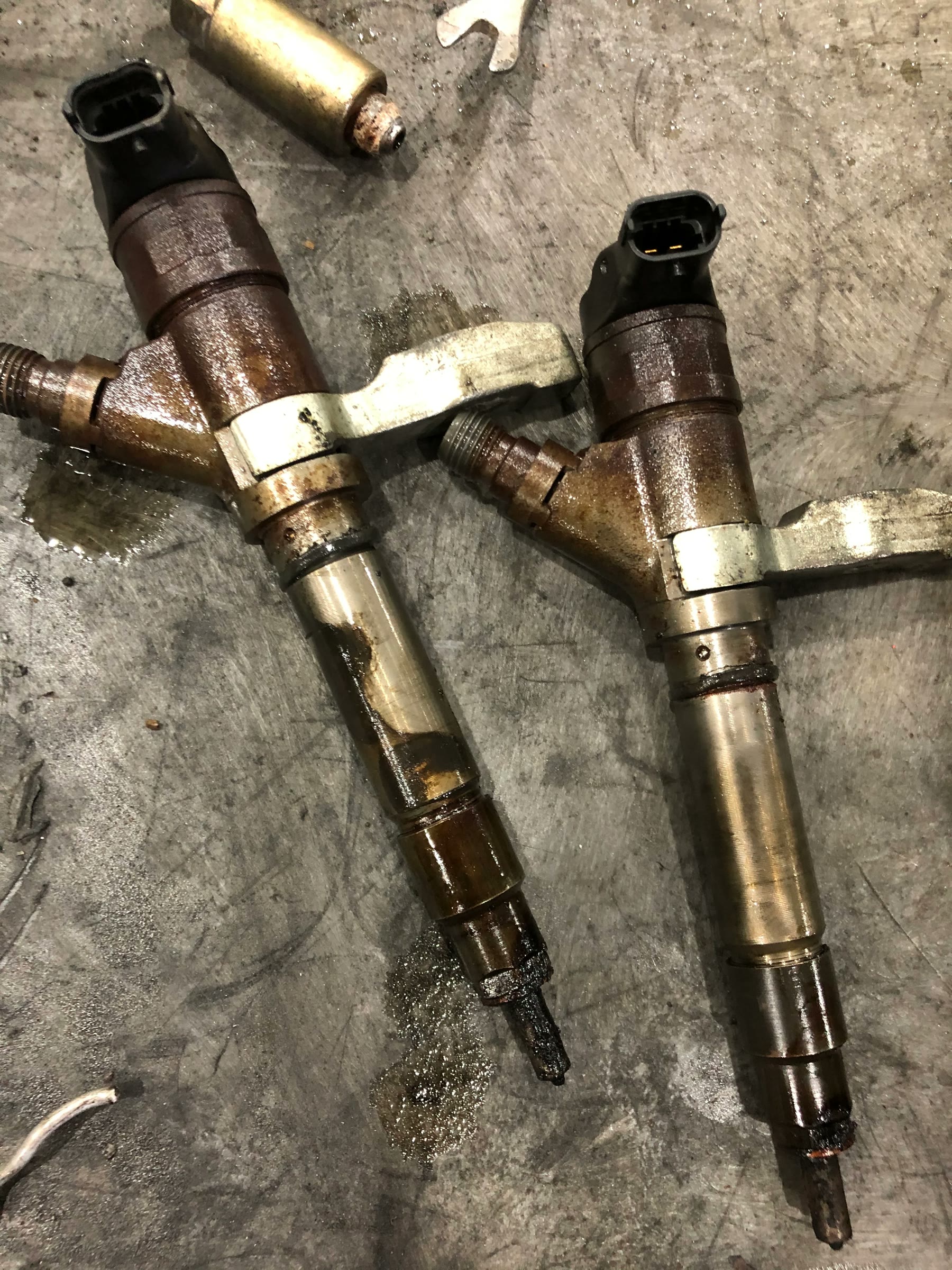
Most workshops sell cleaning as a service with no measurement attached, which makes it impossible for the customer to know whether anything changed. A bottle of additive in the tank has the same problem. This page exists because the measurement is the point.
Why measuring twice is only possible in house
Testing is the expensive part of this job when it is bought from somebody else — and cleaning-and-testing is only worth doing if the injector is measured twice.
The two tests are the product. A workshop that subcontracts its bench work has every incentive to test once, or not at all, and sell you the cleaning. Our bench is on the floor, so testing a set twice costs us time rather than money, and the before-and-after sheet is standard rather than an extra.
The whole set is run in one session, on one bench, at one setting. That is what makes the before and after figures comparable. Measurements taken a week apart on somebody else's equipment are not evidence of anything.
You get the answer to the real question. Cleaning either restored the injector or it did not, and only a second measurement can tell you which. Without it, "we cleaned them" is a statement about our afternoon, not about your engine.
No unnecessary work. Because we can measure before we quote, an injector that tests within specification goes home clean and untouched with a report — not into an overhaul.
Measured before and after, per injector: delivery, spray pattern, opening pressure and seat tightness. You receive a sheet showing both.
What cleaning can and cannot fix
Cleaning fixes deposits. Carbon builds up on the nozzle tip and inside the spray holes from incomplete combustion, short-run operation, poor-quality fuel and long idling. Internal lacquering builds up in the injector body from fuel degrading under heat. Both restrict flow and distort the spray pattern, and both come off.
Cleaning does not fix wear. A needle and seat that have eroded, a nozzle whose spray holes have enlarged from abrasive particles, a collapsed spring, a scored needle guide — no amount of ultrasonic time recovers those. The parts have to be replaced, which is injector repair and calibration.
The reason to test first is that the two conditions produce almost identical symptoms in the vehicle, and completely different bills.
Our decision rule, stated plainly
After the incoming test we put each injector into one of three groups, and you are told which group each of your units fell into:
- Within specification — nothing wrong with it. We say so and charge you for the test, not for a repair.
- Restored by cleaning — the injector was outside its delivery or pattern spec on arrival and is back inside it after cleaning. Cleaning was the right job and it is finished.
- Not restored by cleaning — still outside spec after the ultrasonic cycle. The nozzle or internals are worn. We quote the overhaul and you decide; we do not do it automatically.
The line between those groups is not our opinion. It is the manufacturer's specification for that injector, measured on the bench, before and after. That is the whole reason the job is worth doing this way — the decision is made by measurement rather than by whoever is selling you the work.
The process
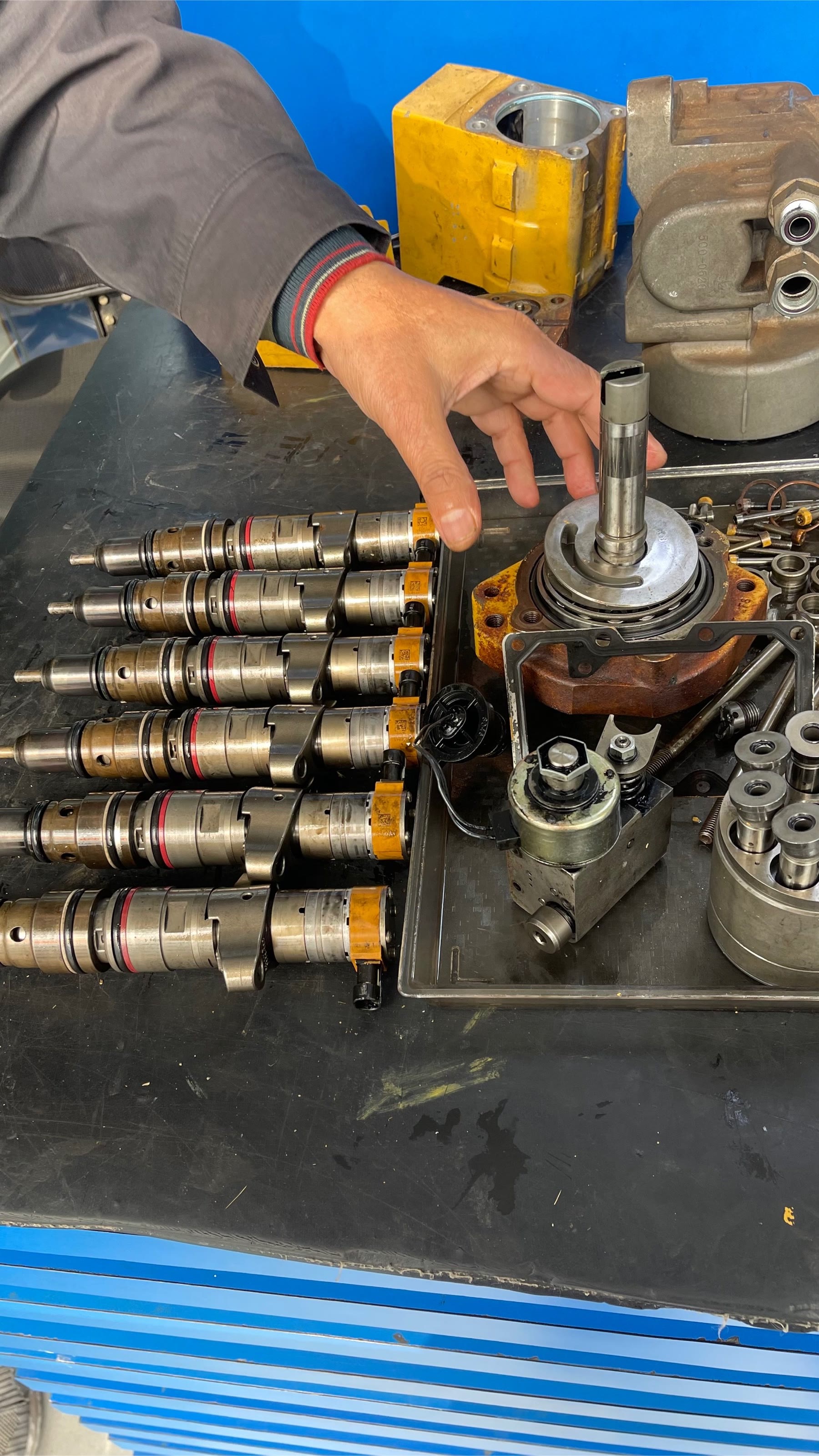
- Incoming flow and pattern test. Each injector is run on the bench and its delivery, opening pressure, spray pattern and seat tightness recorded against its cylinder number. Cylinder numbers matter — an imbalance you can see on the bench often matches the cylinder the driver complained about.
- External carbon removal. Tip carbon taken back with brass tooling only. Steel picks and abrasive media are never used on a nozzle tip: enlarging a spray hole by a few microns permanently changes delivery, and it cannot be undone.
- Ultrasonic cleaning. The injectors are cycled in a heated ultrasonic bath, which drives solvent through the internal galleries and lifts deposits from surfaces a brush cannot reach.
- Back-flushing. Flow reversed through the injector on the bench to clear loosened debris out rather than further in.
- Retest. The same measurements repeated, on the same bench, at the same settings, in the same session. Same conditions is what makes the comparison valid.
- New seals. Copper washers and O-rings replaced before return — reusing a crushed copper washer is how a cleaned injector comes back as a blow-by complaint.
- Report. Before and after, per injector, signed.
What the report shows you
The sheet you receive lists each injector by its cylinder number, with its delivery, opening pressure, spray pattern verdict and seat tightness recorded twice — as it arrived, and as it left. Reading it takes about thirty seconds and it answers three questions at once: which units were actually at fault, whether cleaning was enough, and how close the set now sits to itself.
That last point is the one people underestimate. An engine reacts to the spread across a set far more than to any single unit's absolute figure, and a spread is only visible when all six numbers are on the same page.
Why injectors foul faster in this region
Ambient temperature is the main driver. Fuel that returns hot to the tank and sits at 45°C or more degrades faster and lays down more deposit. Short-duty operation is the second: standby gensets and fire pump engines that run for twenty minutes a month never get hot enough to burn deposits off, and they foul far faster than an engine working hard all day. Fine airborne dust and water condensation in tanks do the rest.
For equipment that runs infrequently and must start on demand, a periodic clean-and-test is cheap insurance compared with finding out on the day.
What we clean
Diesel injectors: mechanical, electronic solenoid, unit injectors and common rail. Marine, generator, truck, bus, construction plant and industrial engines. Common rail injectors are cleaned and tested on dedicated high-pressure equipment — see common rail injector and pump service — because cleanliness standards and test pressures are different.