
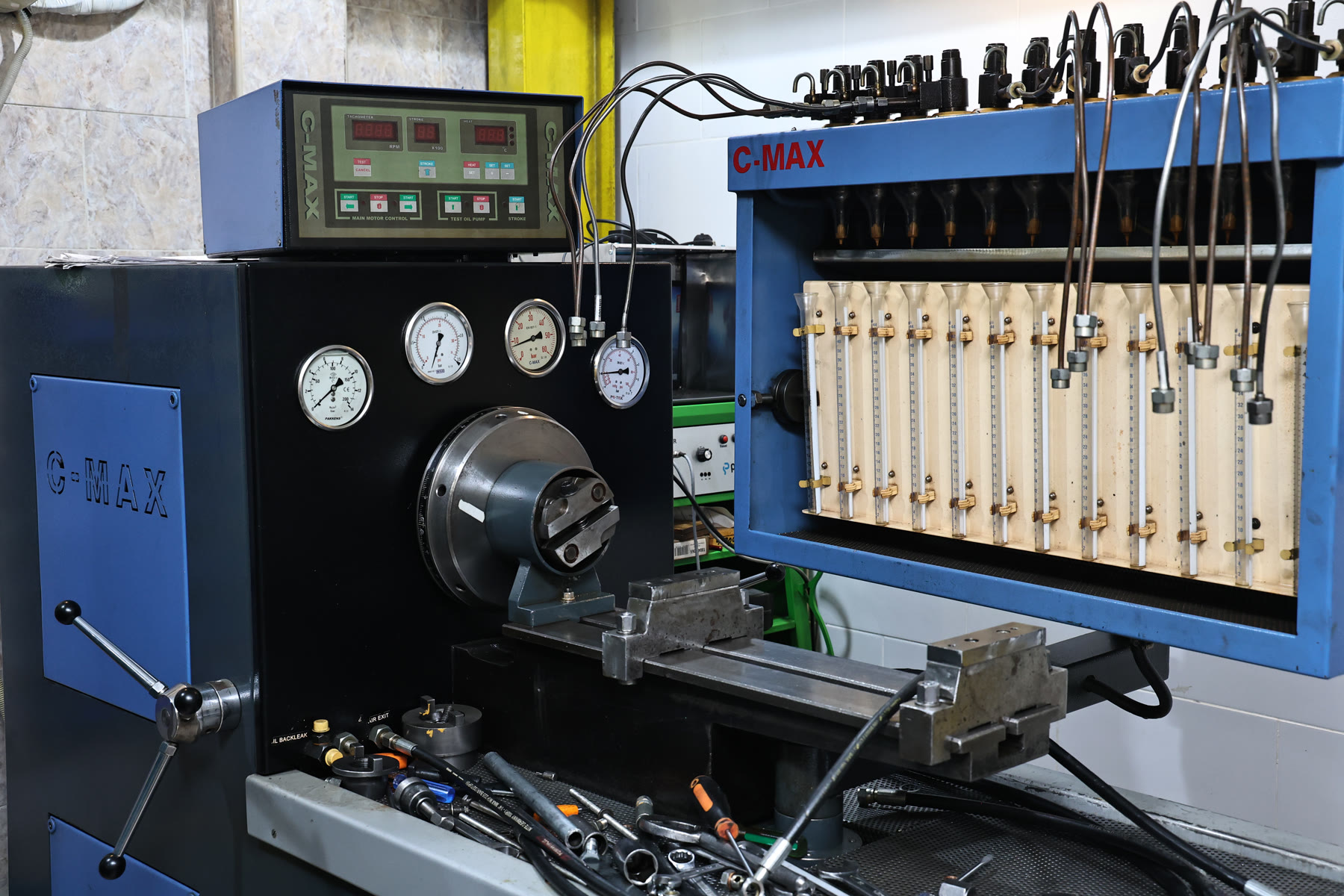
If you are comparing two workshops, this is the page to read. Not because our report is prettier, but because the presence or absence of one tells you whether the work was measured or merely done.
Established 2011, over 25 years of experience.
Why a piece of paper is the deliverable
A rebuilt fuel pump looks exactly like a pump that has been washed and painted. So does a cleaned injector. There is nothing on the outside of a finished unit that distinguishes an overhaul that was set on a bench from a strip-and-reassemble that was not, and there is no way to tell them apart once the unit is back on the engine — until it does not work.
The report is what closes that gap. It does three things:
It proves the work happened. Numbers taken at defined test points, on a defined date, signed by the person who took them. A workshop that cannot produce that has not measured your unit, whatever else it has done to it.
It lets you verify the result yourself. You do not have to take the workshop's word for anything. The figures are in front of you with the specification beside them, and if you know your engine you can read them and form your own view. That is a deliberately uncomfortable position for us to put ourselves in, and it is the point.
It lets you show somebody else. A vessel owner asking why the auxiliary was down for a week. A plant manager signing off the spend. A superintendent, an operator, a client, or the next engineer who touches the equipment in three years. The report is a record that outlives the conversation and travels with the unit.
That last one matters more than people expect. Fuel equipment moves — between vessels, between sets, into and out of stores. A pump with its test report in the box is a known quantity. A pump without one is a gamble that somebody will take, badly, in two years' time.
What is on a report
The exact fields depend on what was tested, but the structure is the same across every unit that leaves here.
Identification. What the unit is — type, part number, serial number where it carries one — and the engine make, model and serial it came off. This is what makes the document belong to a specific object rather than to a job.
The date, and who did the work. Signed by the technician who ran the test, not stamped by an office.
Condition as received. The results of the incoming run, before anything was touched. This is the field most workshops do not have, because testing before quoting is only free to a shop that owns its bench. It is also the field that carries the most information: it tells you what your engine was actually running on.
What was found and what was done. Which components were worn, which were replaced, what was adjusted. In plain terms, not part numbers alone.
The measurements after the work, at each defined test point, with the figure that applies to that unit beside them so the comparison is visible rather than asserted.
The set compared against itself, where the job was a set. Six injectors that each pass individually can still be spread apart from one another, and the engine feels the spread, not the limit. The report shows the spread.
The settings the unit left at. Opening pressures, timing and phasing settings, speed settings, droop — whatever applies. These are the numbers whoever refits the unit will need, and they are the numbers that let anybody re-check the work later.
Anything outstanding. If a unit passed but something else was noted — a damaged pipe, a marginal component, a fuel contamination finding — it goes on the report rather than into a conversation somebody forgets.
What is measured, by unit type
An injection pump. Delivery at each defined test point across the speed range, element by element on an inline pump; the spread between elements; phasing, port closing and static timing settings; maximum fuel and maximum speed settings; smoke limit and boost compensator settings where fitted; and the pump's condition as received. See fuel injection pump calibration and inline and rotary pump repair.
A mechanical injector. Opening pressure as received and as set; spray pattern and atomisation; chatter where the type gives it; seat tightness held under sustained pressure; back leakage past the needle guide; and how the units in the set compare against each other. One sheet per injector. See injector repair and calibration.
A common rail injector. Delivery measured separately across the injection map — pilot, main and post quantities — because a unit can be correct at full delivery and badly wrong on a pilot quantity of a few cubic millimetres; return flow; response; and the injector's calibration code, recorded so that whoever refits it has what the ECU requires. See common rail injector and pump service.
A governor. Speed range and maximum speed stop; droop setting; stability and response after run-in at temperature; terminal shaft travel matched to the pump's fuel rack travel. See governor repair and calibration.
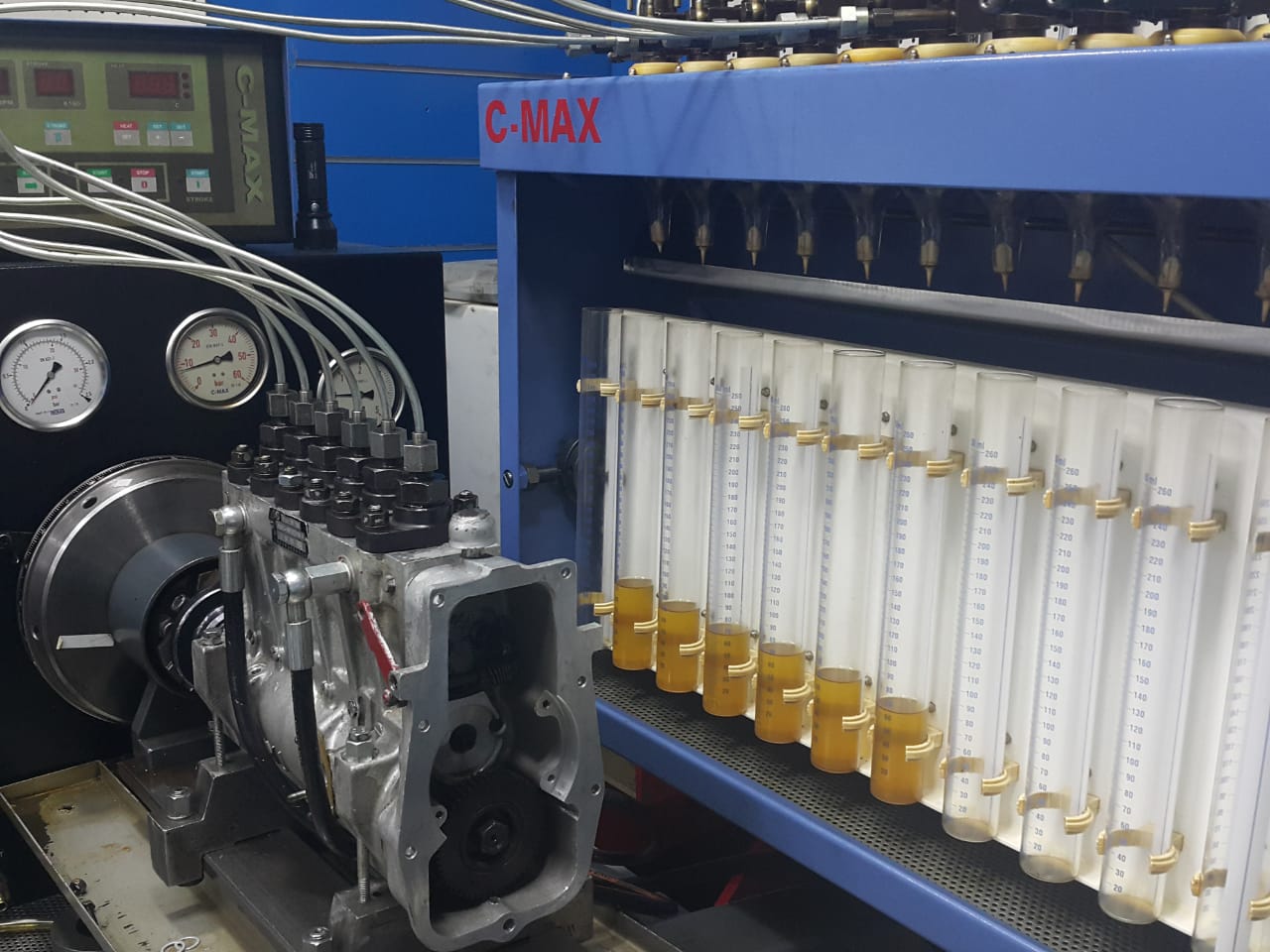
How to read a report — the four things worth checking
Most people file the document without reading it. If you read only four things, read these.
1. Is there an "as received" column at all? If the report only shows the unit passing after the work, you cannot tell whether the work was necessary. The incoming figures are the justification for everything that follows.
2. Look at the spread, not the pass. On a set of injectors or across the elements of an inline pump, the useful number is not whether each unit is inside its limit — it is how far apart they are from each other. An engine runs on the differences.
3. Check the settings against your engine. Opening pressures and timing settings are chosen from the unit's part number. If your engine has been rebuilt to a different specification, or the pump has been swapped from another machine at some point in its life, this is where that shows up — and it is much better to find it on the bench than on the engine.
4. Check that the identification matches the unit in your hand. Serial numbers on the document and on the unit. It sounds trivial. It is the most common source of a fuel equipment mix-up in a store.
The question worth asking any calibration workshop
Not "do you have a bench" — everybody says yes. Ask these instead:
Is the bench in your building, and did the person who set my pump also strip it? Subcontracted calibration is normal in this market and it is not disclosed. It is the difference between a workshop that can re-test after every adjustment and one that cannot afford to.
Do you test the unit before you quote? A shop that tests first can tell you the pump is fine and the problem is elsewhere. A shop that quotes first has no mechanism for reaching that conclusion and no commercial reason to look for it.
What condition is the bench itself in, and when was it last verified? A test bench is a measuring instrument, and an instrument that has drifted produces confident, signed, wrong numbers. This is a fair question, it is one very few buyers think to ask, and any workshop that reacts badly to it has told you something. Ask us and you will get a straight answer about our equipment.
Can I see a sample report before I commit? Yes, from us. Ask and one will be sent with the customer details removed.
What the report is, and what it is not
It is a record of what we measured, on our equipment, on that date, by the person who signed it. That is a substantial thing and it is what makes the work checkable.
It is not a certificate issued under anybody else's authority, and we do not present it as one. If your operation requires documentation issued or endorsed by a particular third party, tell us what is required at the start of the job — that is a question about your requirements, and the honest answer to it is a conversation rather than a claim on a web page.
Repair or replace is decided by this document
The report is not only the end of a job. It is very often the whole job.
A unit sent here for testing alone comes back with the same document and one of three conclusions on it: within specification, and the fault is elsewhere; repairable, and here is what it needs; or beyond economic repair, and here is why. That is the cheapest useful step available on any suspect pump or injector, and the readings behind the verdict come with it.
Customers use that third answer more than you would think. Being told in writing that a pump is not worth rebuilding — with the measurements attached — is what allows a plant manager or a superintendent to justify buying a replacement. An opinion on the phone does not do that.