Established 2011, over 25 years of experience.
Why the nozzle is the component that matters
Strip a mechanical injector and most of what comes out is durable: the body is a forging, the spring rarely fails outright, the shims do not wear. The nozzle is different. It is a matched, lapped pair — a needle and a body, ground and honed to each other in the factory, with a clearance measured in single-digit microns — and it lives at the hottest, dirtiest point in the engine, with combustion gas on one side of it and fuel at very high pressure on the other.
Everything the injector is for happens in that component:
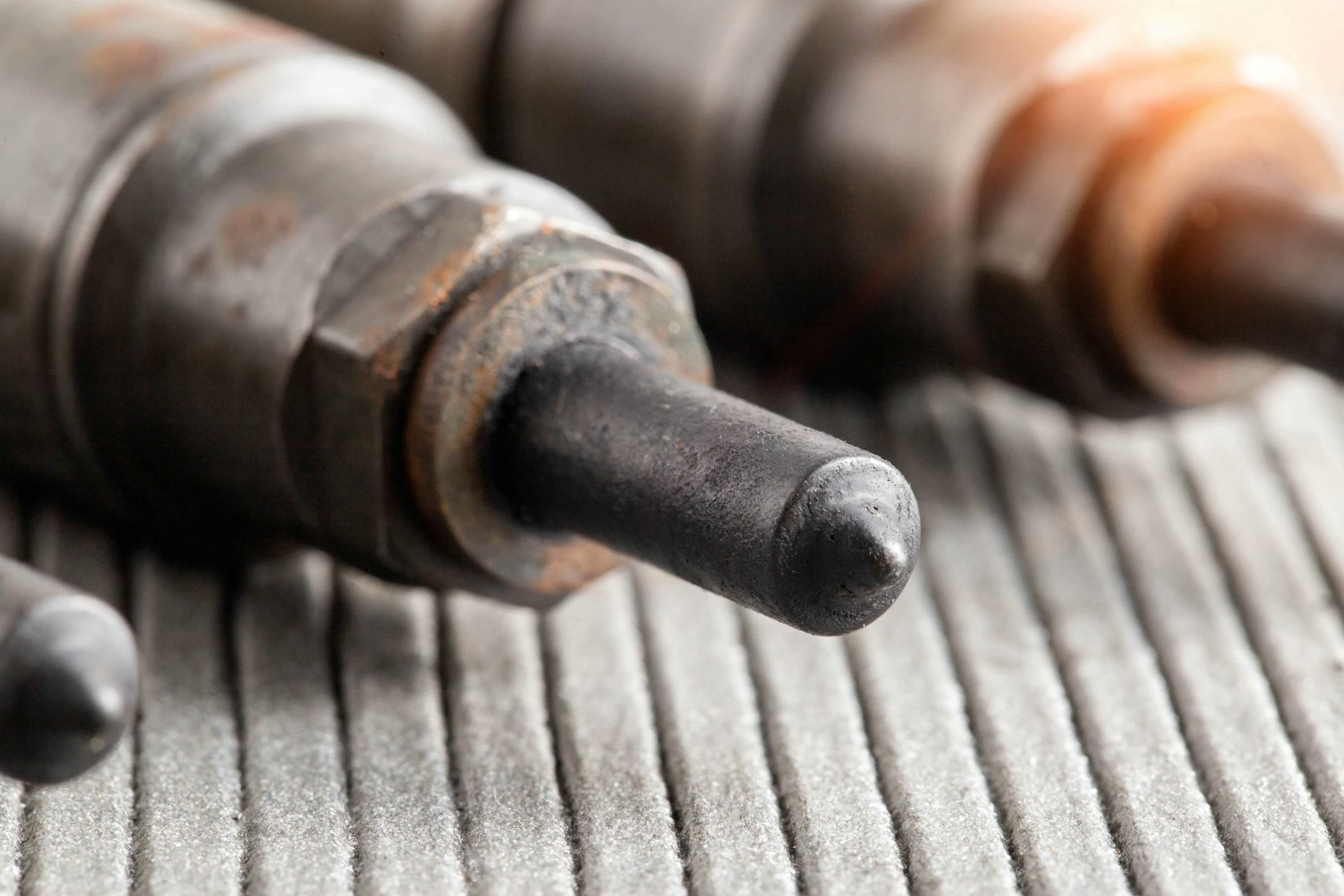
The holes shape the spray. Diesel does not burn as a liquid; it burns as a mist. The spray holes are the feature that turns a column of fuel into an atomised cone at the right angle for the combustion chamber. Erode those holes — from abrasive particles, from cavitation, from carbon — and the hole is bigger, rounder-edged and no longer the shape it was machined to. More fuel goes in, less finely broken up, in a wider and softer pattern. That is black smoke and rising consumption with no extra power, and no amount of cleaning restores a hole that has been enlarged.
The seat decides whether injection stops cleanly. The needle sits on a conical seat and has to seal completely between injections. A worn or pitted seat dribbles, and fuel dribbling into a hot cylinder after the burn has finished does not burn properly — it carbons the nozzle tip, glazes the bore and shows as white smoke at idle.
The clearance decides how much fuel leaks back. The needle is guided by the nozzle body. As that guide wears, more fuel escapes up past the needle and out of the return line. On a mechanical system that is lost delivery. On an electronic system, excessive return flow is one of the most common reasons an engine logs a rail pressure fault while the pump itself is perfectly good.
The needle lift and the spring together set the timing of injection. Opening pressure is where the needle lifts. It drifts down as the spring relaxes and the seat and shim faces bed in — and a nozzle opening early and at a lower pressure atomises worse and injects sooner than the engine was designed for.
What testing nozzles in house changes
Nothing is condemned by eye. A carboned nozzle can be perfectly serviceable and a clean-looking one can be finished. The only thing that separates them is a test, and the test is here.
The incoming test always happens. It is a walk, not an invoice, so every unit that arrives is run as received before anything is stripped. That is what allows us to tell you whether the whole set is tired or one nozzle has failed — before you have committed to anything.
Set, run, adjust, run again. Opening pressure is set by shimming or by an adjuster, and getting it exactly right is a loop. That loop is free when the bench is twenty paces away, which is why a set leaves here matched to each other rather than merely each inside a limit.
Nozzles and the pump are set against each other. Delivery balanced at the pump means very little if it is feeding uneven nozzles. Both are done in this building, in the same week — see diesel pump repair and overhaul.
You get the numbers per nozzle. Not a sticker saying tested. A sheet showing what each one did.
Nozzle operations we perform
- Incoming test as received — pressure, pattern, chatter, tightness, leak-off
- Opening (pop) pressure measurement
- Spray pattern and atomisation assessment
- Chatter test on nozzle types where chatter is a valid indicator
- Seat tightness test — held under sustained pressure below opening, checked for a dry tip
- Back leakage measurement past the needle guide
- External carbon removal with brass tooling only
- Ultrasonic cleaning and back-flushing
- Nozzle tip and spray hole inspection under magnification
- Needle tip and seat inspection
- Nozzle body sealing face inspection
- Lapping of the nozzle sealing face against the injector body
- Spring condition assessment and replacement
- Shim and spacer replacement
- Opening pressure set to the figure for your unit
- Nozzle and needle replacement as a matched pair
- Reassembly to specified nozzle nut torque
- Re-test after assembly and matching across the set
- Copper washer, O-ring and seal renewal
- Per-nozzle written test sheet
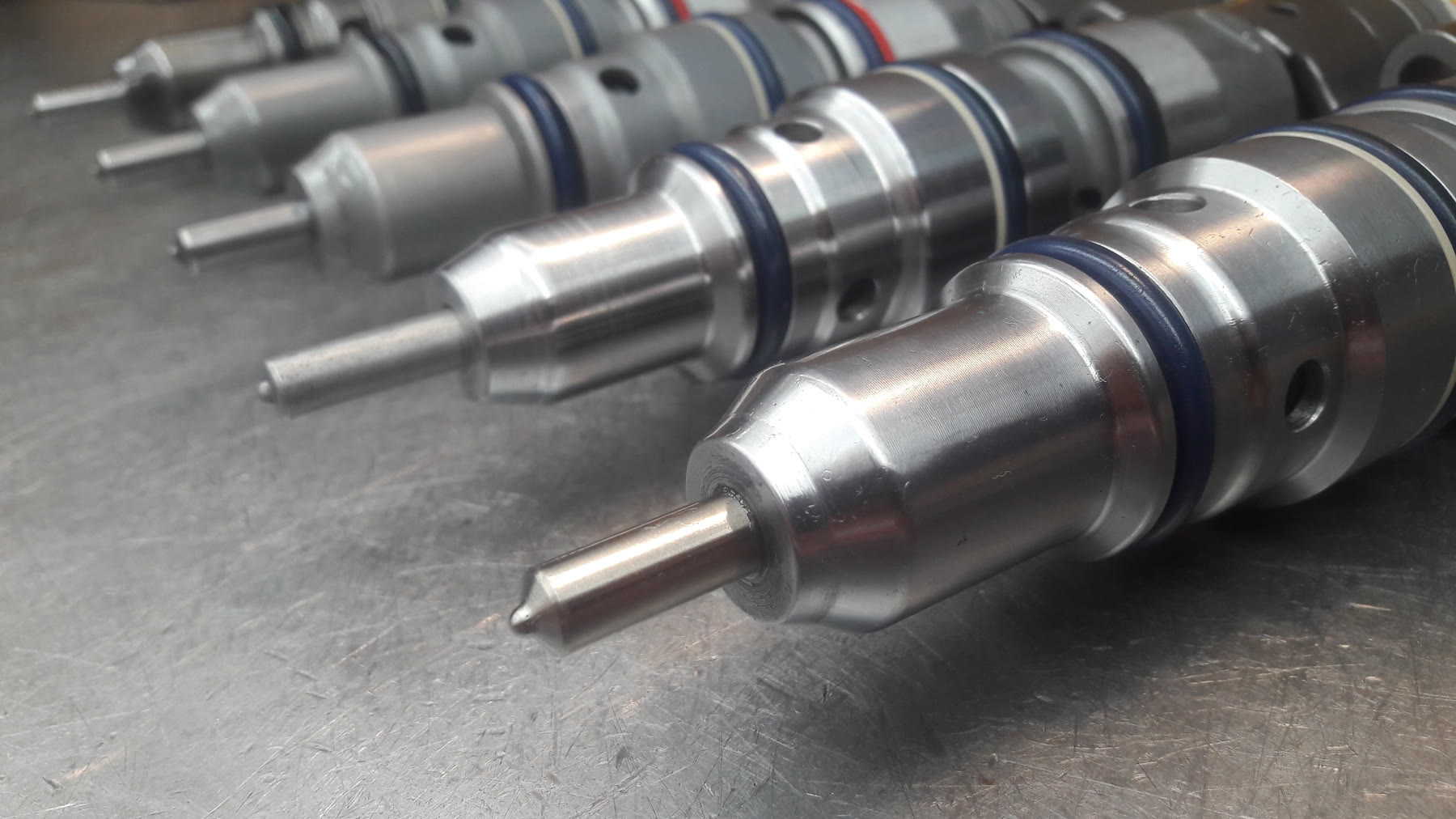
Nozzle types serviced include multi-hole nozzles for direct injection and pintle nozzles for indirect injection, in mechanical, electronic solenoid, unit injector and common rail injectors.
The five things a nozzle test actually measures
Opening pressure. The pressure at which the needle lifts. Low, and injection starts early and atomises poorly. High, and delivery is late and short. It is set to the figure that applies to your unit and recorded.
Spray pattern. A sound multi-hole nozzle throws a fine, even, symmetrical mist from every hole at the designed cone angle, with a sharp cut-off at the end. A worn or coked one streams from one hole, sprays unevenly, produces a visibly heavy jet, or fails to cut off. Streaming fuel does not burn cleanly; it washes the bore and lands on the piston crown, and that is how injectors erode pistons.
Chatter. On the nozzle types where it applies, a healthy needle oscillates on its seat as it opens and gives a characteristic buzz. It is a quick, honest indicator that the needle is moving freely in its guide.
Seat tightness. Held just below opening pressure, the tip must stay dry. Wetness means the seat has gone and the nozzle will dribble into the cylinder after injection ends.
Back leakage. How much fuel escapes past the needle guide and out of the return. It is the direct measurement of internal clearance, and on electronic injectors it is frequently the reading that explains a fault code nobody could account for.
When to have nozzles tested
- Black smoke that will not clear, with fuel supply and air both proved good
- White smoke at idle that clears under load — the classic dribbling nozzle
- A hard metallic knock from one cylinder, worst under load
- Rough idle that smooths as the engine warms
- Fuel consumption climbing with no gain in power — often excess return flow
- One cylinder running hot on exhaust temperature readings
- Hard starting with a healthy battery, healthy pump and good compression
- Scheduled marine or genset overhaul, where fuel valves are tested as a matter of routine rather than after a failure
- After any fuel contamination event — water or abrasives in the tank take the nozzles out before they take anything else out
Recondition or replace the nozzle — the test decides
This is the question people arrive with, and it has a clear answer once the unit has been run.
Recondition is right where the fault is deposits, a slightly drifted opening pressure, a tired spring, worn shims, or a sealing face that needs lapping. Clean it, re-shim it, set it, prove it. The nozzle goes back into service performing as it should, and it costs a fraction of a replacement.
Replace the nozzle and needle as a matched pair where the wear is in the precision surfaces:
- Spray holes eroded or enlarged. No process restores hole geometry. This is the most common reason a nozzle is replaced and it is not visible without magnification.
- The needle seat is worn or pitted so the nozzle will not hold tight.
- Back leakage beyond the limit, meaning the needle guide clearance has opened up.
- Corrosion or pitting on the needle or in the body — usually from water in the fuel.
- A seized or sticking needle that has picked up on its guide.
The needle and the body are lapped to each other and are always changed together, never separately. A new needle in an old body is not a repair; it is two parts that have never been matched, and it will not hold pressure or seal.
There is no case where a nozzle whose holes have eroded can be cleaned back into specification, and we will not sell you a clean instead of a nozzle. Equally, we will not sell you nozzles for a set that only needs cleaning — that is injector cleaning and flow testing, it is a much smaller job, and the incoming test is what tells the two apart.
What we return to you
The nozzles or complete injectors, and a test sheet per unit showing opening pressure as received and as set, spray condition, chatter result where applicable, seat tightness, back leakage, and how the units compare against each other across the set. Where a nozzle was replaced, the sheet says so and says why.
Nozzles reconditioned and set here are covered, and what the cover runs to is written on your paperwork rather than offered as a slogan — a nozzle clean and re-set and a full injector rebuild are not the same undertaking.
What we test nozzles for
Mechanical injectors, electronic solenoid injectors, unit injectors and common rail injectors, from Bosch, Denso, Delphi and Stanadyne equipment, on Caterpillar, Cummins, Perkins, Yanmar, Scania, MAN, Volvo, Mitsubishi, Deutz and John Deere engines — marine main and auxiliary, generator sets, fire pump engines, compressors, plant and heavy trucks.
Common rail nozzles are handled under common rail injector and pump service, because the delivery on those units has to be verified across the whole injection map rather than at a single opening pressure.
Send the nozzle or injector part number with the engine make, model and serial and you will get a straight answer on your specific units before you arrange transport.