
If a head gasket has failed twice, the second failure is nearly always a surface that was never actually measured.
What surfacing in house gets you
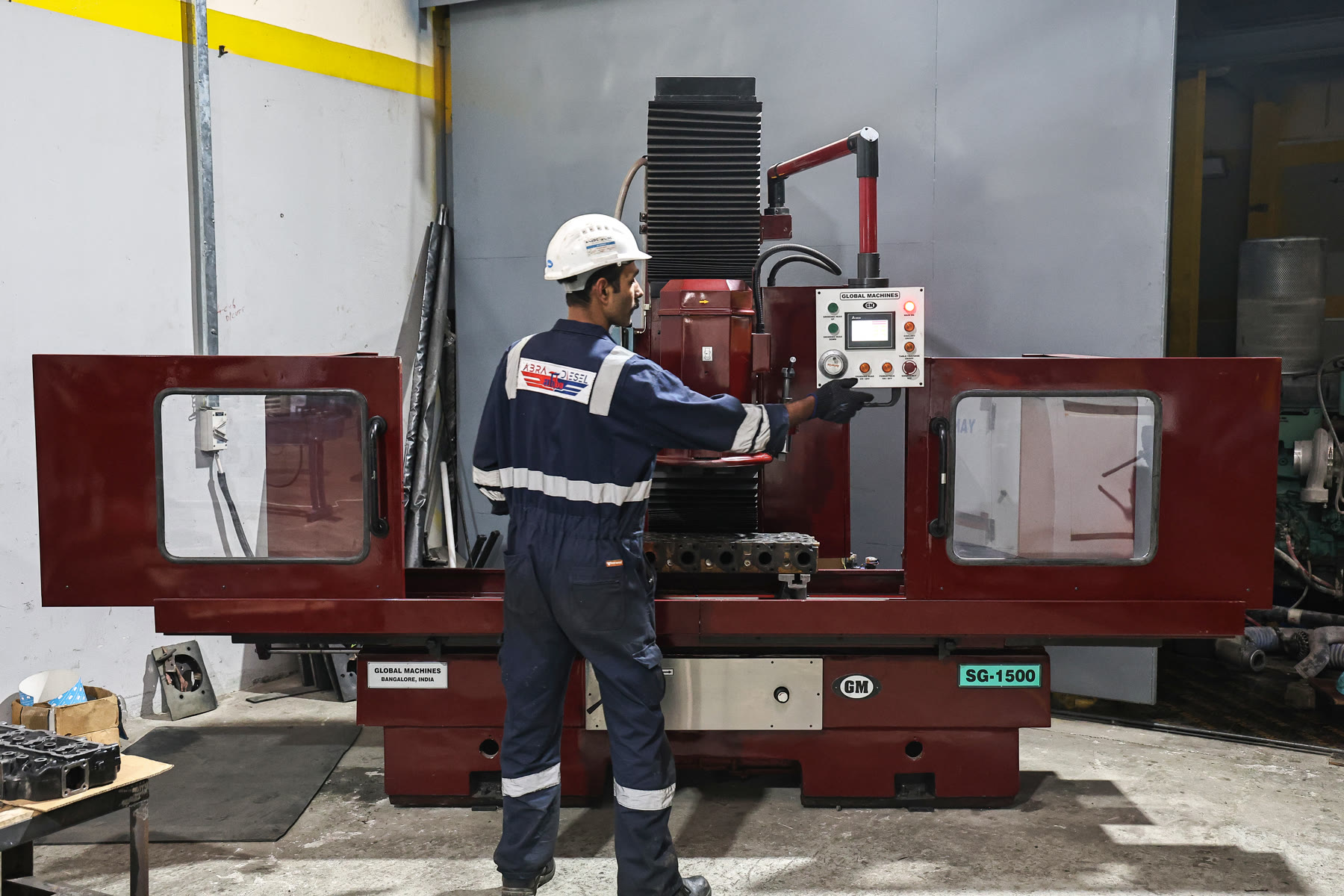
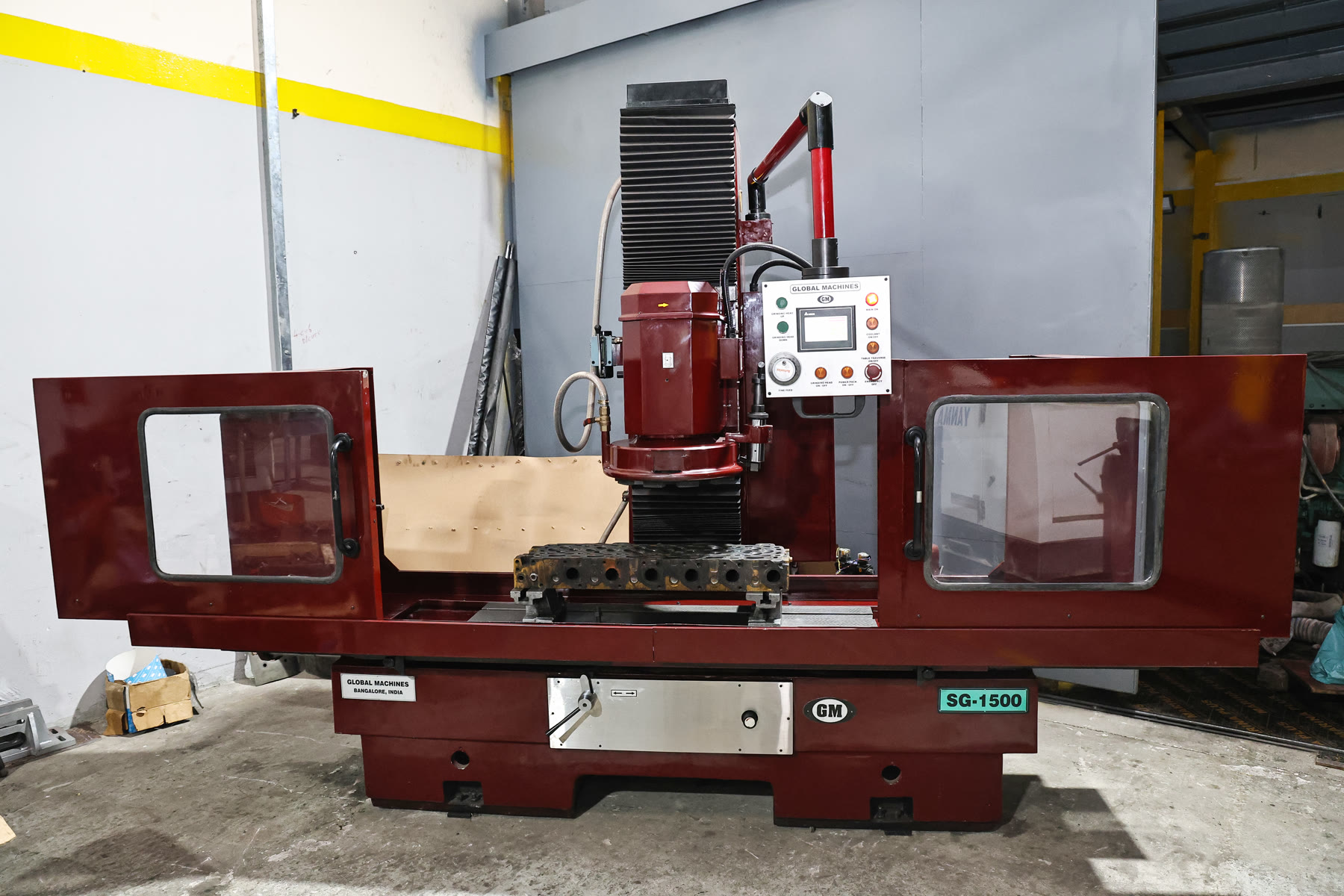
Head surfacing is the operation most often sent out by workshops that call themselves full-service, because it is the one that needs a machine nobody buys casually.
The face is measured before the cut, and again after it. Straightedge and feelers across length, width and both diagonals, recorded. That is what makes the difference between machining a head and machining a head that is now known to be flat.
Only the material that has to come off, comes off. Every cut is permanent. A shop that owns the machine and quotes the operation has no reason to take a habitual depth; it takes the minimum that cleans the face, and it writes down how much that was.
The face is finished for the gasket you are actually fitting. MLS and composite gaskets want different textures, and the decision has to be made before the machine is set up. That conversation only happens where the person quoting the job is the person cutting it.
Head and block deck are machined in the same shop. A gasket failure after an overheat usually distorts both. Doing both here means both are checked, and the liner protrusion or valve depth consequences of each cut are caught before reassembly rather than at it.
A week and a transport leg do not get added to your job. Sending a head out for one operation is how a three-day job becomes a two-week one, and it puts a machined sealing face in the back of somebody's pickup.
Surfacing operations we perform
- Flatness measurement with a precision straightedge — length, width and both diagonals
- Head face resurfacing, cast iron
- Head face resurfacing, aluminium
- Head face finishing to composite gasket specification
- Head face finishing to MLS gasket specification
- Manifold face machining — inlet and exhaust
- Block deck resurfacing
- Deck cleanup cut, minimum removal
- Liner counterbore re-cut and protrusion setting after decking
- Face preparation after crack repair or welding
- Valve depth, injector protrusion and timing geometry check after the cut
- Material removed recorded and issued with the head
No prices for any of these are published. Surfacing is quoted after the face has been measured.
Why flatness and finish both matter
A head gasket seals because clamping load is distributed evenly across a flat, correctly textured surface. Two independent things can break that.
Flatness is the geometry. A head that has been overheated bows, usually in the middle and usually along its length. Once the distortion exceeds the gasket's ability to take up, load concentrates on the high spots and the gasket is extruded or burnt through at the low ones. Multi-layer steel gaskets are far less forgiving than the older composite types: published gasket-industry guidance puts the maximum allowable distortion across an MLS-sealed face at around 0.05 mm total, whereas soft-faced composite gaskets tolerate considerably more.
Surface roughness is the texture, and it is not "the smoother the better".
- MLS gaskets need a genuinely smooth face, because the gasket seals through thin embossed steel layers with a micro-coating and there is no soft facing to flow into a coarse finish.
- Composite gaskets need texture to grip. Too smooth and the gasket can creep and lose torque.
That is why a single "polished" finish is the wrong answer for both. The correct target comes from the gasket the engine will be reassembled with, and it is decided before the machine is set up, not after. Tell us which gasket you are fitting when you book the job — it is the one piece of information that changes the setup, and most customers are never asked for it.
When a head or deck needs surfacing
- Head gasket failure, particularly after an overheat.
- Repeat gasket failure after a rebuild that skipped the flatness check.
- Visible erosion or fretting around a fire ring or a coolant port.
- Localised burn marks on the face where combustion has tracked out.
- A head that has been welded or crack repaired, which always leaves the face needing to be re-machined flat.
- A block deck that is corroded, eroded around the liner counterbores, or no longer parallel to the crank centreline.
The process
- Check the face before touching it. Precision straightedge and feeler gauges across the length, both diagonals and the width. This tells us both how much distortion exists and where it is, and it is recorded as the "before" figure.
- Decide the gasket first. MLS or composite changes the finish target and therefore the tooling and the feed.
- Confirm the head is straight enough to machine. A badly bowed cast iron head can need correcting before surfacing, otherwise a heavy cut is taken from the ends to chase the middle and material is thrown away that the head will want back later.
- Set up square. The head is clamped without inducing distortion — over-clamping a head to a table machines it flat and then lets it spring back the moment it is released.
- Machine the minimum. The cut is set to clean the face up, not to a habitual depth. Material removed is recorded in millimetres.
- Measure the result. Flatness re-checked with the straightedge, and the finish checked against the gasket's requirement before the head leaves the machine.
- Check the consequences of the cut. On a diesel head, removing material raises compression, changes injector protrusion, changes valve depth relative to the face, and can alter the timing geometry of an overhead cam. On a block deck, it changes liner protrusion. These are checked against specification before the head is signed off, not discovered at reassembly.
- Clean thoroughly. Machining swarf in an oilway or a coolant gallery destroys the engine that the job was meant to save.
What we return to you
A machined face with a recorded flatness figure, the finish specified for your gasket, and the total material removed in millimetres — which is the number the next shop will need in five years' time, and the number almost nobody writes down. Ask and we will mark it on the head as well as on the report, so it cannot be separated from the casting.
Surfacing work is warranted; terms are confirmed in writing with the quotation.
What drives the cost
cylinder head resurfacing price is a real search, so here is an honest answer to it: we publish no prices, we quote after seeing the head, and these are the variables that move the number.
- Size of the head. A four-cylinder truck head and a marine main-engine head are not the same job or the same machine time.
- Number of faces. Head face only, or head face plus manifold faces.
- Condition. A lightly bowed face is one pass. An eroded or crack-repaired face takes preparation first.
- Whether it is surfacing alone or part of a full recondition. Bundled with a complete head recondition, the setup, cleaning and testing are shared and the per-operation cost falls sharply. If you are having the head tested anyway, having it surfaced here as well is the cheapest way to buy the operation.
- Material. Cast iron and aluminium cut differently and need different tooling and finishes.
- Priority. Tell us at the outset if the engine is holding up a vessel or a site, and the job is sequenced accordingly.
What we will promise before you spend anything is the method: the face is measured, the gasket decides the finish, the minimum is removed, and you are told how much came off.
Repair or replace — when a head should not be surfaced again
Surfacing is cheap relative to almost any alternative, which makes the interesting question the opposite one: when should a head not be cut again?
Every cut is permanent. A head that has already been surfaced two or three times over its life reaches a point where the face has moved far enough that valve depth, injector protrusion or cam timing are out of specification, and correcting those costs more than the head is worth.
That point is measurable, and it is measured here before the machine is switched on. Head thickness against the engine maker's minimum, valve depth relative to the face, injector protrusion, and the flatness error we would have to cut out — four readings. If they say the head has nothing left, we say so and quote you a replacement instead. That verdict is worth more to you than the surfacing fee we would otherwise have taken.
For a used head of unknown history, thickness is measured against the maker's published minimum rather than assumed from appearance. It is the only reliable way to know what a previous workshop already took, and it is why we ask whether the head has been skimmed before — and check regardless of the answer.