
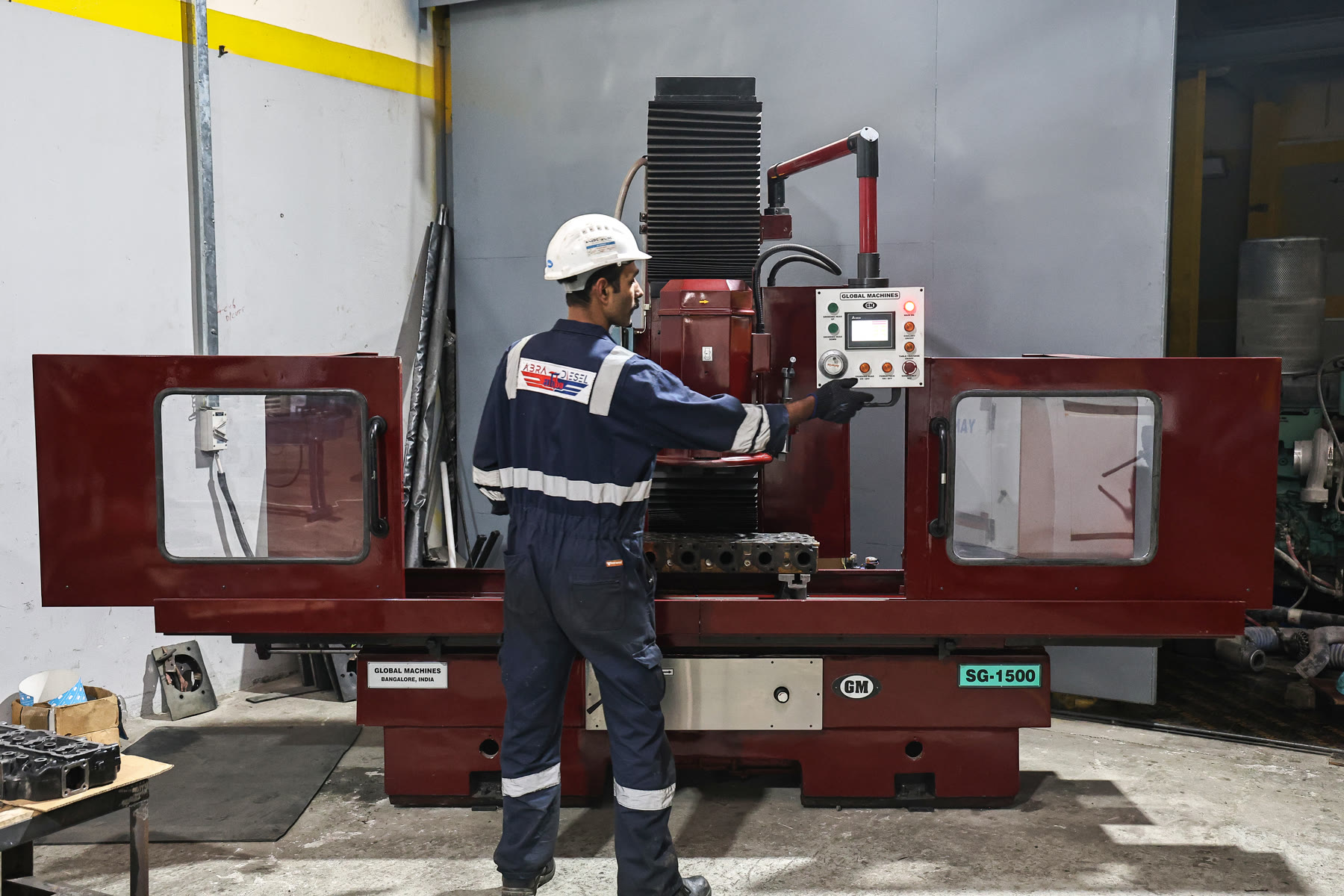
This page is for a head that is off: burnt or recessed valves, compression loss on one cylinder, a valve train that will not hold clearance, or a routine head recondition where the seats need to be cut properly rather than lapped and hoped for. Established 2011, over 25 years of experience.
Why the seat is cut from the guide, not from the seat
Everything about valve sealing depends on one relationship: the valve has to land on the seat in the same place, all the way round, every time it closes.
That alignment is controlled by the guide, because the guide is what holds the stem. A seat cut concentric to a worn guide is a seat cut concentric to nothing — the valve will wander as it closes and it will only ever touch part of the seat. It will seal on a compression test on the bench and burn in service.
So the correct sequence is fixed, and it is not negotiable: measure the guide, replace or repair the guide, then cut the seat from the new guide. A shop that cuts seats without dealing with the guides first is producing a head that looks finished and is not.
The second thing the seat controls is heat. A diesel exhaust valve loses most of its heat through the seat contact into the head. Too narrow a seat and the valve runs hot and burns; too wide and it traps carbon, loses its ability to clear deposits, and burns anyway. That is why seat width is set, not accepted.
What seat work in house changes
The guides are dealt with before the seats are touched. Guide bore measured, stem-to-guide clearance measured, guides replaced or reamed as the readings require, and only then is a cutter put near the seat.
Seats are cut with a defined geometry, not lapped in with paste. Grinding paste closes a gap; it does not put a contact band in the right place on the valve face, and it will not restore a recessed seat. Cutting sets the contact position, the width and the concentricity deliberately.
Three-angle work where the head calls for it. A seat is not one cone. The seat angle carries the contact, a shallower top cut positions the contact band down the valve face and unshrouds the port, and a steeper bottom cut sets the width from below. Together they put the contact band where the engine builder intended and improve the flow past a valve that is only just off its seat.
Valve depth is measured, not discovered later. Every cut into a seat sinks the valve further into the head. Sink it too far and the valve train geometry, the clearance range and — on a diesel — the piston-to-valve relationship all move. Valve protrusion or recession is measured against the maker's limit, and when the head has reached that limit the answer is a new seat insert, not another cut.
The head is leak tested after the work. Seats are proved before the head leaves, so a leaking valve is found here rather than on a compression test after the engine is back together.
On an overhead-cam head the camshaft is measured while the head is apart. A valve clearance that will not stay where it is set is as often a worn lobe or a worn cam journal as it is a seat fault, and camshaft repair and reconditioning is done in the same shop, on the same job sheet.
Valve and seat operations we perform
- Head stripping with valve-by-cylinder identification and bagging
- Valve guide bore measurement and stem-to-guide clearance measurement
- Valve guide removal and replacement
- Guide reaming to the correct clearance for the actual valve stem
- Valve stem diameter, taper and straightness measurement
- Valve head margin measurement — the thickness left on the edge of the valve
- Valve refacing to the specified valve angle
- Valve stem tip dressing
- Valve seat cutting to the engine maker's seat angle
- Three-angle seat cutting, with top and bottom cuts to set contact position and width
- Seat width measurement and correction
- Seat concentricity to the guide checked with a dial gauge
- Valve recession and protrusion measurement against the maker's limit
- Valve seat insert removal and replacement, including cutting a head for inserts that never had them
- Valve seat insert machining to size and fitting
- Valve spring free length and pressure checking
- Valve stem seal and collet renewal
- Head reassembly and cold valve clearance setting
- Leak testing of the finished seats
- Written measurement report
Nothing here is priced in advance. The head is measured, then it is quoted.
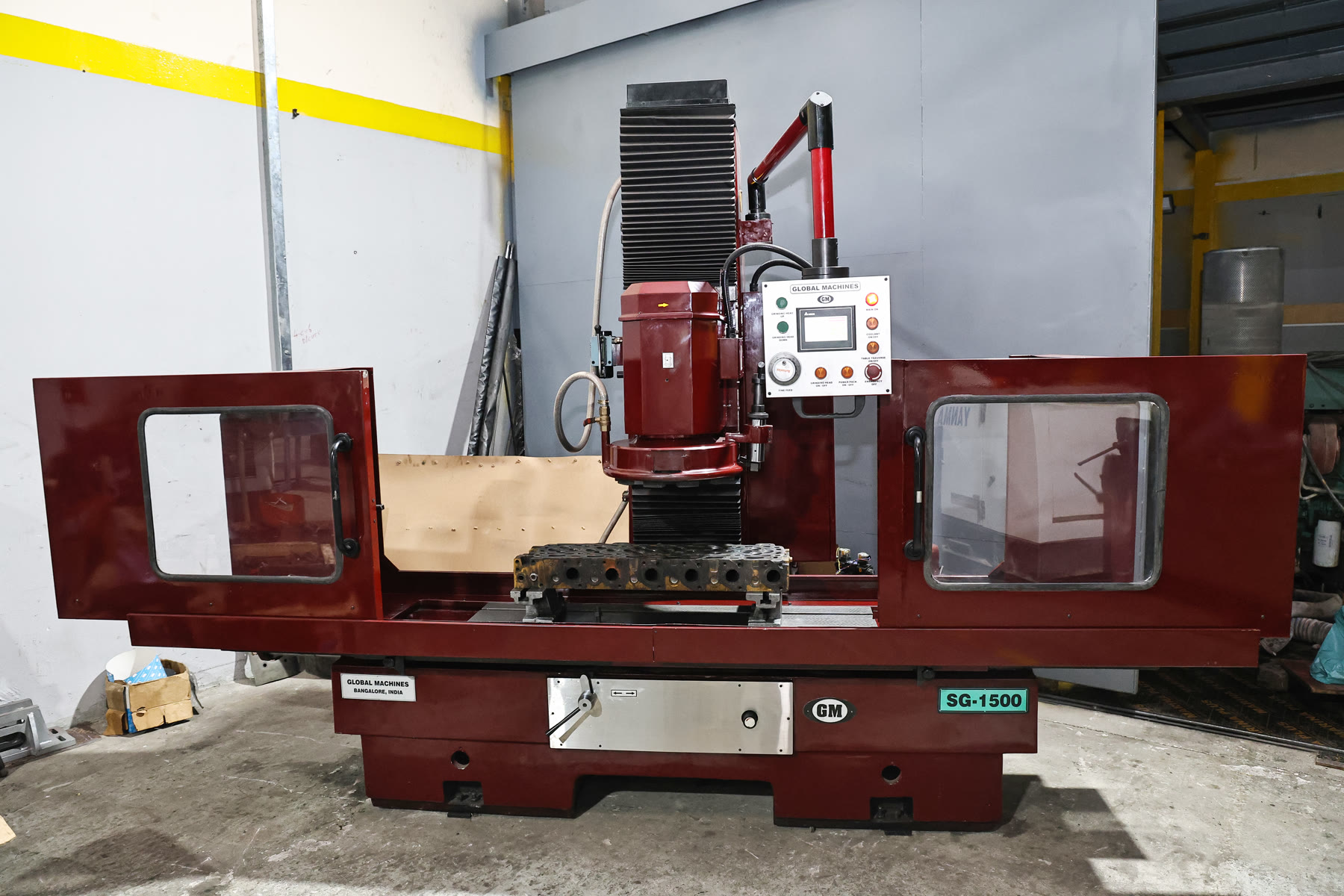
When a head needs valve and seat work
- Compression loss on one cylinder with the rings and the head gasket in order.
- A burnt exhaust valve. Usually the seat lost contact before the valve burnt, not the other way round.
- Valve clearance that closes up between services. As a valve recedes into its seat it rises, and the clearance shrinks. A clearance that keeps needing adjustment in one direction is a seat sinking, and it will eventually hold the valve open.
- Hard starting and low power on an old engine that is otherwise sound. Leaking seats bleed compression at cranking speed before they show up anywhere else.
- A blue haze and oil consumption with good rings. Worn guides let oil down the stems.
- A dropped valve, a broken collet, or a valve that has met a piston. Assessment before anything else — see cylinder head pressure testing and crack detection.
- Any full head recondition. Seats and guides are part of the job, not an extra. The full workflow is on cylinder head reconditioning.
The process
- Strip, bag and clean. Every valve, spring, collet and cap identified to its own cylinder and position. Nothing here is measured dirty.
- Inspect the head. Cracks, flame deck condition, bridges between the seats, injector bores. Crack detection and pressure testing come before machining, because there is no point cutting seats into a head that will not hold water.
- Measure the guides. Guide bore and stem-to-guide clearance at each valve. This is the reading that decides the sequence of everything after it.
- Guides replaced or reamed. New guides fitted where the wear requires it and reamed to the clearance the actual valve stem needs, rather than to a nominal figure.
- Assess the valves. Stem diameter and straightness, head margin, face condition. A valve with too little margin left is replaced, not refaced — refacing removes margin, and a thin-edged valve runs hot and cracks.
- Reface the valves that are worth refacing, to the specified angle.
- Cut the seats, piloted from the new guide, to the engine maker's seat angle, with top and bottom cuts where the head calls for a three-angle seat.
- Set the contact band. Seat width measured, contact position checked on the valve face, concentricity to the guide checked with a dial gauge.
- Measure valve depth. Recession or protrusion against the maker's limit. If a head has reached that limit, the answer is seat inserts and you are told before anything further is cut.
- Check the springs. Free length and pressure. New seats behind tired springs is a job half done.
- Reassemble, set the cold clearances, and leak test.
- Report.
Nothing is cut until you have seen the incoming measurements and approved the scope. If the head turns out to need inserts or a crack repair, you get a phone call before the machine is started again.
What we return to you
The head, assembled, and a measurement sheet giving stem-to-guide clearance per valve, which guides were replaced, valve stem and margin readings, seat width and concentricity as cut, valve recession against the maker's limit, spring readings, the leak test result and the cold clearances set. That sheet tells the person who fits the head what they have, and it tells the next engineer how much life is left in the seats.
Head work is warranted. What the cover extends to depends on whether we also supplied the valves and guides and whether we did the assembly, so it is stated on your quotation.
Repair or replace — the head decides, in numbers
Valve seats are among the most recoverable features on a diesel engine, and the boundaries are measurable.
Repairable by cutting: a seat with material left, in a head with valve depth still inside the maker's limit.
Repairable by insert: a seat that has been cut to the limit, a seat that has been damaged by a dropped valve, or an integral seat in a head that has done enough hours. Cutting the head to accept a new insert restores it to the original geometry and gives the head another full service life. This is the operation that keeps old heads working and it is exactly the thing a replacement-first supplier will not offer you.
Replace the valve: insufficient margin left on the head, a bent or worn stem, or a cracked or burnt-through face. Refacing a valve that has already lost its margin produces a valve that will burn.
Replace the head: cracks through the bridges or into the injector bore that cannot be repaired, a deck already surfaced to its limit, or widespread water jacket erosion. That verdict comes with the measurements behind it and it costs you the inspection and nothing else.
Heads we do valve work on
Caterpillar, Cummins, Perkins, Volvo, Scania, Mercedes-Benz, Mitsubishi, Yanmar, Iveco, Wärtsilä, Niigata, Tata and Ashok Leyland, in truck, bus, generator, industrial and marine forms — including the individual single-cylinder heads used on large marine and genset engines and the two-valve and four-valve multi-cylinder heads used on road and plant engines.
If you are unsure whether your head is one we can take, send a photograph and the engine model and you will have an answer the same working day.