
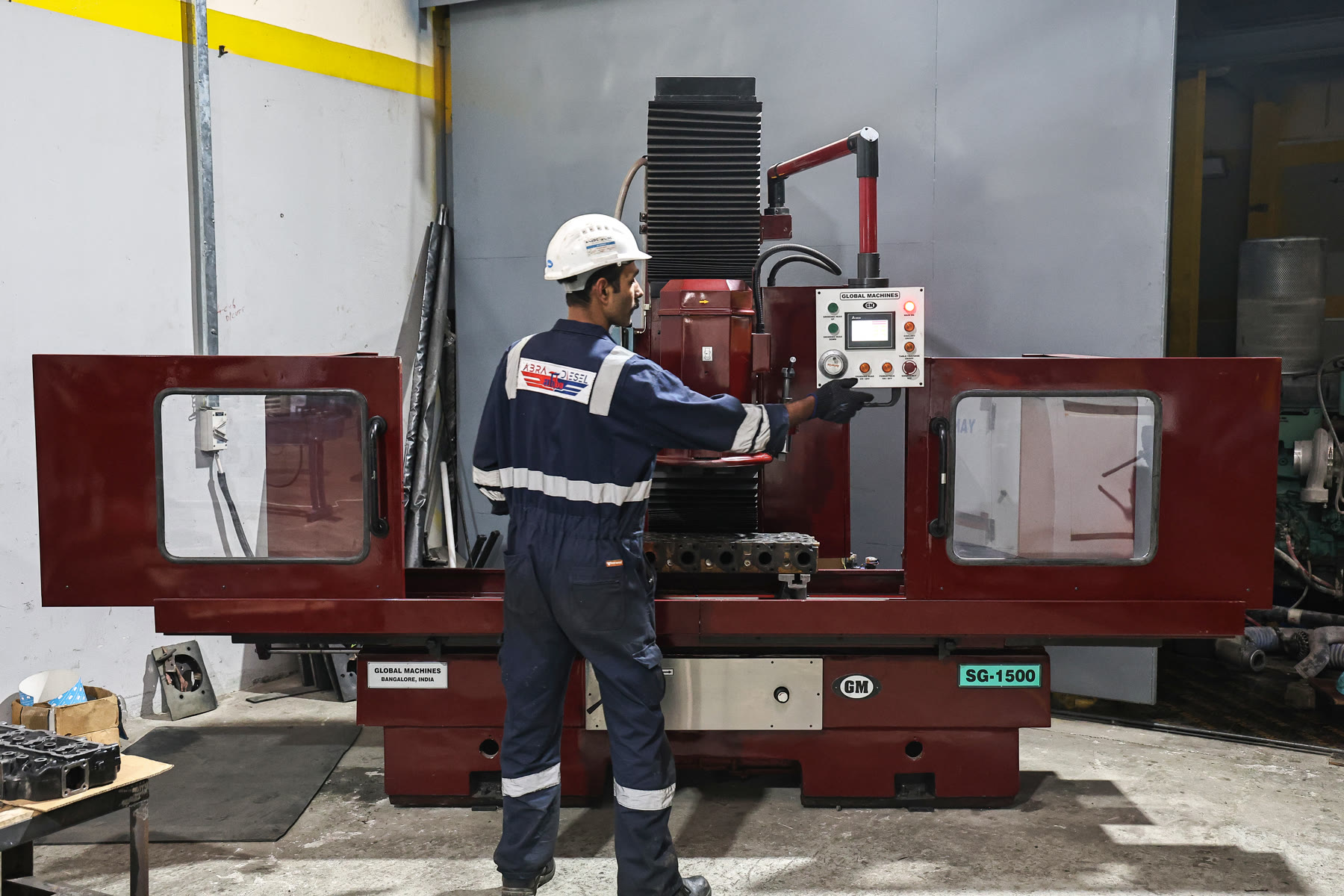
This page is for the decision that comes before the rebuild: is this head worth reconditioning at all? Established 2011, over 25 years of experience.
Why the test comes first
A cracked head and a good head look identical on a bench. So do a head with a porous casting and a head that is sound. The failure is inside the water jacket, and no amount of inspection with a torch will find it.
That matters commercially, because everything else you might spend on the head — new valves, guides, seats, injector sleeves, surfacing, a gasket set, and the labour to fit it — is spent before the engine runs. If the head then leaks, all of it is spent twice, and the second time it is spent under the pressure of an engine that is already back together and already late.
Test first, rebuild second. That is the whole argument, and it costs the price of a test.
What testing in house changes
You get a verdict quickly rather than a queue. A head that arrives here is cleaned and tested in this building. Nobody is waiting on a third party's schedule for a yes or no answer.
A crack that is found is a crack we can also repair. When the test finds something, the next conversation is about engine block and head crack repair by metal stitching — not about where to send the casting next. Test, repair and re-test happen under one roof and in the right order.
The head is re-tested after the repair, not just after the promise. The only meaningful proof that a crack repair worked is the same test that found the crack, repeated. That loop is free when the test rig is twenty paces away.
Testing is a step, not a sales stage. We test heads for customers who then take them away and rebuild them elsewhere, and that is a normal outcome. The result is the product.
The finding is recorded. Where the leak was, how the head behaved under pressure, and what condition the casting was in. That document is what you show the engine's owner, the insurer's surveyor, or the workshop that fits it.
Cylinder head testing operations we perform
- Head stripping, valve-by-cylinder bagging, and full cleaning before any test
- Water jacket pressure testing with the ports blanked, held and observed
- Hot testing, where the head is brought up to temperature so that cracks which only open when the casting expands are found
- Air-under-water testing for leak location on smaller heads
- Magnetic particle crack detection on cast iron heads
- Dye penetrant inspection on aluminium heads and on geometry that does not suit magnetising
- Visual inspection of the flame deck, valve bridges and injector bores under magnification
- Injector sleeve and tube leak testing
- Deck flatness measurement with straightedge and feeler across both axes and the diagonals
- Valve seat recession measurement
- Guide bore and stem clearance measurement
- Camshaft bore and journal inspection on overhead-cam heads
- Corrosion and erosion assessment of the water jacket
- Re-test after crack repair or after machining
- Written test report with the finding, the location and the recommendation
No prices are published for any of these. The test is quoted before it is done, because unlike machining, a test is a known quantity — it is the repair that follows which cannot be priced until the result is in.
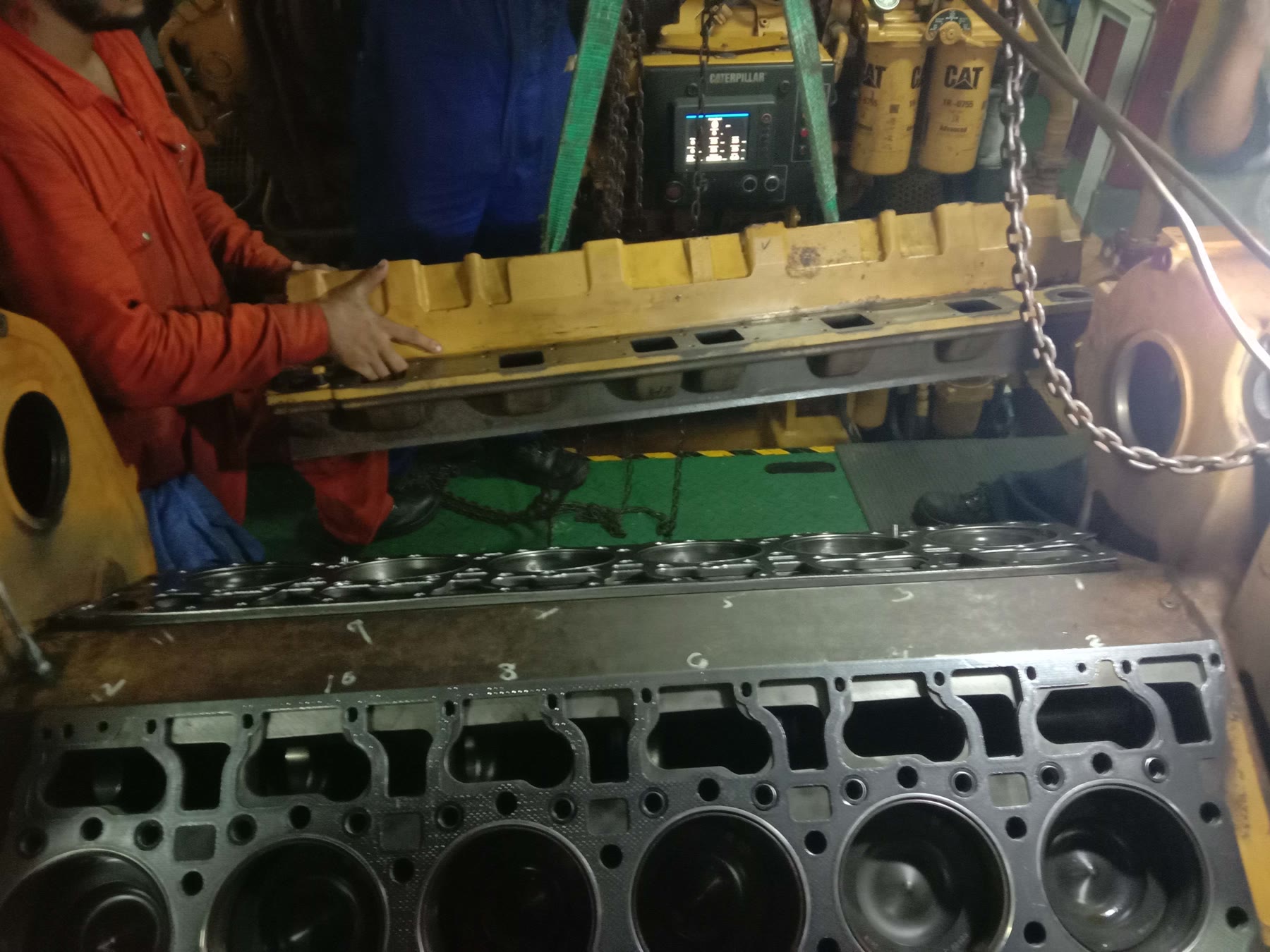
When a head needs pressure testing
- Coolant loss with no external leak. The system goes down and nothing appears on the floor. It is going into a cylinder, into the oil, or out of the exhaust.
- White smoke that does not clear when the engine is warm. Coolant is entering a combustion chamber.
- Oil that has gone milky, or coolant with oil in it. A crack or a gasket failure between the oil gallery and the water jacket.
- Pressurisation of the cooling system. Combustion gas entering the jacket will push coolant out of the header tank and refuse to let the system cool.
- A head gasket that has failed twice. The second failure is almost never a bad gasket. It is a distorted deck, a cracked head, or a liner protrusion problem in the block.
- Before any head rebuild, as a matter of routine. This is the version that saves the most money and the version customers ask for least often.
- After an overheat. A head that has been cooked is a head that should be tested before it is trusted.
- On a used head bought in. A second-hand head with an unknown history is worth testing before it is worth fitting.
The process
- Strip and clean. Valves, springs, guides and injector hardware out, everything bagged by cylinder. The casting is cleaned properly — a crack under carbon or scale will not show, and nothing here is tested dirty.
- Visual and dimensional inspection. Flame deck, bridges between valve seats, injector bores, deck flatness. The bridges are where diesel heads crack most often, because they are the thinnest section between the two hottest features.
- Seal and pressurise. Ports and galleries blanked with the correct plates, the jacket brought up to test pressure and held. Pressure held over time is the measurement: a head that will not hold is leaking whether or not anyone can see where.
- Locate the leak. Where the head does not hold, the leak is traced — under water, or with the head hot so a crack that is closed cold opens under expansion. A head that passes cold and fails hot is a real and common result, and finding it is the reason hot testing exists.
- Crack detection. Magnetic particle on cast iron, dye penetrant on aluminium, both applied to the areas the pressure test has pointed at and to the areas experience says to check anyway.
- Report. Pass or fail, where, how it behaved, and what we recommend — including "this one is not worth repairing" where that is the honest answer.
- You decide. Nothing is machined or repaired until you have the result and have said yes.
What we return to you
The head, and a written report stating what was tested, whether it held, where the leak or the crack was found, the crack detection method used, deck flatness as measured, and a plain recommendation. If the head passes, that report is the document that lets you commit to a rebuild without wondering. If it fails, it is the document that stops you.
Where a repair follows, the head is tested again afterwards and the second result goes on the same sheet. A crack repair without a post-repair test is an assertion; with one, it is evidence.
Repair or replace — the casting decides, in numbers
A cracked head is not automatically scrap, and it is not automatically saveable either. What decides it is measurable: where the crack is, how deep and how long it runs, how much material remains around it, how much the deck has already been surfaced, and whether the casting is otherwise sound.
Crack between the valve seats. Very common on diesel heads, and often repairable. This is the classic case for metal stitching or seat insert work.
Crack into the injector bore or through a bridge into the port. Assessed on its length and depth. Some are repairable; some are not.
Crack through the deck into a water jacket, on a head already surfaced to its limit. Usually replace. Removing more material to clean up a repair will take valve depth and injector protrusion out of specification, and then the head is straight but wrong.
Widespread corrosion or erosion of the water jacket. Replace. A repair to one place in a casting that is thinning everywhere buys months.
Multiple cracks, or a crack through a head bolt boss. Replace.
You get that answer in writing with the test result behind it, and it costs you the test and nothing else.
Heads we test
Caterpillar, Cummins, Perkins, Volvo, Scania, Mercedes-Benz, Mitsubishi, Yanmar, Iveco, Wärtsilä, Niigata, Tata and Ashok Leyland, in truck, bus, generator, industrial, and marine main and auxiliary forms — including the individual heads used on large marine and genset engines as well as one-piece multi-cylinder heads.
If you are unsure whether your head is one we can take, send a photograph and the engine model and you will have an answer the same working day.