
This page is for the moment a crack is found and someone has quoted you a replacement casting. Established 2011, over 25 years of experience.
Why a cracked casting is not automatically scrap
The response most people get to a cracked block is a price for another block. It is an easy answer to give, it is usually the most expensive answer available, and on older or larger engines it is often not an answer at all — a block for a marine auxiliary or a large genset engine is a factory order with a lead time measured in weeks or months, and for equipment that has been out of production for twenty years it may not exist at any price.
Meanwhile the casting sitting on the floor is, apart from one crack, entirely serviceable. The bores are there. The main bearing bores are there. The deck is there. All of the expensive geometry — everything that took a foundry and a machine shop to produce — is intact, and it is intact in a component whose only fault is a fracture a few tens of millimetres long in a water jacket wall.
Cast iron cracks for predictable reasons: freezing coolant, an overheat, hydraulic lock, a dropped valve, fatigue at a stress concentration, and — very common in this region — coolant that has been run without the correct inhibitor until the jacket has thinned. Those failures put a crack in a casting. They do not usually make the casting worthless.
What crack repair in house changes
The crack is found, mapped and proven — not guessed at. A crack that is repaired without knowing where it ends is a crack that will run out of the repair. The ends of every crack are located before anything is drilled, and the casting is tested afterwards to prove the repair holds. Finding, repairing and testing all happen in this building, in that order.
The repair is cold, so the casting does not move. Metal stitching puts no heat into a large casting. That matters more than it sounds: heat a block or a head enough to weld it and the casting distorts, the deck goes out of flat, the bores go out of round, the main bearing bores go out of line, and you have exchanged a crack you can see for distortion you cannot. A cold repair leaves the geometry where it was.
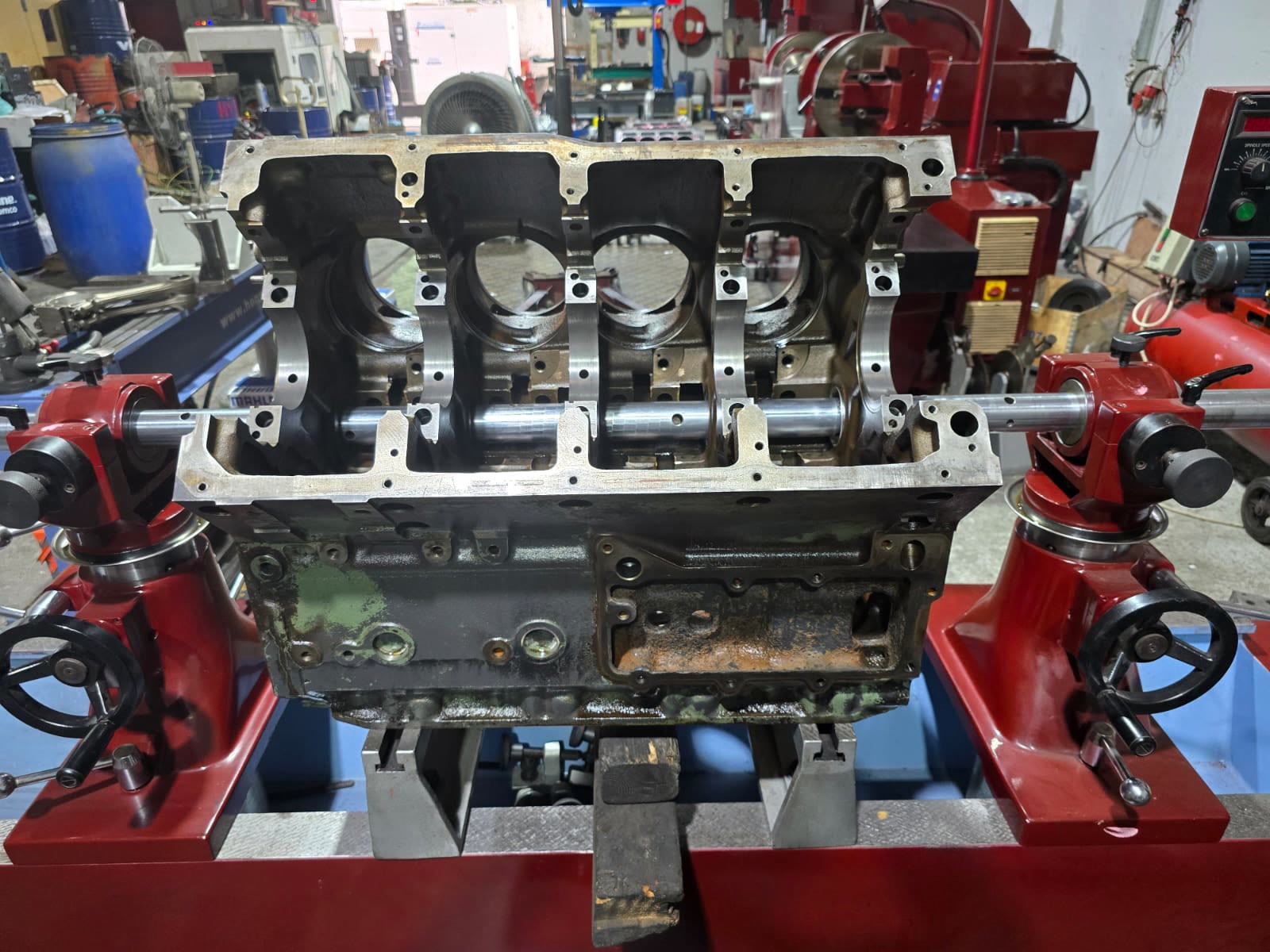
The repaired casting is re-machined here if it needs it. A stitched crack that runs across a deck or through a bore is dressed flush and then the surface is machined properly — deck surfaced, bore honed or bored, main bores checked for line. That is not a separate supplier and a second journey. See engine block machining and repair.
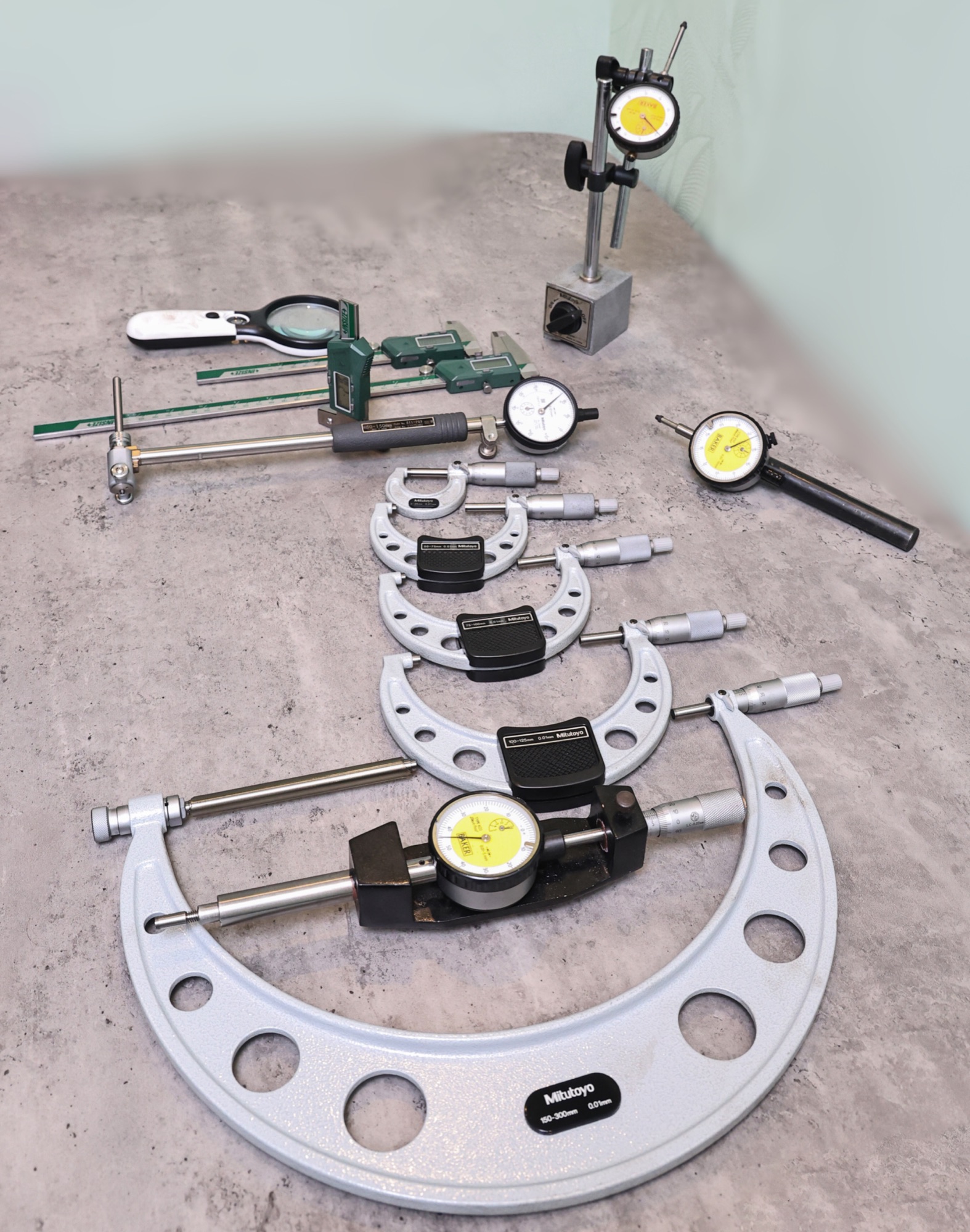
The repair is pressure tested, and you get the result. A crack repair with no test behind it is somebody's opinion. With a test it is evidence, and it is evidence you can show to the vessel's owner, the plant manager or the insurer. See pressure testing and crack detection.
You are told when the casting is not worth saving. There are cracks we will not repair, and they are listed further down this page. Telling you that costs you the inspection and it is worth more than the repair fee we would otherwise have taken.
How metal stitching actually works
The name sounds decorative. The process is not.
A crack in a casting is a place where the material has separated and where the load that used to pass through it now concentrates at the crack tips. A repair has to do two things: seal the crack so that gas and liquid cannot pass, and restore enough strength across it that the load has somewhere to go.
Metal stitching does both, mechanically and cold.
Stop the crack first. A hole is drilled at each end of the crack. This is the oldest and most important step in the process, and it is the one that gets skipped: an undrilled crack tip is a stress concentration, and a repair that leaves the tips live will simply push the crack past the last pin.
Pin the length of it. A line of overlapping threaded stitching pins is drilled, tapped and driven along the crack, each one overlapping its neighbour so the row becomes a continuous band of new material occupying the crack line. Because the pins are threaded into both sides of the fracture and they are slightly larger than the hole they replace, driving them in pulls the two sides of the crack towards each other. The repair does not just fill the gap; it puts the casting into compression across it.
Lock across it. Where the repair has to carry real load, locks are set into a precision hole pattern cut across the crack line, at right angles to it. The pins seal, the locks tie the two halves of the casting together, and together they take the stress that the parent metal used to carry.
Dress and machine. The repair is dressed flush to the surrounding surface, and where it lies on a machined face — a deck, a bore, a landing — the surface is machined afterwards to bring it back to specification.
Test. The casting goes on the pressure test rig and is held. If it does not hold, it is not finished.
Crack repair operations we perform
- Incoming inspection and crack location on blocks, heads, housings and casings
- Crack end location — the step that decides whether the repair holds
- Magnetic particle crack detection on cast iron
- Dye penetrant inspection on aluminium and on geometry that does not suit magnetising
- Pressure testing to find a leak that is not visible
- Hot pressure testing, where the crack only opens once the casting has expanded
- Cold crack repair by metal stitching — pins driven the length of the crack
- Locking across the crack line where the repair must carry load
- Crack repair in water jackets, cylinder walls, decks, ports and external casing walls
- Repair of cracks between valve seats in cylinder heads
- Repair of cracks around injector bores and bridges
- Stripped and damaged thread repair with inserts, including head bolt and stud threads
- Damaged head bolt hole repair
- Dressing and finishing the repair flush
- Deck resurfacing over a repaired area — see cylinder head and block surfacing
- Bore machining or liner fitting over a repaired cylinder wall — see cylinder liner fitting
- Main bearing bore alignment check after a repair near the main webs — see line boring
- Post-repair pressure test with the result recorded
- Written report with the crack location, the repair method and the test result
Nothing on that list is priced before the casting has been seen. A crack is quoted after it has been found and measured, because until then nobody knows how long it is or where it ends.
What about welding the block?
People search for engine block welding, and it deserves a straight answer rather than a sales one.
Welding cast iron is a real discipline and there are repairs where it is the correct method. But grey cast iron is a difficult material to weld well: it has very little ductility, it is full of graphite that does not want to go into the weld pool, and the heat-affected zone either side of the bead becomes hard and brittle. Cool it wrongly and you get a new crack running parallel to the one you just repaired. Doing it properly on a large casting means controlled pre-heat, controlled interpass temperature and controlled cooling over hours — and even then, the casting has been through a thermal cycle that will have moved it.
That is why cold repair is usually the better engineering answer on an engine block or a cylinder head. The casting keeps its geometry, there is no heat-affected zone, there is no distortion to machine out afterwards, and the repair can be done on a casting too large to put in an oven.
Where welding genuinely is the right route for a particular casting or a particular material, we will tell you that and arrange it rather than force the job into the method we happen to prefer. What we will not do is heat a block that should have been stitched because welding sounds more permanent. It is not; on cast iron it is frequently less.
Where cracks appear, and what each one means
Between the valve seats in a cylinder head. The most common crack in a diesel head. The bridge between the two hottest features in the casting is also the thinnest, and it cracks after an overheat. Often repairable, sometimes with a seat insert as part of the repair.
Into the injector bore or sleeve. Assessed on length and depth. The geometry around an injector bore matters, so this repair is judged carefully.
In a water jacket wall. The classic freeze or corrosion crack. This is the repair metal stitching does best, because the requirement is gas and liquid tightness and there is parent metal either side to work with.
Down a cylinder wall. Repairable in many cases, and where it is not, the bore can often be machined out and sleeved — which recovers the cylinder even when the crack cannot be stitched. See cylinder liner fitting.
Around a head bolt hole or a stud boss. Usually from over-torque or corrosion. Thread repair and stitching together often deal with it.
Through a main bearing web. This is the serious one. A crack through a web is in the structural spine of the engine, carrying the full firing load through the main bearing. This is where the honest answer is usually replace.
In gearcases, housings, manifolds, pump bodies and machine castings. Not just engines. Any cast iron industrial casting with a crack in it is worth showing us before it is written off.
Repair or replace — the casting decides, in numbers
Repairability depends on measurable condition: where the crack is, how long it runs, how deep it goes, how much sound material remains either side of it, whether the casting has cracked in more than one place, and whether the surrounding metal has thinned. All of those are things that can be established in a day, and none of them can be established from a photograph on a phone — though a photograph is a perfectly good place to start the conversation.
We will tell you to replace the casting when:
- The crack runs through a main bearing web or another primary structural member. Repairing a casting that carries firing load through the crack is not a risk worth taking on somebody's engine.
- The casting is cracked in several places. One crack is a failure. Several is a casting that has been overloaded or corroded throughout, and repairing three cracks buys you time until the fourth.
- The water jacket has thinned generally. Stitching sound metal is one thing. There has to be sound metal.
- The crack runs through a feature the repair cannot be machined back into — a deck already surfaced to its limit, a bore already at its last oversize with no room for a liner.
- The repair would cost more than the casting is worth. On a common road-engine block with plentiful used stock in this market, a long complicated repair is not the right advice and we will say so.
That verdict comes in writing with the findings behind it, and it costs you the inspection and nothing else.
Castings we repair
Cylinder blocks and cylinder heads from Caterpillar, Cummins, Perkins, Volvo, Scania, Mercedes-Benz, Mitsubishi, Yanmar, Iveco, Wärtsilä, Niigata, Tata and Ashok Leyland, in truck, bus, generator, industrial and marine forms — including the large marine and genset castings where replacement is least practical and this work is worth the most.
Beyond engines: gearcases, housings, machine beds and frames, pump and compressor bodies, manifolds and industrial castings generally. Cast iron is cast iron.
If you are unsure whether your casting is repairable, send photographs of the crack with something in frame for scale, plus the component and engine details, and you will have an initial view the same working day — before you pay to transport anything.