This page is for a block that is being relinered: worn or scored liners at overhaul, a liner that has cracked or cavitated through, or a block whose counterbores have sunk and will not hold a head gasket. Established 2011, over 25 years of experience.
What fitting liners in house changes
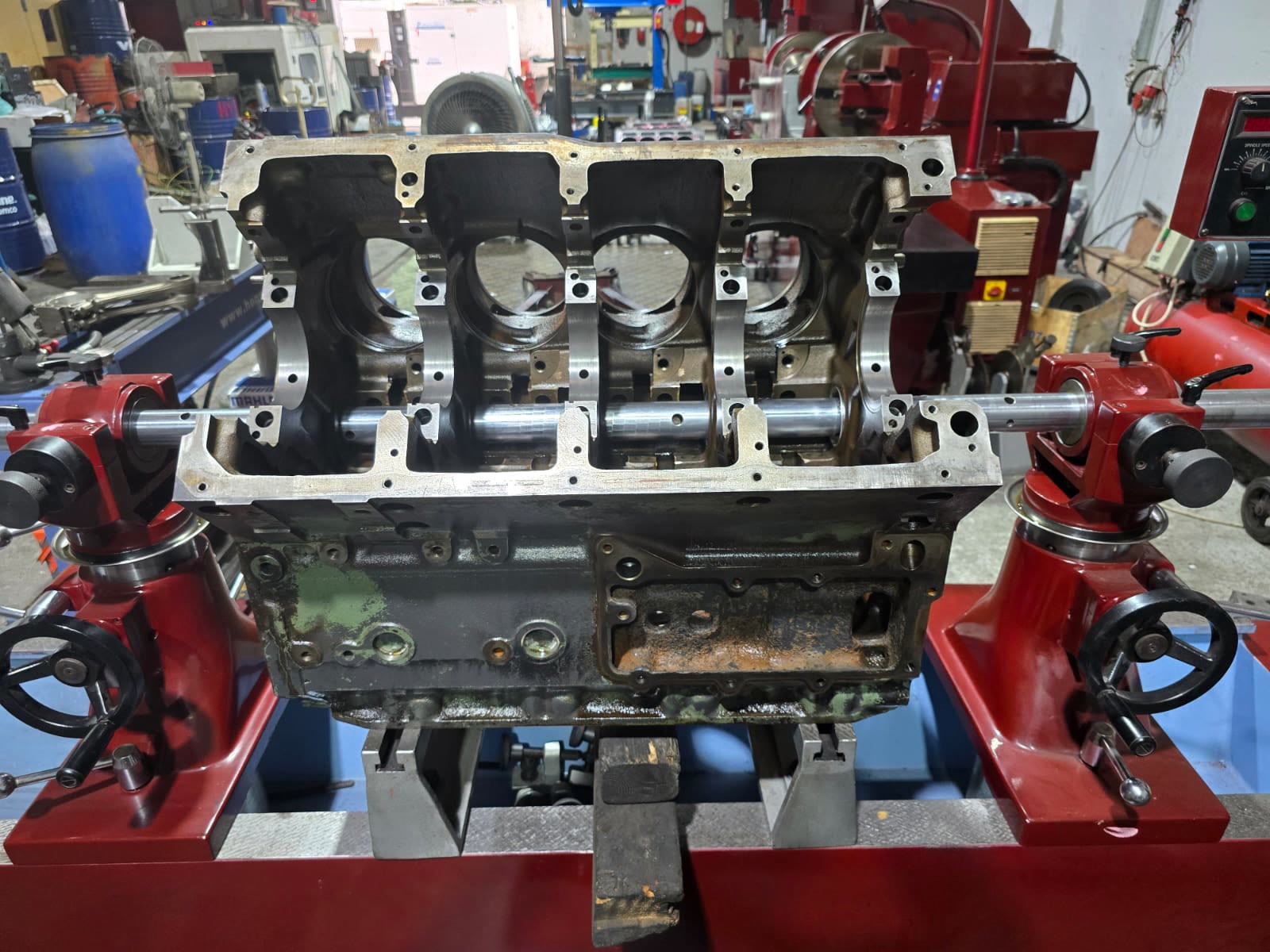
The bore and the liner are matched to each other, not to a catalogue. The interference fit that holds a dry liner is a relationship between two measured parts. We measure the liner that is actually going in and machine the bore for that liner, rather than cutting to a nominal figure and hoping the two agree.
Protrusion is set, not discovered. Liner protrusion above the deck is what clamps the gasket's fire ring, and it is set by the counterbore depth, the liner flange thickness and the shims. Getting it right means machining the counterbore with the finished number in mind. A shop that only presses liners in finds out what the protrusion is; a shop that machines the counterbore decides what it will be.
Every cylinder is measured against its neighbours, not just against the book. Protrusion has to be within limit at each cylinder and consistent across the block. Two cylinders at opposite ends of the tolerance band will lift a head gasket even though both readings "pass".
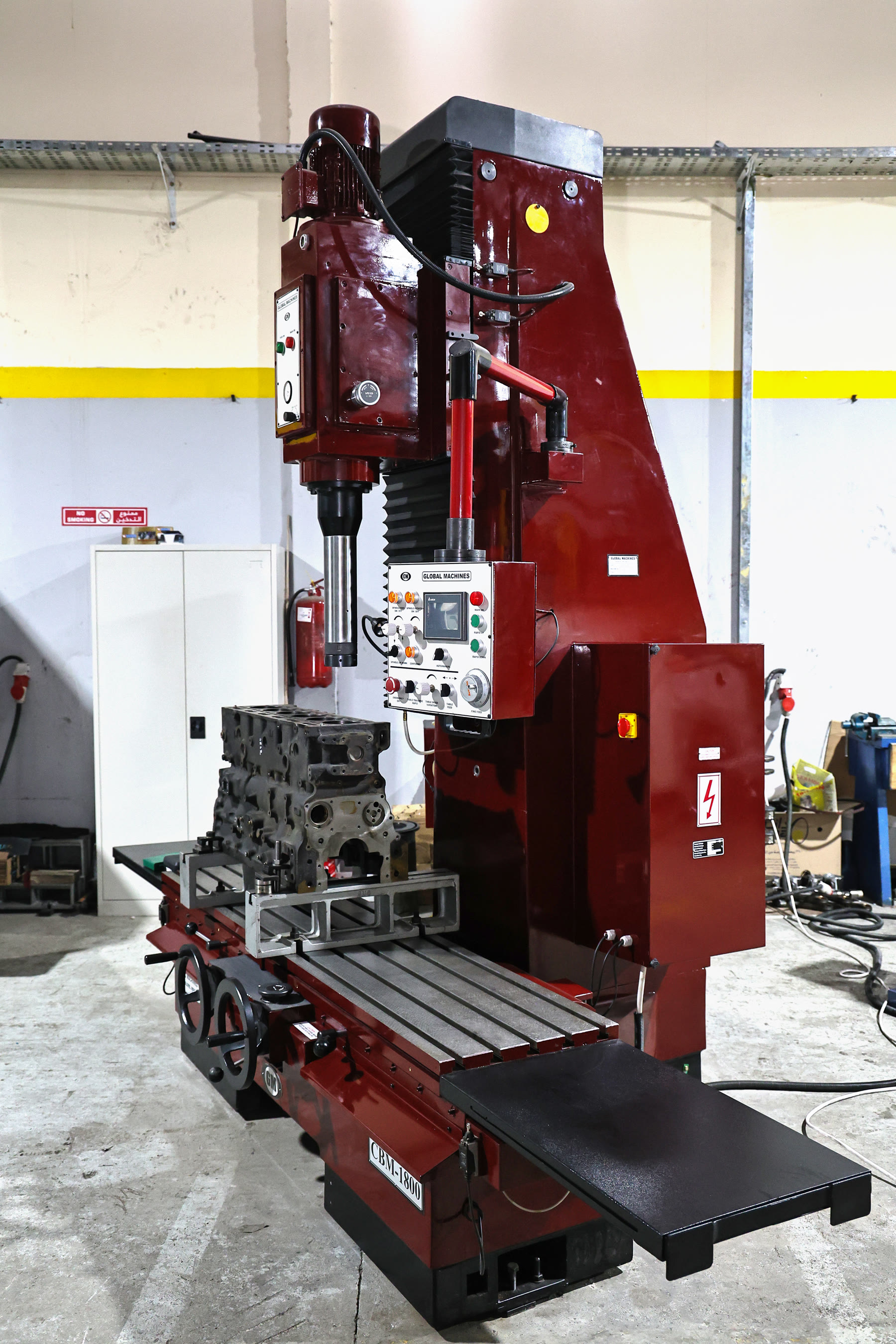
Boring, honing, pressing and testing are one job number. A relined block usually also needs its deck checked, its bores honed to the piston, and a pressure test afterwards. All of it happens here, in sequence, off one datum — see engine block machining and repair.
A liner that will not come out does not become your problem. Seized liners in old blocks are routine here. Pulling one without damaging the counterbore or the block deck is a skill and a press, not a hammer — see hydraulic press services.
Liner operations we perform
- Liner condition measurement in the block — bore diameter, wear at the ring reversal point, taper and ovality
- Liner protrusion measured as received, at each stud position
- Counterbore depth measurement before removal
- Liner removal, wet and dry, including seized liners
- Block counterbore cleaning and inspection
- Counterbore machining and re-cutting to restore a flat, square seat
- Counterbore depth correction and shimming to bring protrusion into specification
- Cavitation and erosion assessment of the block's water jacket around the liner landing
- Block bore machining for dry liners to the interference fit the liner actually requires
- Liner insert fitting to a block that has been bored beyond its last oversize — restoring a scrapped bore to standard size
- Dry liner pressing to a controlled fit
- Wet liner fitting with new O-rings and correct seal seating
- Liner protrusion set and verified at every stud position after fitting
- Bore honing after fitting, to the finish and crosshatch the engine builder specifies — see cylinder bore honing
- Final bore measurement and piston-to-bore clearance check
- Block pressure test after relining
- Written measurement report
Every line on that list is quoted after the block has been measured. Nothing is priced before.
When a block needs relining
- Wear at overhaul. Bores measured at the ring reversal point are past the service limit for diameter, taper or ovality. New rings in a worn bore will not seal, and the engine will smoke and use oil within a season.
- Scoring. A picked-up piston, a broken ring, or dirt through a failed air filter leaves vertical scores that no amount of honing will remove.
- Cavitation through a wet liner. The classic coolant-side failure: pitting on the outside of the liner from vibration in the coolant, eventually breaking through into the cylinder. If the coolant has been running without the correct inhibitor, expect it.
- A cracked liner. Usually from an overheat, a hydraulic lock, or freezing.
- Sunk counterbores. The liner flange has hammered its way into the block seat, protrusion has dropped, and the gasket will no longer be clamped. This is why a block with a repeat head gasket failure gets its protrusion measured before anything else.
- A block bored past its last oversize. A block whose bores have been taken as far as pistons are made for is not scrap — it can be bored and sleeved back to standard size, which is the cheapest version of "buy another block" there is. See engine reboring.
The process
- Measure the block as received. Bore diameter, taper and ovality at each cylinder; liner protrusion at every stud position; deck flatness; counterbore depth. These readings are what the whole job is planned from, and they are the "before" column on your report.
- Remove the liners. Pulled under controlled load so the counterbore and the block deck are not damaged on the way out. Seized liners take longer; they do not take a bigger hammer.
- Clean and inspect the block. Counterbore seats, the liner landing area, the water jacket and the deck. Cavitation damage and cracks are looked for here — a block that is cracked is found now, not after the liners are in. See crack repair by metal stitching.
- Machine the seats. Counterbores re-cut flat and square where they need it. A counterbore that is not square puts the liner in at an angle and the protrusion reading will differ around the same cylinder.
- Machine the bore for the liner. For dry liners, the block bore is machined to suit the specific liner going in, so the interference fit is what the engine maker asks for rather than what the parts happened to be.
- Fit. Dry liners pressed under controlled load; wet liners fitted with new seals, seated correctly, with the sealing faces clean and undamaged.
- Set protrusion. Measured at every stud position on every cylinder, corrected with shims where the design allows it, and recorded. Consistency across the block matters as much as the individual figure.
- Hone. Bores honed to the finish and crosshatch angle the engine builder specifies, with the piston measured so the clearance is set to the actual part rather than the nominal one.
- Pressure test. The block is tested after relining, so a coolant leak is found on the bench and not after the engine is back in the vessel.
- Final measurement and report.
Nothing is cut until you have seen the measurements and approved the scope. If the block turns out to be cracked or the counterbores need more work than the incoming readings suggested, you get a phone call before the machine is started again.
What we return to you
The block, and a measurement sheet giving bore diameter, taper and ovality before and after, liner protrusion at each stud position on every cylinder, counterbore depths, deck flatness, the pressure test result, and the piston-to-bore clearance the bores were honed to. That sheet tells the person assembling the engine what they are working with, and it is the document the next engineer to open this block will want.
Liner work is warranted. What the cover runs to depends on whether we also supplied the liners and pistons and whether we did the assembly, so it is stated in writing on your quotation.
Wet liners and dry liners — and why it changes the job
Wet liners sit in the block with coolant directly against their outer wall, sealed at the top by the counterbore landing and at the bottom by O-rings. They are replaceable without machining the block in most cases, which is why large industrial and marine engines use them. The failure modes are cavitation on the coolant side, seal failure at the bottom, and sunk counterbores at the top. The critical dimensions are protrusion and the condition of the seal landings.
Dry liners are pressed into a machined bore in the block and never touch coolant. The block bore has to be machined to give the correct interference fit; too loose and the liner moves and loses heat transfer, too tight and the liner distorts as it goes in and the bore closes up. That fit is the whole job, and it is why dry liner work belongs in a shop with the boring equipment rather than a workshop with a press.
Liner inserts into a worn-out block are a third case, and the most valuable one: a block whose bores are beyond the largest oversize piston available is bored out, sleeved, and brought back to standard size. That is a scrapped casting recovered, and it is the clearest example on this site of repairing what everyone else replaces.
Repair or replace — the block decides, in numbers
Whether a block is worth relining is measurable: how much material remains around the bores, whether the counterbore seats can be re-cut and still leave enough depth, whether the deck has been surfaced to its limit already, whether the water jacket has thinned through cavitation, and whether the main bearing bores are still in line.
We will tell you to replace the block when the water jacket is eroded through in more than one place, when a crack runs through a main web, when the counterbores cannot be re-cut without going below the depth the liner flange needs, or when the deck has already been surfaced to the point where relining would put protrusion out of reach. That verdict costs you the inspection and nothing else.
Engines we reline
Caterpillar, Cummins — including the large KTA19, KTA38, KTA50 and NTA855 blocks — Perkins, Volvo, Scania, Mercedes-Benz, Mitsubishi, Yanmar, Iveco, Wärtsilä, Niigata, Tata and Ashok Leyland, in truck, bus, generator, industrial and marine forms.
If you are unsure whether your block is one we can take, send the engine model and a photograph of the block on its stand or its pallet, and you will have a yes or a no the same working day — before you pay to move it.