
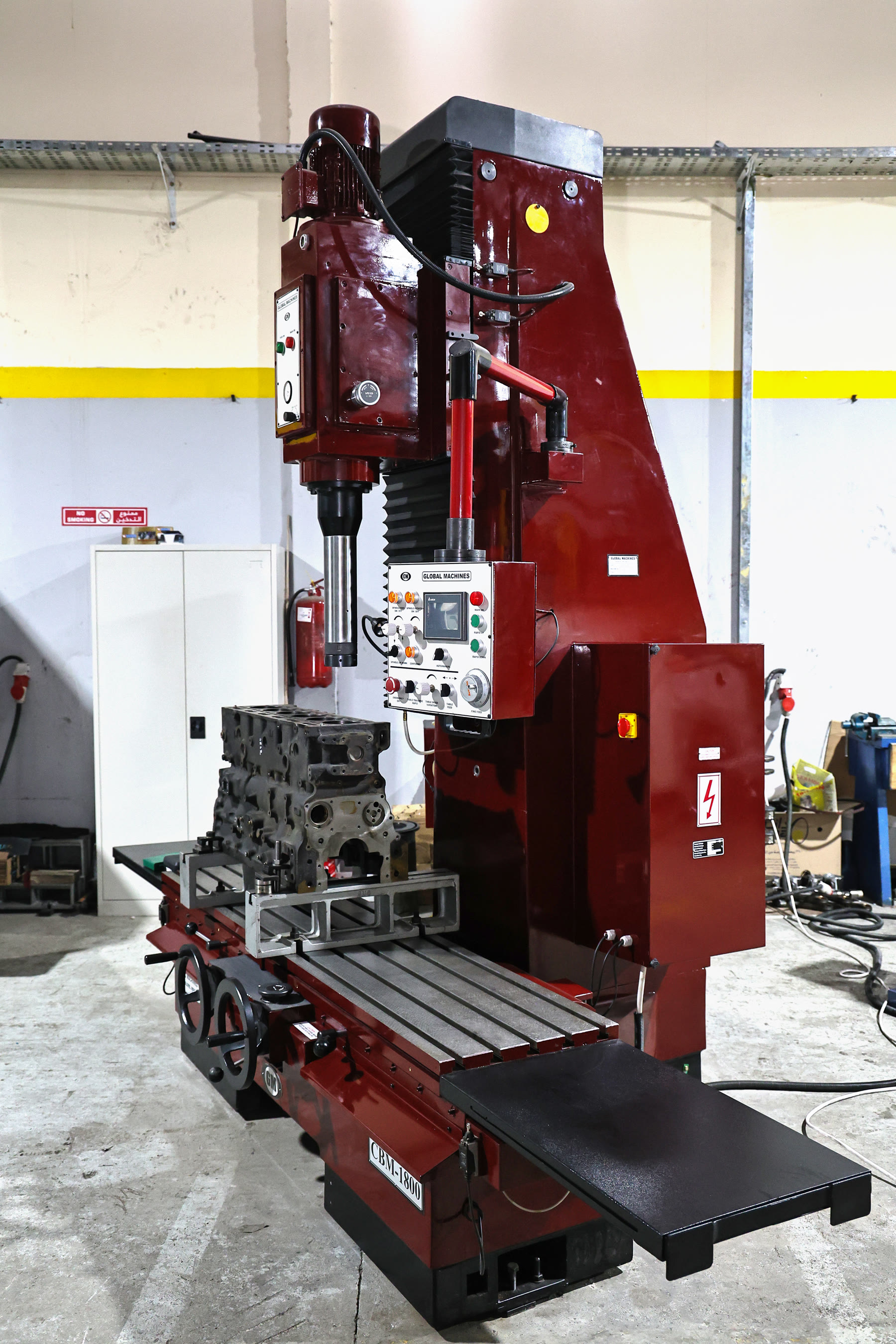
Boring makes the bore the right size. Honing makes it round, straight and correctly textured. They are not the same job, and the second one is where rebuilds are won or lost.
Why the hone should be in the same shop as the bore
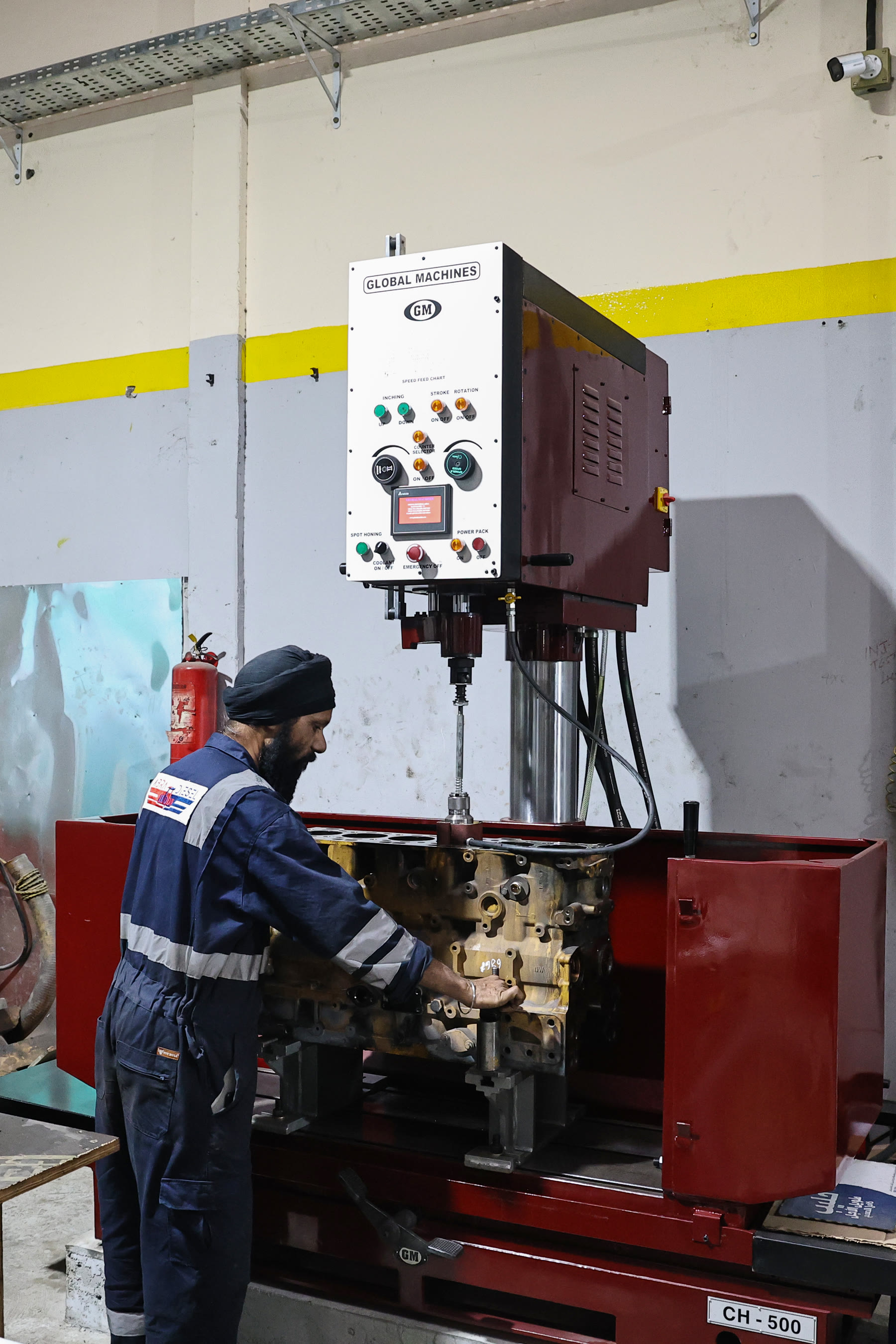
Honing is the last cut a cylinder ever receives, and it is the one most often given away to a subcontractor because a proper machine is expensive to own.
The bore is honed to the piston that is going into it. Final size comes from the actual piston plus the maker's clearance, measured on the bench here. A subcontracted hone works to a number on a docket, and a number on a docket is not a piston.
Boring and honing happen in sequence, without a journey in between. A block that is bored here goes onto the hone with its fixturing and its datum intact. Ship it out half-machined and it comes back to a shop that has to take the previous shop's word for everything.
The crosshatch is set for your engine and your rings, not for the machine's habit. Chrome, moly and cast iron rings do not want the same finish, and the engine builder's specification takes priority. That conversation only happens when the person quoting the job is the person running the hone.
Liners are honed in a fixture that holds them the way the block will. Clamp a liner badly and you hone it oval, then press it into a block and hone it again in a different oval. A shop that fits liners and hones them owns that whole problem instead of splitting it.
The clean-up is done to a rebuild standard, here, before the block goes anywhere. Honing debris left in a bore is one of the commonest causes of an engine that wears out early, and it is invisible on a block that looks finished.
Honing operations we perform
- Bore measurement before honing — diameter, taper and ovality at several depths and two axes
- Rough honing to within a few hundredths of final size
- Finish honing to size, holding the crosshatch angle
- Crosshatch angle set to the engine builder's specification
- Plateau honing — a soft final stage to knock the peaks down and leave the oil-retaining valleys
- Deglazing before a ring change
- In-block honing, with a torque plate fitted where the engine calls for it
- Loose liner honing in a holding fixture
- Marine and generator liner overhaul honing
- Removal of the polished bore band at the top of a worn liner
- Final size, roundness and taper verification over the full bore length
- Piston-to-bore clearance measurement against the actual pistons
- Hot-water and detergent bore cleaning, wiped to the white-cloth standard
- Written measurement report
No prices are published for these operations. Honing is quoted after the bores have been measured.
What honing actually does
Three things, and they are all measurable.
Geometry. The hone removes the last stock left by the boring bar and, because the stones float and follow the bore, it corrects roundness and straightness rather than reproducing the errors of the previous operation.
Crosshatch. The stones travel up and down while the bore rotates, cutting two intersecting sets of scratches. The angle between them is set by the ratio of stroke speed to rotation speed. That angle controls how oil is carried up the bore and how quickly it drains back. Ring makers commonly specify a crosshatch in the region of 22°–32° from the horizontal, uniform in both directions, and the engine builder's own figure takes precedence over any general rule. Too shallow and oil is dragged up into the chamber; too steep and the bore runs dry at the top.
Finish. Freshly honed bores are covered in sharp peaks. Those peaks wear off in the first hours of running, and where they go is into the oil and past the rings — which is why a badly finished bore shows high blow-by and high oil consumption in its first hundred hours and then never fully recovers.
Plateau honing removes those peaks deliberately, on the machine, with a soft final stage after the main cut. What is left is a flat load-carrying surface with the oil-retaining valleys still intact — the plateau structure the piston-ring literature calls for. In practical terms, the engine seats its rings almost immediately, blow-by is lower from the first start, and the bore does not spend its first service interval wearing itself in. On a generator that has to take load the day it is recommissioned, or a vessel that sails on completion, that is not a refinement. It is the difference between a rebuild that works on Monday and one that is still bedding in a month later.
When you need honing
- After reboring. Always. See engine reboring and cylinder boring.
- After fitting new liners. A liner is honed after installation, because pressing a liner into a block distorts it. See cylinder liner fitting.
- Deglazing before a ring change. Bores within size and round, but glazed, so new rings would never bed in.
- Marine and generator liner overhaul. Loose liners honed off the engine to restore the crosshatch and remove the polished bore band.
- Bore polishing at the top of the liner, the classic large-diesel symptom: oil consumption climbing, the top of the bore mirror-bright, carbon build-up on the piston crown land.
The process
- Measure the bore. Diameter, taper and ovality at several depths and two axes, before anything is done.
- Set the target. Final bore size from the piston to be fitted plus the maker's piston-to-bore clearance; crosshatch angle and finish from the engine builder's specification and the ring type.
- Fixture. In-block bores honed with the block secured and, where the engine requires it, a torque plate fitted so the bore is round under assembly load rather than only when free. Loose liners honed in a fixture that clamps them the way the block will, not in a way that squeezes them oval.
- Rough hone to within a few hundredths of final size.
- Finish hone to size, holding the crosshatch.
- Plateau stage where specified, to knock the peaks down without destroying the valleys.
- Measure again. Size, roundness, taper over the full length, and finish.
- Clean properly. Honing debris embeds in the bore surface and in the block. Bores are washed with hot water and detergent and a brush, then wiped until a clean white cloth comes out clean, then oiled. Solvent alone does not do this, and a bore that looks clean and is not will wear a ring set out in weeks.
What we return to you
A finished bore at a stated size with the crosshatch and finish recorded, plus a measurement sheet showing size, roundness and taper before and after, the finish specified and achieved, and the piston-to-bore clearance measured on your actual pistons. Honing is warranted; the terms sit in writing on your quotation and depend on whether we also supplied the rings and pistons.
Engines and liners we hone
Cummins, Caterpillar, Perkins, Volvo, Scania, Mercedes-Benz, Mitsubishi, Yanmar, Iveco, Wärtsilä, Niigata, Tata and Ashok Leyland — in-block bores and loose liners, truck through to marine main engine.
Long marine and large-genset liners are regular work here, not an exception. If you want that confirmed before you crate a set of liners, send the engine model, the liner bore and length and a photograph, and you will have an answer the same working day.
Repair or replace — measure the liner before you order a set
A worn liner is often replaced on reflex. It does not always need to be. If the liner is within its wear limit, round, and free of scoring, honing it back to a fresh crosshatch and fitting new rings restores oil control at a fraction of the cost of a liner set — and on a large marine or generator engine, a liner set is a substantial purchase with a lead time attached.
Which case you are in is four measurements: bore diameter against the wear limit, ovality, taper over the full length, and the depth of any scoring — plus a look at the water side for cavitation. Half a day's work, and it is the difference between buying a liner set and not needing to.
Where the liner is past its wear limit, cracked, cavitated through on the water side, or scored deeply enough that honing cannot clean it up without going oversize, we say replace and we show you the measurement that says so.