
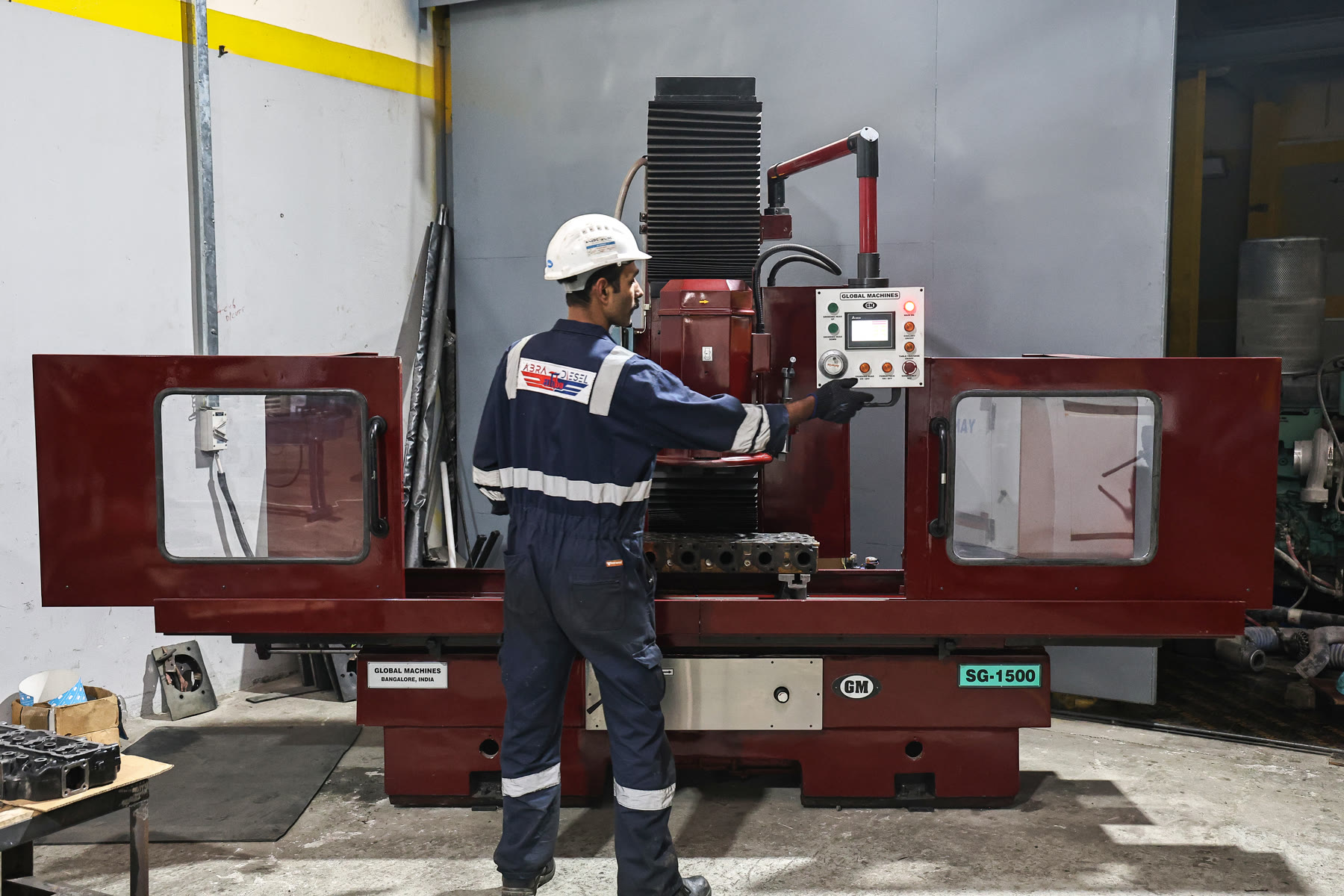
The head is where most diesel head-gasket jobs are actually lost. A head that goes back on without being tested and measured is a repeat failure with a delay built in.
Why the whole head is done here
A cylinder head recondition is not one operation. It is eight or nine, and the usual way it goes wrong is that they are spread across three suppliers who never speak to each other.
Test, machine and assemble in one building, in the right order. Pressure test before surfacing, seats cut after the guides are replaced, valve clearances set after the face has moved. Get that order wrong and the work is wasted. It only stays right when one shop owns the whole sequence.
A head that never leaves does not arrive with the valves in the wrong bag. Valves and seats mate. A stripped head shipped to another workshop and back is a head where somebody else's bench discipline decides whether your seat work survives.
The bad news arrives early, from the people who found it. A pressure test that fails is the cheapest outcome in this job, because it stops you spending money on a casting that cannot be saved. Here you get that call on day one, from the engineer holding the head.
Head and block are checked as a pair. A flat head bolted to a distorted deck fails again. Because the block deck is machined in this same shop, both faces get checked against each other rather than each being declared fine in isolation.
One lead time, not three. Sending a head out for surfacing alone typically adds a week and a second set of handling risks to a job that is already holding an engine down.
Head operations we perform
- Head stripping — valves, springs, collets, guides, bridges, injector sleeves
- Valve-by-cylinder bagging and identification
- Cleaning and degreasing to a standard that allows crack detection to work
- Magnetic particle crack detection on cast iron heads
- Dye penetrant inspection on aluminium and complex geometry
- Pressure testing with the pressure and hold time recorded
- Flatness checking with a precision straightedge, across length, width and both diagonals
- Head face resurfacing — see cylinder head surfacing
- Manifold face machining
- Valve guide measurement, replacement and reaming to stem clearance
- Valve seat cutting, concentric to the new guide
- Three-angle valve seat cutting where specified
- Valve seat insert removal and fitting
- Valve refacing and stem tip dressing
- Valve spring free length and pressure checking
- Injector tube and sleeve replacement, with injector protrusion checked
- Crack repair by stitching, where the location allows, followed by re-testing
- Reassembly and cold valve clearance setting to the engine maker's figures
- Full written inspection report
No prices are published for any of it. The scope is not knowable before the head has been tested, so neither is the price.
When a head comes to us
- Head gasket failure, especially a repeat one. The gasket is a symptom; flatness, finish and clamping load are the causes.
- Coolant in the oil, oil in the coolant, or combustion gas in the coolant. A pressure test finds the path.
- Overheating. Aluminium and cast iron both distort, and cast iron cracks between valve seats and around injector bores.
- White smoke, hard starting or a cylinder down on compression with valves suspected.
- Injector sleeve leakage — fuel in the coolant, or coolant into the cylinder past a corroded sleeve.
- Scheduled overhaul. Heads come off, get tested, and go back proven rather than hoped for.
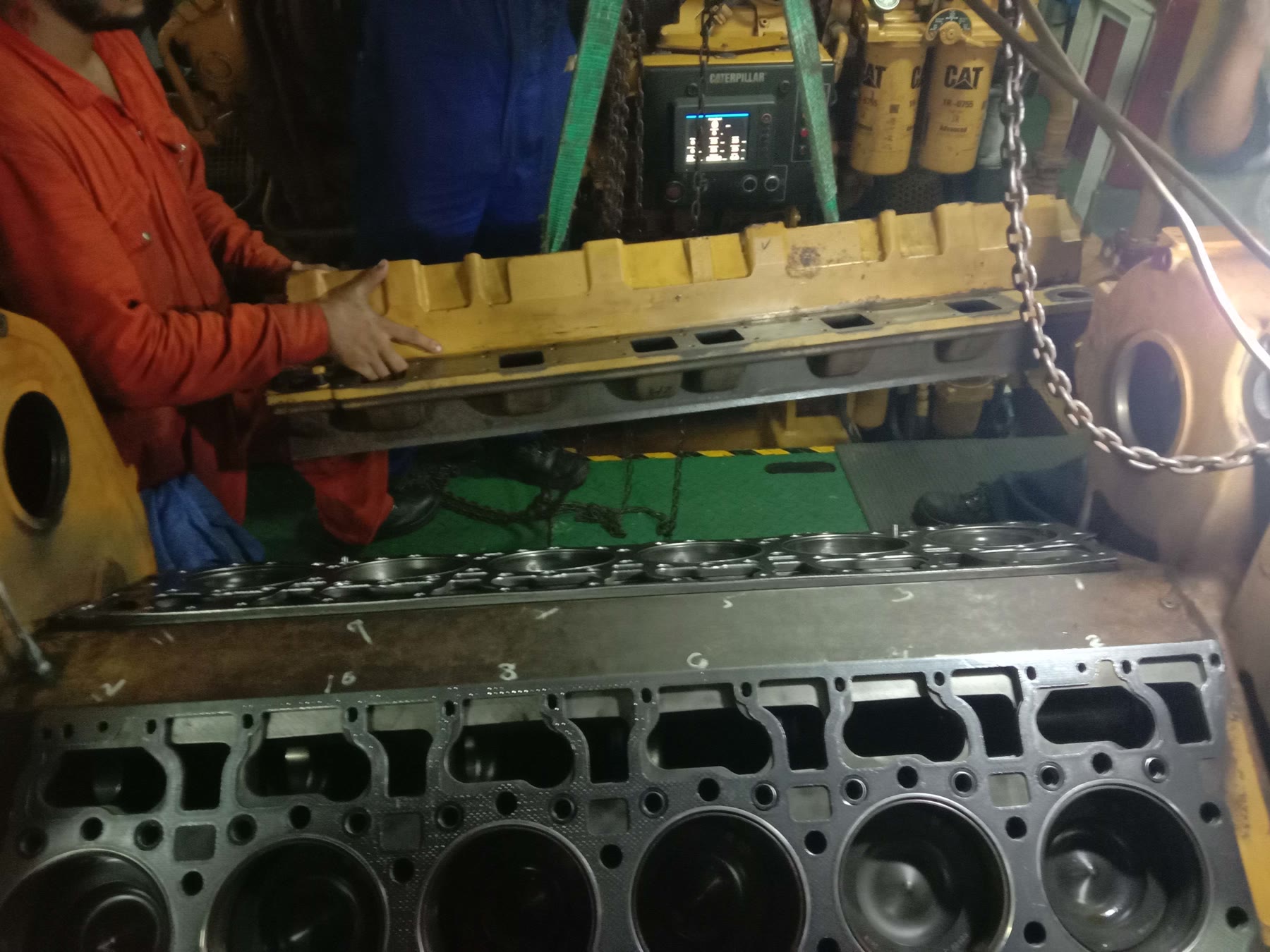
The workflow, step by step
1. Strip. Valves, springs, collets, guides, bridges and injector sleeves out. Every valve is bagged by cylinder — valves and seats mate, and a valve returned to the wrong seat undoes the seat work.
2. Clean. The head is cleaned back to bare metal in the combustion faces, the ports and the water jacket. This is not cosmetic: crack detection on a dirty head finds nothing, and a pressure test on a jacket full of scale can hide the very leak you are looking for.
3. Crack detection. Magnetic particle inspection for cast iron heads: cracks between valve seats and around injector bores are the common ones on diesel heads, and MPI shows them at the surface and just below it. Dye penetrant is used on aluminium and where geometry does not suit magnetising.
4. Pressure test. The head is sealed, pressurised and held, and the water jacket watched for leaks that a visual inspection will never show. This is the test that decides whether spending money on the head is worth it. The pressure used and the hold time go on your report. Detail on cylinder head pressure testing and crack detection.
5. Flatness check and surfacing. The face is checked with a straightedge and feelers across length, width and both diagonals, then machined only as much as it needs. Full detail on cylinder head surfacing and resurfacing, including why MLS and composite gaskets need different finishes and how much material a head can lose before it is finished.
6. Valve seats and guides. Guides are measured for stem clearance and replaced or reamed; seats are then cut concentric to the new guide, because a seat cut to a worn guide will never seal. Seat width and concentricity are measured, and the valves are refaced or renewed. See valve seat grinding and valve refacing.
7. Injector tubes and sleeves. Corroded or leaking sleeves are drawn and new ones fitted and sealed, then the injector protrusion is checked against the engine maker's figure. Protrusion matters: an injector sitting proud or deep changes the spray pattern in the chamber and shows up later as smoke nobody can explain.
8. Reassembly and valve setting. Springs are checked for free length and pressure and replaced where they have relaxed, the head is reassembled, and valve clearances are set cold to the engine maker's figures.
9. Final report. Every measurement taken, before and after.
You approve the scope after step 4, with the test result in front of you. Nothing else is machined before that.
What we return to you
A complete, tested head, plus a report giving: crack test result, pressure test pressure and hold time and the outcome, flatness before and after with the amount of material removed, seat width and concentricity per cylinder, valve stem-to-guide clearances, and the valve clearances set. The material-removed figure matters beyond this job — it is what tells the next engineer whether the head can be surfaced again in five years, and most heads arrive here without it because nobody wrote it down.
Reconditioned heads are warranted. The cover depends on the scope and on whether we supplied the parts and fitted the head, and it is confirmed in writing with your quotation.
Heads we recondition
Main engine, auxiliary engine, generator, marine and boat, truck and bus heads, in cast iron and aluminium. Brand coverage runs across Caterpillar, Cummins, Perkins, Volvo, Scania, Mercedes-Benz, Mitsubishi, Yanmar, Iveco, Wärtsilä, Niigata, Tata and Ashok Leyland.
Large marine and industrial heads are routine work here, not an exception we make. If you want certainty before arranging transport, send the engine model and a photograph of the head with something in frame for scale, and you will have an answer the same working day.
Repair or replace — the pressure test decides
A new head for a common truck or generator engine is often cheap enough that reconditioning has to be justified. For a large industrial or marine head it is the opposite: the casting is expensive, frequently not stocked in the region, and on a lead time that idles the engine.
Which case you are in is a measurement, not a judgement. Crack location and depth, whether the jacket holds pressure and for how long, how much material the face has already lost, seat insert and counterbore condition, and the wall thickness left where corrosion has been working. Those readings are taken in a day, and they settle a decision people otherwise make on instinct and regret.
We will recommend replacement when:
- the head is cracked into a water jacket or a combustion chamber in a way that cannot be reliably repaired and re-tested;
- it has already been surfaced to its limit, so removing more material would drop valve depth, injector protrusion or the cam and rocker geometry out of specification;
- seat inserts are loose or the counterbores are eroded beyond what can be re-cut;
- corrosion in the water jacket has thinned the casting.
The inspection fee is what that verdict costs you, and it is the cheapest money in the job.