
Abra Diesel Machine Repairing LLC works on marine and industrial diesel engines from behind Yerevan Steel Factory, Industrial Area 15, Sharjah. Established 2011, with over 25 years of experience. If you are choosing a supplier rather than booking a repair, marine and shipping is the page for that.
Vessel types and engines
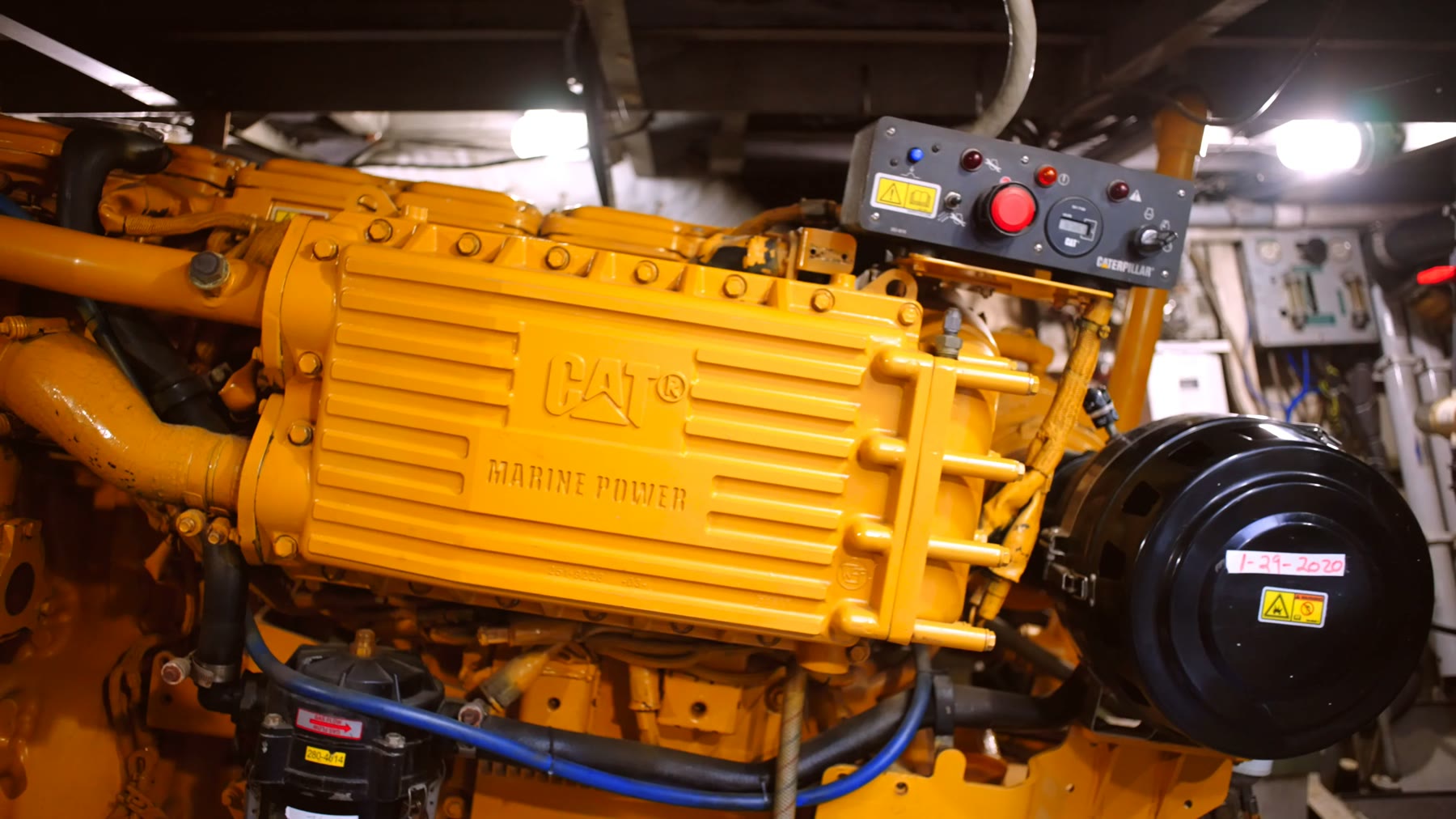
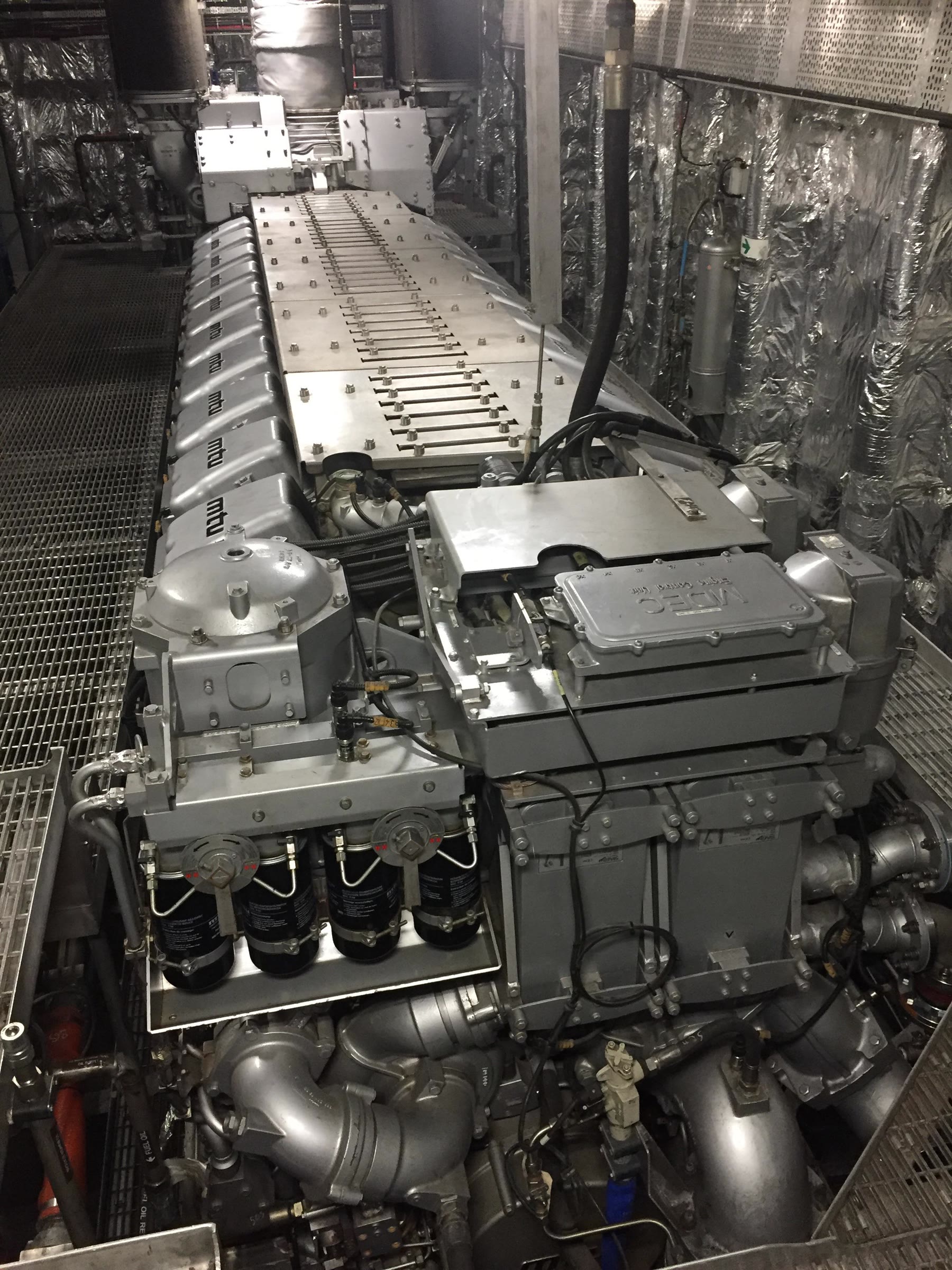
We work on main engines in tugs, barges, landing craft, supply and crew boats, fishing vessels, dhows, workboats and yachts. Makes with real depth here are Caterpillar, Cummins, MAN, Perkins, MTU, Volvo Penta marine and industrial engines, Yanmar engines, Mercedes and Wärtsilä.
Practically everything within reason is taken on, and large scopes are accepted with subcontract support where it makes sense. Send the engine model and the nameplate photograph with your enquiry and you will get a straight yes or no before anything is landed.
Where main engine work happens
Onboard, engine running out of the vessel's own schedule. Unit-by-unit top overhauls, injector and pump renewal, turbo removal and refit, cooler cleaning, valve and timing work. Most medium-speed marine engines are built to be worked one unit at a time, which is exactly what makes them repairable in place. See on-site and in-situ repair.
Alongside or at a yard. Larger scopes where components are landed ashore, machined in Sharjah and returned. This is the shape of most major main engine jobs we do: strip onboard, machine in the workshop, rebuild onboard.
In the workshop. Every machining operation, and complete engines where landing one is practical. The relevant point for a vessel operator is proximity: the machine shop is close to Sharjah's own berths and a short run from Dubai's marine areas, so a landed component is on a machine the same day rather than in a crate.
Main engine scope of work
Top overhaul (in situ). Heads lifted unit by unit, valves and seats reconditioned, valve guides checked, injectors changed for calibrated units, head gasket and stud condition assessed, clearances and injection timing reset, engine run and exhaust temperatures balanced across units.
Piston, ring and liner renewal. Pistons drawn, ring grooves measured, liners measured for wear, taper and ovality at multiple heights, liner landing and sealing faces checked, new rings and liners fitted where wear justifies it.
Bottom end. Main and big-end bearing renewal, crankshaft journal measurement for diameter, ovality and taper, crankshaft deflection readings taken through a full turn on engines where the manufacturer specifies them, crankshaft ground undersize on our own machine where recoverable, main bearing bore alignment checked and line bored where required. All machining detail lives in the machine shop section.
Fuel injection. Injectors and injection pumps stripped, tested and calibrated on our benches. We calibrate marine heavy-duty injectors and unit injectors as well as industrial units — see fuel systems and calibration.
Turbocharging and air. Turbocharger stripped, cleaned, inspected, rebuilt and balanced, plus charge air cooler cleaning and pressure testing. See turbocharger repair.
Cooling. Heat exchangers, oil coolers, aftercoolers and intercoolers cleaned, re-tubed where possible and pressure tested — the seawater side is where most of the trouble in this market lives. See cooling system and heat exchanger repair.
Gearbox and driveline. Engine-side work, couplings and the machining that driveline components need — shafts, flanges and bearing housings come into the machine shop as components. Tell us what the gearbox itself requires when you enquire and we will say plainly whether it is our job or a specialist's.
Auxiliary engines and onboard gensets are covered separately on auxiliary and onboard genset engine repair.
What a main engine job looks like in practice
The decision to overhaul a main engine is usually driven by one of three things: crankcase pressure and oil consumption climbing together, exhaust temperature deviation between units that will not tune out, or a running-hours figure the operator does not want to gamble past on the next voyage.
Diagnosis before dismantling matters more at sea than anywhere else, because there is no second attempt once the vessel sails. Compression readings, crankcase pressure, exhaust temperature survey across units, oil analysis and a crankshaft deflection set will normally scope the job before a single head comes off. That scoping is what stops a two-week job becoming a six-week job.
And the repair-or-replace decision is a measurement. Whether a main engine crankshaft can be ground rather than replaced turns on ovality, hardness, bend and crack depth, and on how much material is left above the manufacturer's bottom undersize. Whether a liner can stay in turns on wear, taper and ovality at height. Land the component, or let us take the readings onboard where the engine allows it, and the decision stops being a negotiation. A replacement main engine crankshaft is an import with a lead time attached; the measurement that tells you whether you need one takes hours.
How a main engine job is recorded
Every job is written up in the same form, and it is the form the job records we publish take: Customer (named with permission, otherwise described — a fifteen-year-old harbour tug, a coastal cargo vessel) · Location — onboard, alongside, at the yard, or in the Sharjah workshop · Equipment — engine make, model, rating and age · Problem in the chief engineer's words · Repair · Scope of work · Downtime · Result, with the measurements that produced each decision.
The measurements are what make such a record worth reading: journal diameters before and after, hardness where heat damage was involved, deflection readings, the undersize ground to, and the crack-test method used to confirm it. A superintendent can check a record like that. He cannot check an adjective.
Class and documentation
Marine work is bought on paperwork as much as on workmanship, and a job here leaves a written record behind: what was measured, against which limits, what was machined and to what size, which spares were used, and what the engine was run and tested to. Ask for the documentation format when you enquire and it can be agreed before the job starts rather than argued about after it.