
Established 2011, with over 25 years of experience. We work on heavy-duty diesel only.
Why auxiliaries wear differently from main engines
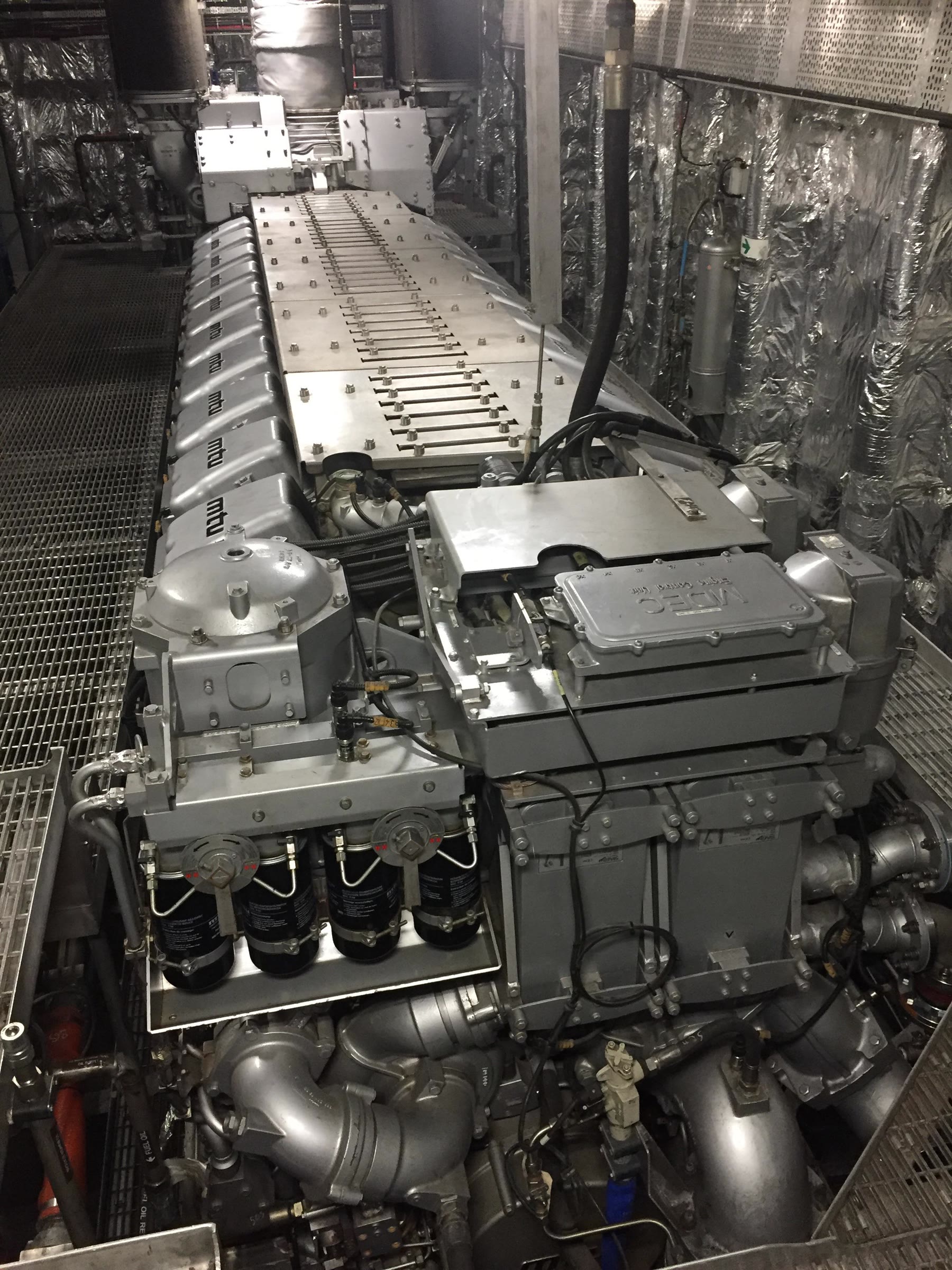
An auxiliary is not a small main engine, and treating it like one is how they get killed early.
They run at constant speed under a variable and often light load. A generator engine held at synchronous speed on a fraction of its rated load runs cool, and a cool diesel does not burn cleanly. The result is glazed liners, sticking rings, carbon on valve seats, fouled turbine and nozzle rings, and wet exhaust manifolds. The engine then loses the ability to take load, which is discovered at the worst moment.
They run far more hours than anyone plans for. Harbour generators, cargo pump drives and hotel-load sets accumulate running hours quietly. Two auxiliaries on a routine alternating regime will reach a top overhaul interval long before the main engine does.
They start and stop constantly. Every start is the worst moment in a bearing's life, and an engine that starts and stops several times a day suffers wear that an engine on a steady run does not.
They are the last thing on a maintenance plan. Main engine work gets scheduled. Auxiliaries get run until one fails and the other becomes critical.
Symptoms that bring an auxiliary to us
- The set will not take load, or trips on overload well below its rating
- Exhaust temperature deviation between cylinders on the pyrometers
- Black smoke on load pick-up that will not clear
- Blow-by from the crankcase breather, oil misting in the engine room
- Rising jacket water temperature with a clean expansion tank and a good pump
- Hard starting, or starting only on the second or third attempt
- Falling lube oil pressure at running speed
- Water in the oil, or oil in the jacket water — a cracked head, a failed liner seal or a leaking oil cooler
- The set runs, but the vessel will not hold class because the standby unit is not fit to be run
What we do on an auxiliary engine
Top overhaul in service. Heads off, valves and seats reconditioned, injectors tested and calibrated, liners inspected, rings and gaskets renewed, clearances and timing reset. On most auxiliaries this is done in place, unit by unit, so the vessel keeps one generator available while the other is opened.
Major overhaul. The engine taken down to the block — crankshaft measured and ground where required, liners renewed or bored and honed, main bearing bores line bored where alignment has gone, connecting rods checked for bend, twist and big-end stretch. This is where the machine shop does the deciding work rather than a parts order.
Fuel system. Injectors, injection pumps and governors stripped, tested and calibrated on our own benches, so a smoke complaint is settled by a bench result rather than by argument. See fuel systems and calibration.
Turbocharger. Strip, clean, rebuild and balance, with the failure cause stated rather than guessed — see turbocharger repair.
Cooling. Jacket water coolers, lube oil coolers, charge air coolers and seawater-side corrosion, cleaned and pressure tested. Seawater cooling is the fastest-degrading part of any auxiliary in Gulf water temperatures — see cooling system and heat exchanger repair.
Landed component work. You strip onboard, we machine and return. This is the shape a great many auxiliary jobs take, and it is the cheapest one for the owner because nobody pays for an engineer to stand on a machine's queue.
The alternator, the switchboard, the AVR and the load side of an onboard set sit with generator repair — and, where the set is on a vessel, with marine and boat generator repair — rather than here. This page is the engine.
Onboard, alongside, or landed at the workshop
The decision is not about preference, it is about what the work needs.
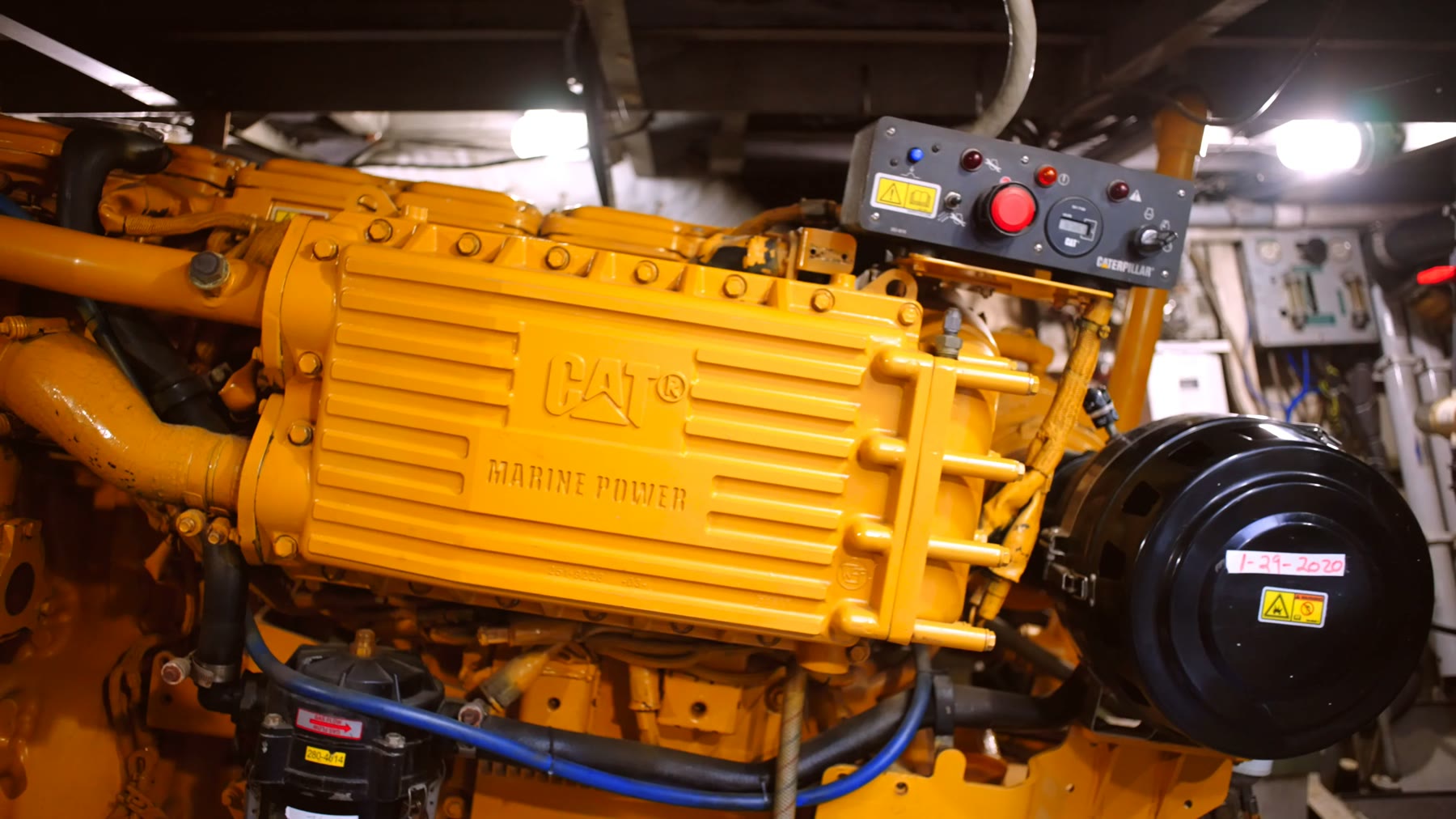
Onboard or alongside — diagnosis, top overhauls, injector and pump changes, turbo removal and refit, cooler cleaning, governor work, running and load checks. The vessel does not move and the engine does not come out. Scope is on on-site and in-situ repair.
Landed at Sharjah — anything that has to go on a machine. Crankshaft grinding, liner boring and honing, head surfacing, connecting rod reboring, line boring. The workshop is close to Sharjah's own berths, close to Hamriyah, and about half an hour from the Dubai marine areas, so a component landed in the morning can be on a machine the same day.
A complete auxiliary lifted out where the vessel's layout allows it and the scope justifies it. Less common than people expect — on most jobs the component travels and the engine stays.
Two auxiliaries, one window — how these jobs are planned
The practical constraint on almost every auxiliary job is that the vessel needs a generator running while you work on the other one. That shapes the plan more than the mechanical work does:
- Work is sequenced unit by unit so a set is always available
- Measurements are taken on the first unit before the second is opened, because what the first one shows usually predicts the second
- Parts and machined components are staged before the second unit comes down, so the vessel is never waiting on a queue with both sets open
- Where both units are at the end of their life, the honest advice is a phased plan across two port calls rather than one heroic week
Tell us the vessel's schedule at enquiry stage and the job is planned against it rather than against workshop convenience.
What you get back
- The engine or component rebuilt, with clearances, torque figures and timing recorded on build
- A measurement record: what was found, what was machined, and the manufacturer's limits alongside each reading
- A parts list stating which items are genuine and which are quality aftermarket
- A running record where the unit was run and load-checked before hand-over
- A written warranty position on the quotation and invoice, stated for your job rather than as a slogan
Have the component measured before you buy a replacement
An auxiliary crankshaft or a set of liners is a slow, expensive order into this region, and the decision to place it is usually taken on someone's opinion. It does not have to be. Whether a crankshaft can be ground rather than replaced turns on ovality, hardness, bend and crack depth, and on how much material remains above the manufacturer's bottom permitted undersize. A liner turns on wear, taper and ovality. A head turns on flatness, seat recession and cracks.
Those are readings. Land the component here and you get them with the limits beside them, and only then a scope. If the part is past recovery you will be told that too, which is a cheaper answer to receive before an order than after a rebuild.