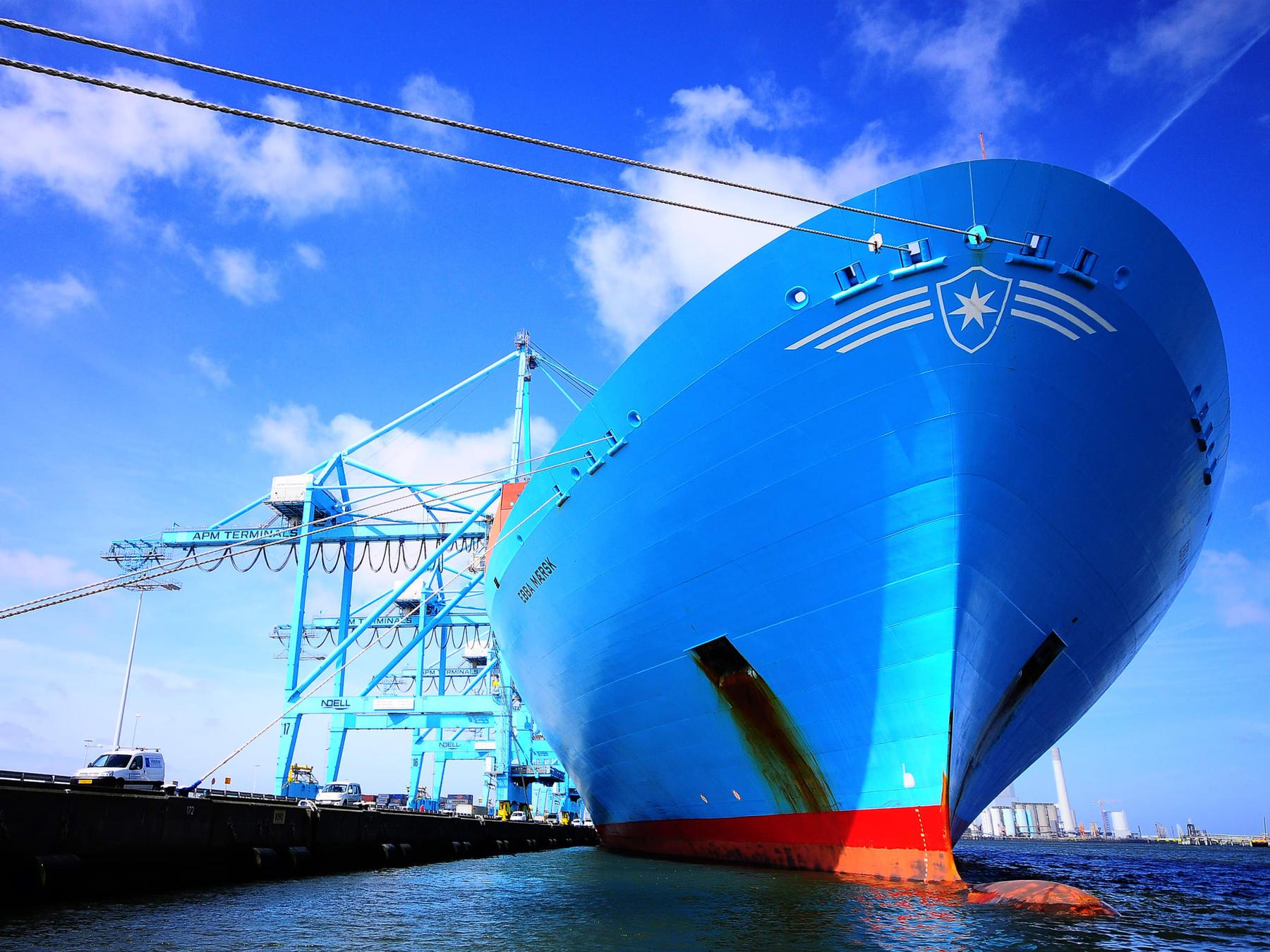
Vessels working from UAE ports
Marine and boat generator repair
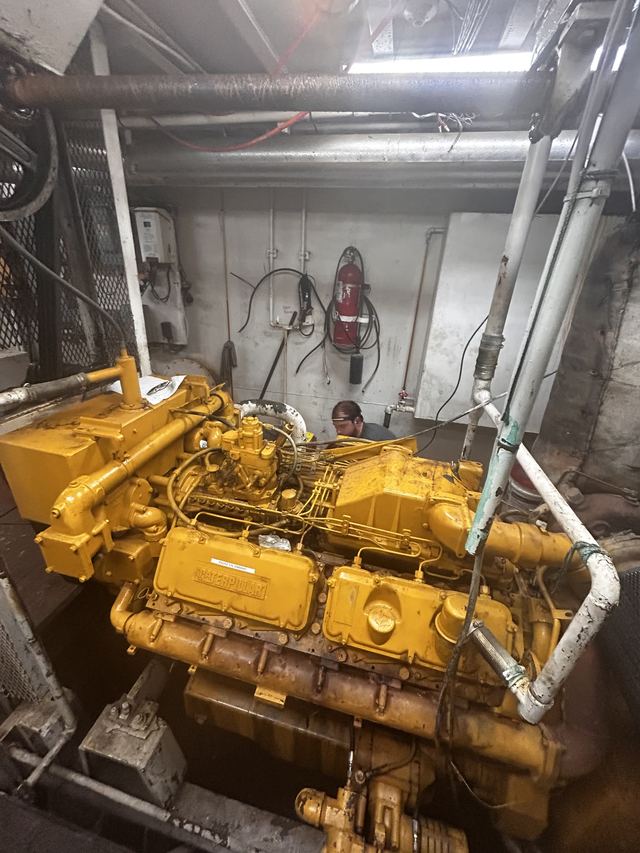
A generator on a vessel is not a standby set that happens to be afloat. It is cooled by sea water, lives in salt-laden air, runs at an angle — and on most vessels it is the machine keeping the lights, the pumps and the refrigeration alive.
We hold no dealership with any manufacturer
No dealership, no service appointment and no manufacturer accreditation — the makes named on this page identify equipment we service, nothing more. Parts are sourced through whichever channel suits the job and the application, and the quotation says which is which. On an out-of-warranty auxiliary set that independence is the useful position: a dealer's incentive is to supply the part, ours is to measure whether you need one.
We work on marine auxiliary sets, harbour gensets, workboat and tug auxiliaries, dhow and fishing vessel sets, and yacht gensets, from the workshop behind Yerevan Steel Factory in Industrial Area 15, Sharjah. Established 2011, over 25 years of experience, ISO 9001:2015 certified. Main engine work is covered on marine main engine repair, and the wider sector picture on marine and shipping.
Why it is a different machine
What is different about a marine genset
It is heat-exchanger or keel cooled, not radiator cooled — and that alone gives it four failure points a land set does not have.
Raw water instead of a fan
A pump draws sea water through a strainer, pushes it through the shell of a heat exchanger and overboard, often through a wet exhaust. Sea cock and strainer, impeller, tube stack, wet exhaust and water-lift muffler are all new places to fail.
The impeller is a consumable
And the commonest single cause of a marine genset shutting down on temperature. Run dry for a minute, a rubber impeller loses vanes; the vanes travel downstream and block the heat exchanger tubes, and now there are two jobs instead of one. Finding the missing vanes is part of the repair, not an optional extra.
The tube stack scales and corrodes
Sea water leaves deposits inside the tubes and growth at the inlet. A stack at half flow keeps the set running until the day it is asked for full load. Cleaning, pressure testing and re-tubing are ordinary marine work — and the pencil anode nobody changed is what was protecting it.
Salt gets everywhere
Terminal boxes, alternator windings, control panels, exhaust lagging and fasteners all age faster here. Insulation resistance on a marine alternator is a routine reading, not an exceptional one, because salt-laden damp air is exactly what degrades winding insulation and tracks across terminals.
Many marine gensets cannot be lifted out without cutting, so the job is planned around what can be done in the space available and what has to come ashore. That decision is worth making at enquiry stage rather than halfway through a strip.
Two lists
What we are called to, and what we do about it
Cooling and raw water
- Overheating and high-temperature shutdown — impeller, strainer, sea cock, heat exchanger, thermostat
- No raw water at the exhaust outlet, or steam rather than water
- Exhaust elbow and mixer corrosion, and water carrying back towards the engine
Electrical and output
- Loss of output, unstable voltage, or an alternator failing insulation resistance after prolonged damp lay-up
- Salt corrosion in the terminal box, on the AVR and at the panel
- Batteries and charging faults after a long period alongside
Fuel and engine
- Fuel contamination and water in the tank — a bigger problem afloat than ashore
- Injector and injection pump wear, black smoke, loss of power under load
- Blow-by, oil consumption and low oil pressure on high-hour auxiliary sets
- Vibration, exhaust and mount failures
On board or alongside, we do
- Fault diagnosis and servicing
- Impeller and raw water pump work, heat exchanger cleaning and pressure testing
- Thermostat and hose renewal, injector changes, sensor and solenoid work
- AVR replacement, control and alarm faults, battery and charging work
- Running and load checks where the vessel's own load allows
Back to the Sharjah workshop
What cannot be done in a machinery space
Alternator stripping, drying, varnishing and rewinding. Engine overhaul with the crankshaft, block and head machined in house. Cylinder head crack testing, pressure testing and surfacing. And marine fuel pump and injector calibration on the bench.
What it changes for you. That split is why both halves of the business exist. A firm with only a service van has to condemn an alternator or a crankshaft; a firm with only a workshop cannot get to a vessel that is sailing on Thursday.
Where we work
Vessels reach us from across the coast
Industrial Area 15 is a short run to the Sharjah ports and a routine one to Dubai.
Tell us which of those three shapes you are planning and when the vessel moves, and the removal, the workshop work and the refit are planned around the date rather than against it.
Equipment
Marine and auxiliary sets we work on
Small and mid-size marine gensets in this region are most often Kohler, Onan, Yanmar, Volvo Penta, Perkins, Cummins, Kubota and Mitsubishi; larger auxiliaries run to Caterpillar, MAN, MTU, Deutz and Wärtsilä. Alternators are dominated by Stamford, with Leroy Somer, Mecc Alte, Marathon and OEM badge-engineered machines alongside.
Two of those have their own pages, because the queries and the faults are brand-shaped.
Paperwork
Machinery on a vessel carries a paper trail
The report is part of the job rather than a courtesy.
What was found and done
A written record of what was found, what was measured, what was replaced and what was tested — produced at the time rather than reconstructed later.
The readings themselves
Insulation resistance on an alternator, pressure test results on a heat exchanger, injection equipment test figures, and running readings.
For the people who ask later
An owner, a superintendent or a surveyor will ask for it, and it is easier to hand over than to rebuild from memory.
Class and survey requirements
Where a job has to satisfy one, tell us at enquiry stage so the scope and the records are agreed against that requirement rather than discovered afterwards.
The decision
Repair or replace a marine genset
Replacing a set on a working vessel is rarely a like-for-like swap
The existing set has a foundation, a sea water route, an exhaust run, a fuel line and a switchboard connection that all already fit and already work. A replacement of a different frame size means new mounts, new pipework and a yard period — and that changes the arithmetic. A marine alternator with a burnt stator is a rewind. A tube stack at end of life is a re-tube. A high-hour auxiliary engine with worn bores and journals is an overhaul if the crankshaft and block clean up within limits — and whether they do is a measurement we can take, not an opinion anyone needs to offer. If the figures say the set is finished, we will tell you that too. It is a shorter conversation than the one that follows a rebuild that was never going to work.
Common questions
Marine gensets, answered
Can you attend a vessel alongside in a UAE port?
Yes. Engineers attend vessels in the Sharjah and Dubai ports and along the northern emirates coast. Give us the berth, the access arrangement, the set details and your sailing date on the call so the visit is planned rather than improvised.
My marine generator overheats after a few minutes. What is it likely to be?
Raw water flow, in this order: sea cock and strainer, impeller, heat exchanger tube stack, thermostat. If the impeller has shed vanes, the vanes have to be found and removed from the heat exchanger or the fault returns within days.
Can you rewind a marine alternator that has been sitting damp?
Often the winding can be dried, cleaned and re-varnished rather than rewound, and insulation resistance testing before and after is what decides it. Where the winding is genuinely burnt or has failed the test after drying, it is rewound in our own winding bay — see alternator repair and rewinding.
Do you service Kohler and Onan marine sets?
Yes, as an independent workshop. We hold no dealership or service appointment with either manufacturer, and we say so plainly rather than leaving it to be assumed.
Can the work be done during a docking?
That is usually the best way to plan it. Give us the yard period dates and the scope at enquiry stage and the sequence — removal, workshop work, return, refit and test — is built around the dates rather than against them.
Talk to us before the vessel sails
Tell us the vessel, the berth or yard, the genset make and model, running hours and the fault. Photographs of the data plate, the alarm screen and the raw water side are worth a long description. Open 7 days, 07:00–20:00.