
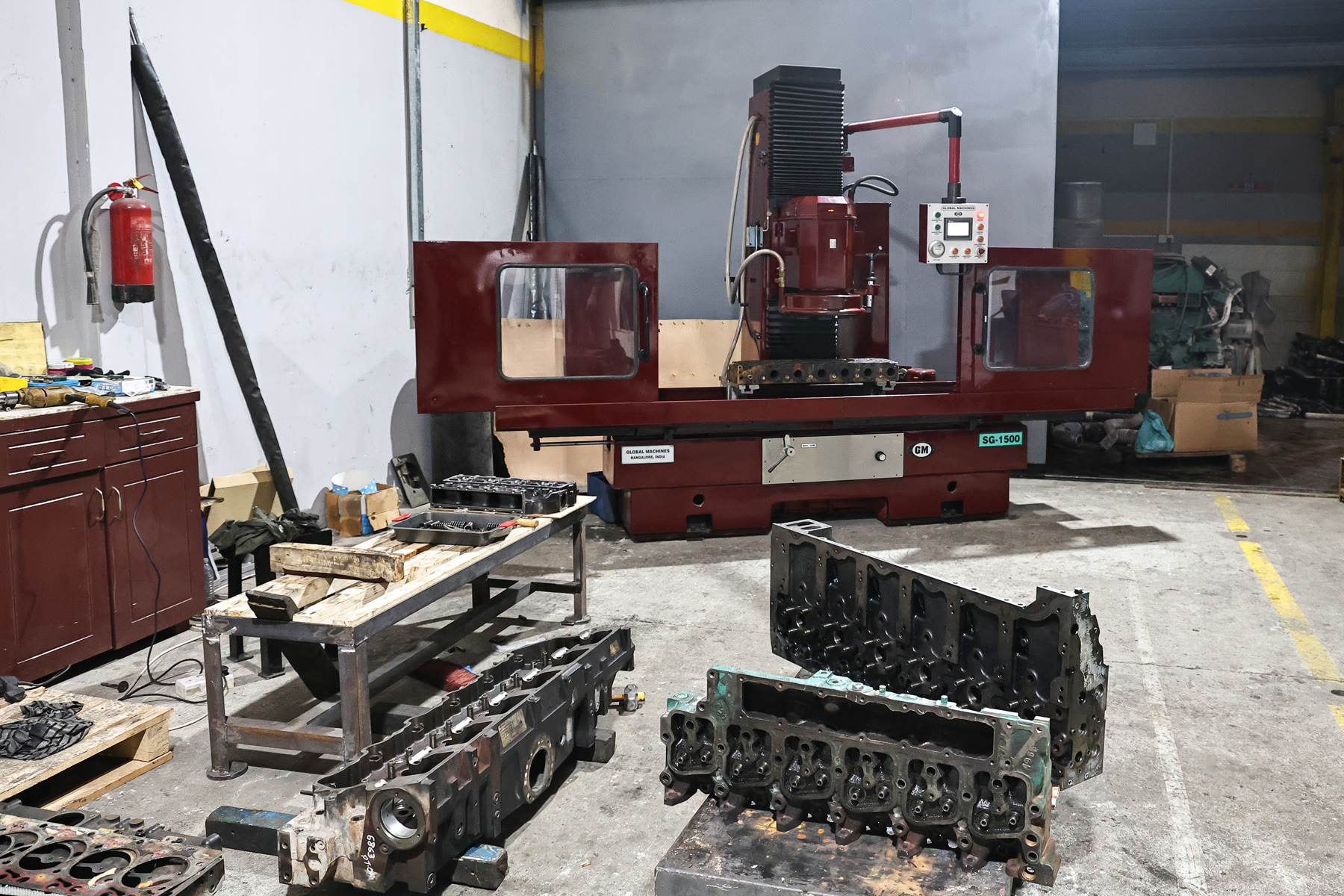
This is the page for an engine that is already apart and a set of pistons somebody has told you to replace. Established 2011, over 25 years of experience.
What actually wears on a diesel piston
A piston is not one component with one wear pattern. It is four separate wearing features that fail independently, and knowing which one has gone is the whole of the repair-or-replace decision.
The ring grooves. The top groove takes the firing pressure and the heat, and the ring hammers against its lower face for the whole life of the engine. The groove widens and, because the wear is uneven, it goes out of parallel — the classic bell-mouthed or stepped groove. Once the side clearance between ring and groove opens up, the ring can no longer seal or transfer heat. It flutters, it pumps oil, blow-by rises, and the engine smokes and loses compression while the bore and the rings themselves may be perfectly serviceable. Groove wear is the most common reason a good piston is thrown away.
The skirt. The skirt carries the side thrust and rides on the oil film. It scuffs when the film fails — overheating, a lubrication interruption, a seizure, or coolant in the oil. Light scuffing polishes out. Heavy scuffing has picked up material and torn the surface, and it usually means the piston has also lost its shape.
The gudgeon pin bore. The pin bore in the piston, and the small-end bush in the rod, wear oval and open up. The result is a light knock at idle and on the overrun that people often chase around the valve gear for weeks.
The crown and the ring land above the top ring. The crown erodes from a leaking or badly sprayed injector, from detonation, or from an overheat. The top land cracks when the piston has been overloaded. Crown damage is where pistons genuinely become scrap, and the honest answer here is short.
What piston work in house changes
The piston is measured against the bore it is going back into, not against a book figure. Piston-to-bore clearance is the number that decides whether the engine runs quietly or picks up. That means measuring the liner or bore after it has been honed and measuring the piston at the correct point on the skirt, on the same day, on the same instruments. When the bore work and the piston work are in two different companies, that comparison never actually gets made — each side works to its own figure and the clearance is whatever it turns out to be. See cylinder bore honing and engine reboring.
The set is matched to itself. Pistons in an engine should be within a small weight spread of each other, and once metal has been machined off some of them and not others, that spread changes. A set worked here is weighed and brought back together, so the balance of the rotating and reciprocating assembly is not quietly ruined by the repair.
Rod, pin and piston are assessed as one joint. A worn pin bore in the piston is meaningless on its own — the clearance that matters is across the pin, the piston bore and the small-end bush together. All three are measured here, and the rod work happens in the same building. See connecting rod boring and resizing.
Reconditioning beats waiting for a piston that is not in the country. For a common road engine, new pistons are on a shelf and reconditioning is often not the right advice. For a generator, industrial or marine engine, the piston is a factory order with weeks against it, and the engine earns nothing while it waits. That is where this work is worth the most.
You are told when the piston is scrap. There is a clear list further down this page. Being told costs you the inspection.
Piston operations we perform
- Incoming inspection and full measurement of the set
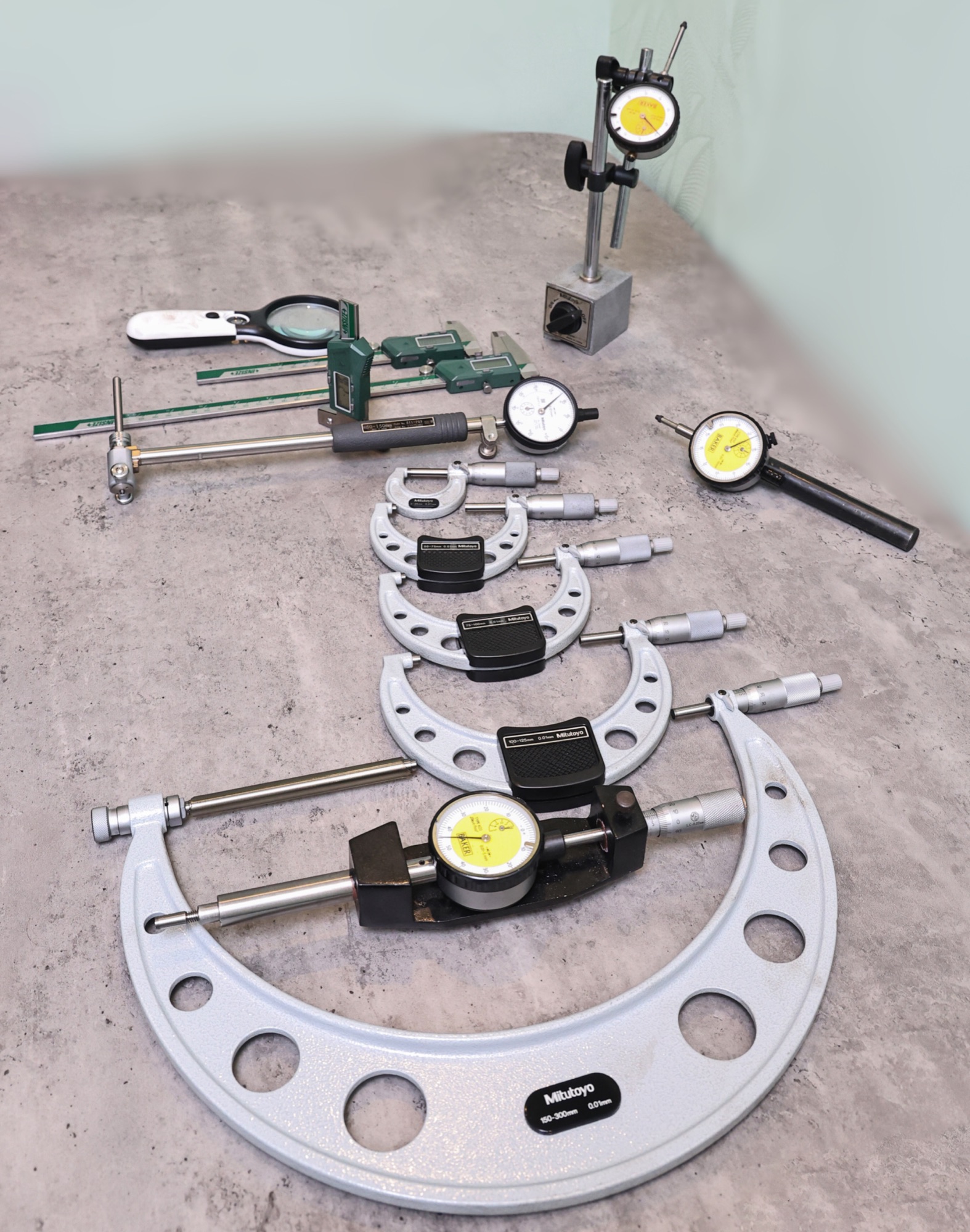
- Skirt diameter measurement at the specified point and at right angles, for wear and ovality
- Ring groove width and parallelism measurement, groove by groove
- Ring side clearance measurement with a new ring in the groove
- Ring end gap check in the bore the piston will run in
- Ring groove machining back to a square, parallel width
- Fitting of groove inserts or spacer rings where the design allows, to restore the original ring width
- Top groove repair on pistons built with a hardened or inserted groove
- Skirt inspection for scuffing, pick-up and collapse
- Light skirt dressing where the damage is superficial
- Gudgeon pin bore measurement for wear and ovality
- Gudgeon pin bore machining and bushing where the design allows
- Small-end bush replacement, boring and honing to the pin — see connecting rod boring
- Pin-to-bore and pin-to-bush clearance set and recorded
- Crown inspection for erosion, cracking and burning
- Ring land and top land crack inspection
- Crack detection by dye penetrant
- Combustion chamber bowl inspection on direct-injection pistons
- Carbon removal from crown, lands and grooves without damaging the sealing faces
- Weight matching across the set
- Piston-to-bore clearance measured against the finished bore or liner
- Assembly of piston, pin, rod and rings where the whole job is with us
- Written measurement report for the set
Nothing on that list is priced before the pistons have been measured, because until they are measured nobody knows which of the four wearing features has actually failed.
When pistons need this work
- Blow-by and oil consumption after a ring change. New rings in worn grooves do not seal. This is the single most common reason a rebuild does not fix the problem it was supposed to fix.
- Compression down on one or more cylinders, with the head and valves proved good.
- A light knock at idle that eases under load — very often the gudgeon pin joint.
- A scuffed piston pulled after an overheat or an oil pressure event. The question is whether the scuffing is superficial or whether the piston has lost its shape, and that is measurable.
- A scheduled overhaul on a generator or marine engine where the pistons are sound but the grooves have worn and replacements are a long-lead import.
- Smoke and rising fuel consumption traced to one cylinder, where the injector has been eroding the crown.
The process
- Clean and identify. Carbon is removed from the crown, the lands and the grooves without touching the sealing faces. A groove full of carbon cannot be measured.
- Measure as received. Skirt diameter and ovality at the correct measuring point, groove width and parallelism on each groove, ring side clearance with a new ring, pin bore diameter and ovality. These become the "before" column.
- Crack detection. Dye penetrant on the crown, the ring lands and the pin bosses. A cracked land ends the conversation for that piston.
- Decide and approve. You get the readings, what each piston needs, and what it would cost against replacement — before anything is machined. Nothing is cut until you say yes.
- Machine the grooves. The groove is cut back to a square, parallel face at the correct width, and where the design allows an insert or spacer restores the original ring width so standard rings go back in.
- Pin bore and skirt work. Pin bore restored where the design allows; skirt dressed only where the damage is genuinely superficial.
- Weigh and match. The set is weighed and brought back to a common weight.
- Measure against the bore. Piston-to-bore clearance is checked against the actual finished bore or liner, with the ring end gaps checked in that bore too.
- Report and return, with the before-and-after figures and the clearances recorded.
What we return to you
The reconditioned pistons and a measurement sheet covering skirt diameter and ovality, groove widths before and after, ring side clearance achieved, gudgeon pin clearances, the piston-to-bore clearance measured against your bore, and the weight of each piston in the set. If any piston in the set was condemned, the sheet says why.
Repair or replace — the piston decides, in numbers
Repairability comes down to measurable condition: groove wear, skirt condition and ovality, pin bore wear, and whether the crown and lands are sound. Three of those four are recoverable. The fourth usually is not.
We will tell you to replace a piston when:
- The crown is cracked, holed or badly eroded. A crown eroded by a bad injector has lost material where it matters most and where nothing can be put back.
- A ring land is cracked, or the land above the top ring is broken. This is the piston about to shed a piece into the engine.
- The skirt has collapsed or is heavily scuffed and out of shape. The skirt is a controlled shape, not a cylinder; once it is deformed, dressing it produces a piston with the wrong profile and a clearance that is wrong everywhere except where you measured.
- The grooves are beyond what machining and an insert can restore, or the design has no room for one.
- The piston is a two-piece or steel-crowned design whose crown is beyond recovery. Some large-engine pistons are rebuildable in ways an aluminium piston is not, and some are the reverse. It is assessed on the actual component.
- New pistons are cheap and on a shelf for that engine. On a common road engine with plentiful supply, reconditioning is not the right advice and we will say so rather than sell it.
That verdict comes in writing with the readings behind it, and it costs you the inspection and nothing else.
Engines we do piston work for
Caterpillar, Cummins, Perkins, Volvo, Scania, Mercedes-Benz, Mitsubishi, Yanmar, Deutz, Iveco, Wärtsilä and Niigata — generator sets, marine main and auxiliary engines, industrial drives, compressors, plant and heavy trucks. The larger and older the engine, the more this work is worth doing.
If you are unsure whether your pistons are candidates, send photographs of the crown, the skirt and the ring grooves, along with the engine make and model — you will have an initial view the same working day, before anything is transported.