
Established 2011, over 25 years of experience.
Why Bosch systems need specialist coverage
Bosch is not one fuel system. It is close to a century of diesel injection technology, and the installed base in this region spans nearly all of it — inline pumps on generator sets that have been running since the eighties, rotary pumps on light plant and light commercials, unit injectors on heavy trucks, and common rail on everything built in the last two decades.
That breadth is the actual reason people struggle to get Bosch equipment repaired here. A workshop set up for modern common rail is not set up to phase a multi-element inline pump, and a workshop that has always done mechanical pumps cannot test a solenoid injector across an injection map. The unit on your bench could be from either world, and it is why the first useful step is identifying what you actually have.
*So the practical problem for a Bosch owner is not "who repairs Bosch". It is "who repairs this Bosch".*
Which Bosch do you have?
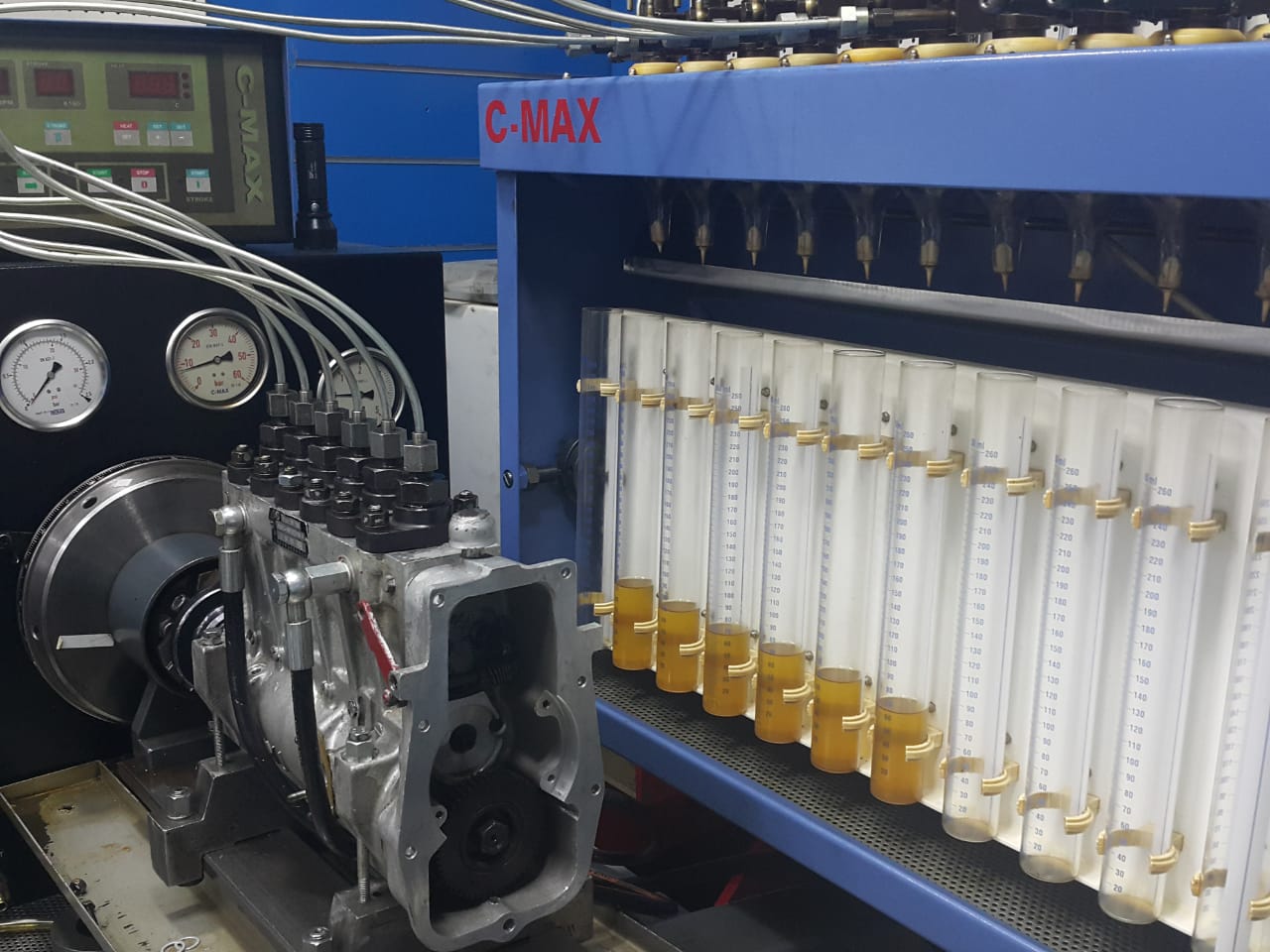
A long, heavy pump with a row of high-pressure pipes leaving the top in a straight line, one per cylinder, and its own oil filler or dipstick — an inline pump. The PE and PES families and their many derivatives. One pumping element per cylinder over the pump's own camshaft, quantity set by a control rack, and a governor bolted to the end. This is the architecture on most larger industrial, marine and genset engines, it is fully serviceable, and it is the equipment on which "repair rather than replace" is least controversial. It needs phasing as well as calibration, which is the step most often skipped.
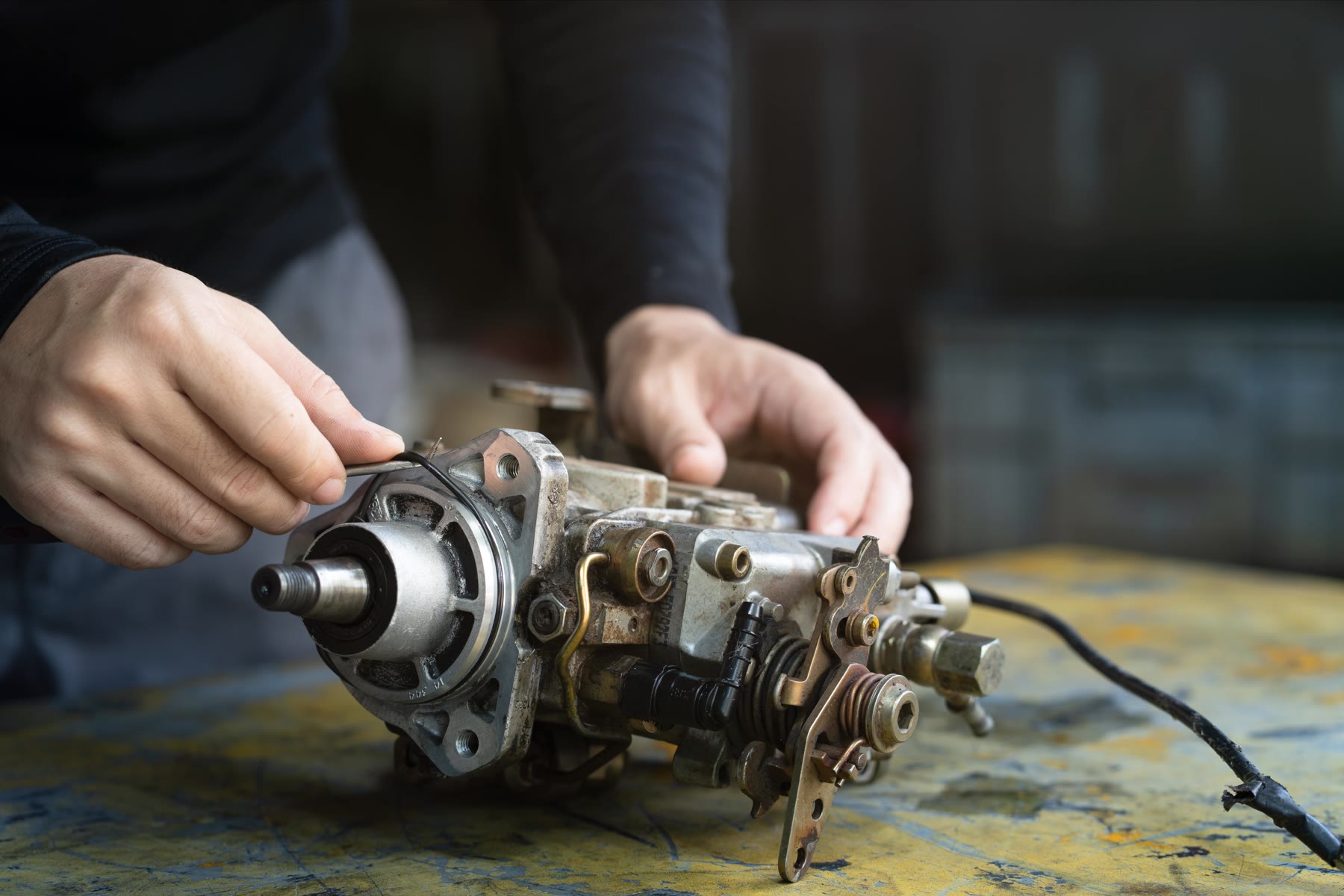
A compact round pump about the size of a large mug, pipes leaving it in a circle — a VE rotary distributor pump. One axial plunger driven against a cam plate, serving every cylinder in turn, with a mechanical governor or, on later units, electronic control. Fitted across light commercials, tractors, small gensets and light plant. Its defining characteristic is that it is lubricated entirely by the diesel passing through it, which makes fuel quality the dominant factor in how long it lasts.
A rotary pump with a control unit mounted on it and an electrical connector — an electronically controlled rotary pump. The VP-series radial-plunger pumps. These are worth a separate note because they fail in a characteristic way: the pump-mounted electronics are a well-known casualty of repeated heat cycling, and the hydraulic side of the pump is frequently still perfectly serviceable when the unit is condemned. Testing tells you which half has failed.
No high-pressure pipes to individual injectors, one thick pipe to a rail on the head, electrical connections to each injector — common rail. The CP-series high-pressure pumps feeding solenoid or piezo injectors. A different discipline with different tooling and different cleanliness requirements — see common rail injector and pump service.
Injectors bolted into the cylinder head with no high-pressure pipe at all, driven by the camshaft, with an electrical connector — unit injectors. Common on heavy trucks and on some industrial engines, where the pumping element and the nozzle are one assembly per cylinder.
Send a photograph of the unit with its data plate visible and you will get a straight identification before you remove or transport anything.
Independent specialist or authorised service centre — how to choose
A large share of the people searching for Bosch service are looking for an authorised centre, so this deserves a factual answer rather than a sales one.
Warranty. If the equipment or the vehicle is inside its manufacturer warranty, work done outside the authorised network can affect that cover. In that case, use the authorised centre. This is the one situation where the answer is not close, and we will say so on the phone.
Parts. An authorised centre supplies through the manufacturer's channel. We are not tied to a channel, so we can quote genuine parts, quality aftermarket, or a mix, and the quotation states which is which. That is an advantage if you want the choice and a disadvantage if your own procurement policy requires manufacturer-supplied parts only — some fleet and marine operators' policies do.
Counterfeit parts are a real problem in this market, and it is worth being blunt about it. Bosch injection components are among the most widely counterfeited diesel parts in the world, and a convincing fake plunger, delivery valve or nozzle will destroy a pump you have just paid to have rebuilt. This is the strongest argument for buying through a channel you can trace, and it is why our quotations name the parts source rather than saying "new parts fitted".
Older equipment. Authorised networks are built around current product, and support for older families naturally thins out over time. An independent workshop that still owns the equipment to strip, phase and calibrate a mechanical inline pump can keep a thirty-year-old genset running. That is where the balance tips decisively.
Technical data and tooling. Authorised centres have factory data and tooling as a matter of course. An independent workshop has what it has invested in. Ask any workshop — including us — what it holds for your specific unit before committing, and take a straight answer as the qualification it is. If we do not have what a particular unit needs, you will be told, not guessed at.
In short: in warranty, or bound by a genuine-parts-only policy — use the authorised network. Out of warranty, older equipment, cost or lead time under pressure — an independent workshop with its own bench is usually the better buy. We are the second kind, and we are content to say when you need the first.
Bosch operations we perform
- Incoming bench test as received, on any unit type, recorded
- Inline pump strip, clean, inspection and rebuild
- Plunger and barrel element replacement as matched pairs
- Delivery valve and seat replacement
- Camshaft, tappet, roller and bearing renewal
- Element phasing and port closing set
- Delivery calibration and cylinder-to-cylinder balancing
- Smoke limit, boost compensator and maximum speed settings
- Governor overhaul and setting on the pump — see governor repair and calibration
- Rotary distributor pump strip, clean, inspection and rebuild
- Transfer pump, vane and regulator renewal
- Hydraulic head and rotor assessment and replacement
- Automatic advance mechanism overhaul and setting
- Shut-off solenoid and cold start device testing
- Electronically controlled rotary pump assessment — hydraulic side and control side tested separately
- Mechanical injector overhaul, nozzle replacement and opening pressure setting
- Unit injector assessment and overhaul
- Common rail high-pressure pump strip, rebuild and test
- Common rail injector testing across the injection map, control valve and nozzle replacement
- Injector calibration codes read and issued with the paperwork
- Final verification run and signed test report on every unit
Nothing on that list is priced before the incoming test, and nothing is stripped or ordered before you have agreed the work.
How Bosch equipment fails in the Gulf
The failure pattern here is not the European one, and it drives most of what comes through the door.
Water in the fuel. Condensation in half-empty tanks, humid air, and long storage in high ambient temperatures put water into diesel. Water strips the lubricating film between a plunger and its barrel and between a needle and its seat — clearances of a few microns, lapped as matched pairs. Once scoring starts, the element is scrap and must be replaced, not cleaned. Rotary pumps suffer worst, because the fuel is their only lubricant.
Abrasive dust. The same failure, faster.
Low-lubricity fuel. Modern low-sulphur diesel carries less inherent lubricity than the fuel most older Bosch pumps were designed around. Again, the rotary families feel it first.
Heat. An injection pump makes its own heat and sits in an already hot engine bay. On pump-mounted electronics, repeated heat cycling is a known failure route — and it is a failure of the control side, not the pump.
Contamination on common rail. At rail pressure, a particle that would pass harmlessly through a mechanical system will cut a control valve seat. This is why common rail work belongs in a clean area with dedicated tooling and not on the same bench as a dirty inline pump strip.
Deferred filter changes. More Bosch equipment in this region is killed by an overdue filter than by age.
Repair or replace — measured, not assumed
A Bosch pump is mostly made of replaceable parts. What decides whether an overhaul is worth doing is the condition of the parts that are not: the housing element bores and camshaft on an inline pump, the hydraulic head and rotor on a rotary, and the control unit on an electronically controlled pump. All of those are measurable, and all of them are checked before you are quoted.
A replacement pump for a large industrial or marine engine is often a long-lead import at a price that makes the engine itself look uneconomic. In most cases it does not need to be bought. But that is a conclusion from a bench test, not a position, and where the numbers say replace, that is what you will be told — in writing, with the readings attached. See what our calibration reports contain.