Established 2011, with over 25 years of experience.
What this page covers, plainly: the engine, its fuel system, its cooling loop, its starting system and its controls. The pump end, the hydraulic performance of the installation, and the statutory inspection and certification regime for your building are a separate matter — tell us what your regime requires and we will say clearly which parts of it are ours and which are not, rather than letting you assume.
Why fire pump engines fail from standing still
Every other diesel on your site fails from work. This one fails from idleness, and the failure modes are specific enough to be worth naming.
The weekly no-flow run is not exercise. A short run at no flow, under almost no load, brings the engine to temperature and no further. Fuel that does not burn cleanly leaves carbon on valve seats, glazes the liners and wets the exhaust. Years of ten-minute runs produce an engine that starts perfectly and cannot pull load — which is discovered on the one day it matters.
Fuel degrades in a tank that is never emptied. Diesel sitting in a warm plant room for years grows water at the bottom, sediment through the middle and microbial growth at the interface. That blocks filters, corrodes injection equipment and picks the worst moment to do it. Fuel condition is the single most common root cause we find behind "it cranks but will not run".
The cooling loop is unlike any other engine's. A diesel fire pump is usually cooled by a heat exchanger fed from the pump's own discharge, through a small bypass line with a strainer and a regulator. That line is small, it carries whatever the water main carries, and it silts, scales and corrodes closed over years of no flow. The engine then overheats within minutes of a real demand — and unlike a genset, a fire pump engine is generally not permitted to shut itself down when it does.
Batteries and charging fail quietly. Two battery banks, a charger that has been alarming into a panel nobody watches, terminals corroding in a humid plant room. The engine is mechanically perfect and will not turn.
Nothing else in the building is inspected this rarely by someone who understands engines. A weekly run performed by a technician with a clipboard confirms it started. It does not confirm it would run for two hours at full load, which is what it exists to do.
Symptoms we get called for
- Cranks but will not start, or starts only on the second battery bank
- Starts and runs at no load, then overheats or shuts down under demand
- Overheating during the weekly run, or a jacket water temperature that climbs and never settles
- Black or white smoke that does not clear
- Fuel in the oil, water in the fuel, or a filter blocking within weeks of being changed
- Overspeed trips, hunting, or a governor that will not hold a steady speed
- Battery and charger alarms, or a solenoid that clicks and does nothing
- A unit that has failed a periodic inspection and has to be put right against a deadline
- An engine that has stood for years and now has to be brought back into service
What we do on a fire pump engine
Fault diagnosis in the pump room. Fuel supply and condition, filters and water separation, air intake and exhaust restriction, cooling loop flow and heat exchanger condition, battery capacity and charging, starting circuit, governor and overspeed function, and the mechanical condition behind all of it. Findings written down, not described.
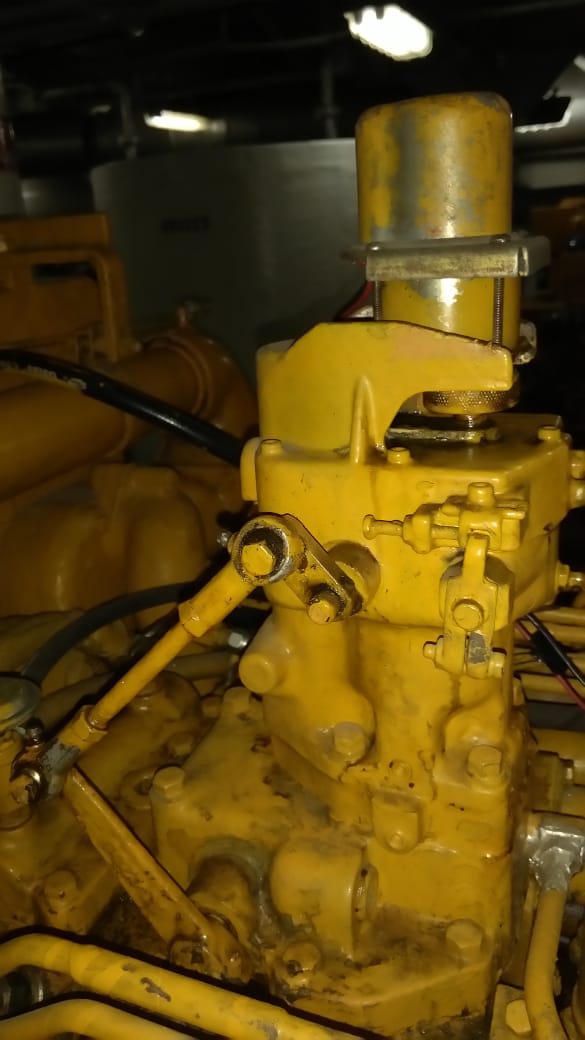
Fuel system work. Injectors and injection pumps stripped, tested and calibrated on our own benches; governor overhaul and calibration; tank and fuel line condition addressed rather than worked around. See fuel systems and calibration.
Cooling loop and heat exchanger. Heat exchangers cleaned, re-tubed where recoverable and pressure tested; strainers, regulators and the cooling bypass line cleared and checked; jacket water side flushed. This is the single highest-value item on a neglected fire pump engine — cooling system and heat exchanger repair.
Starting system. Starter motors overhauled and bench tested, solenoids, cables, terminals and charging renewed — see starter motor repair. On installations using air starting, the air motor and its supply are dealt with the same way.
Top and major overhaul. Heads, valves and seats, liners, rings, bearings and crankshaft. Where a component is out of limits but recoverable it goes onto our own machines rather than into an order — the process is on diesel engine overhaul and the machining on the machine shop pages.
Recommissioning a long-idle unit. An engine that has stood for years is a known quantity once it has been measured, and an unknown one until then. We take the readings first.
Scheduled engine-side servicing, including under maintenance agreements. AMC and maintenance contracts are offered and every one is set against the site rather than sold from a table — call and describe the installation.
Where the boundary sits, stated honestly
Fire protection is a regulated field and it matters that a supplier is clear about scope.
What we do: everything on the engine and its supporting systems — fuel, cooling, starting, controls on the engine side, mechanical repair and overhaul, and the written record of what was found and what was done.
What we do not present ourselves as: the authority on your building's inspection regime or the party that signs it off. We hold no manufacturer dealership for any fire pump engine make. Where your regime, your insurer or your consultant requires specific testing or certification of the installation, tell us what is required and we will tell you plainly what falls inside our scope and what does not, before anyone is booked.
That boundary is worth having in writing from any supplier, and most facilities managers find it easier to plan around a clear one than a vague one. The buyer-side view of all this — programmes, portfolios and who is responsible for what — is on fire protection and FM.
Engines we see on fire pumps
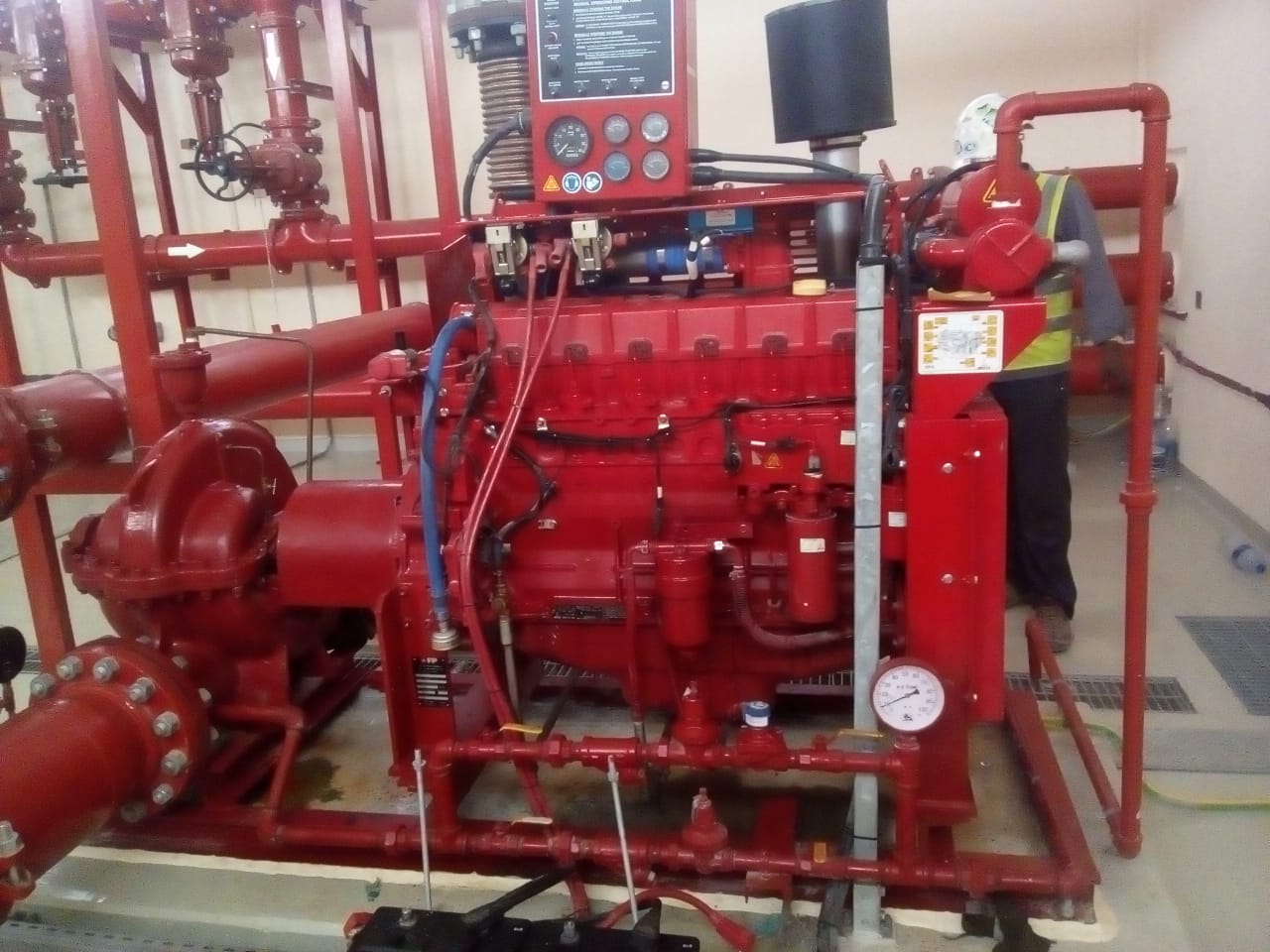
Perkins is disproportionately the fire pump engine in this region, and Clarke-packaged units built around them are common — see Perkins engine repair. Caterpillar, Cummins, Volvo Penta, Deutz and Iveco units also reach us. Send a photograph of the engine data plate and the pump controller with your enquiry and you will get a straight answer about whether it is a job we take.
What you get back
- The engine repaired, run and checked before hand-over
- A written record of what was measured and found, against the limits, with photographs of the condition as it was opened
- A parts list stating genuine or aftermarket for each item
- A clear statement of anything found that sits outside our scope, so nothing falls between two suppliers
- A warranty position stated on your quotation and invoice for the work actually done