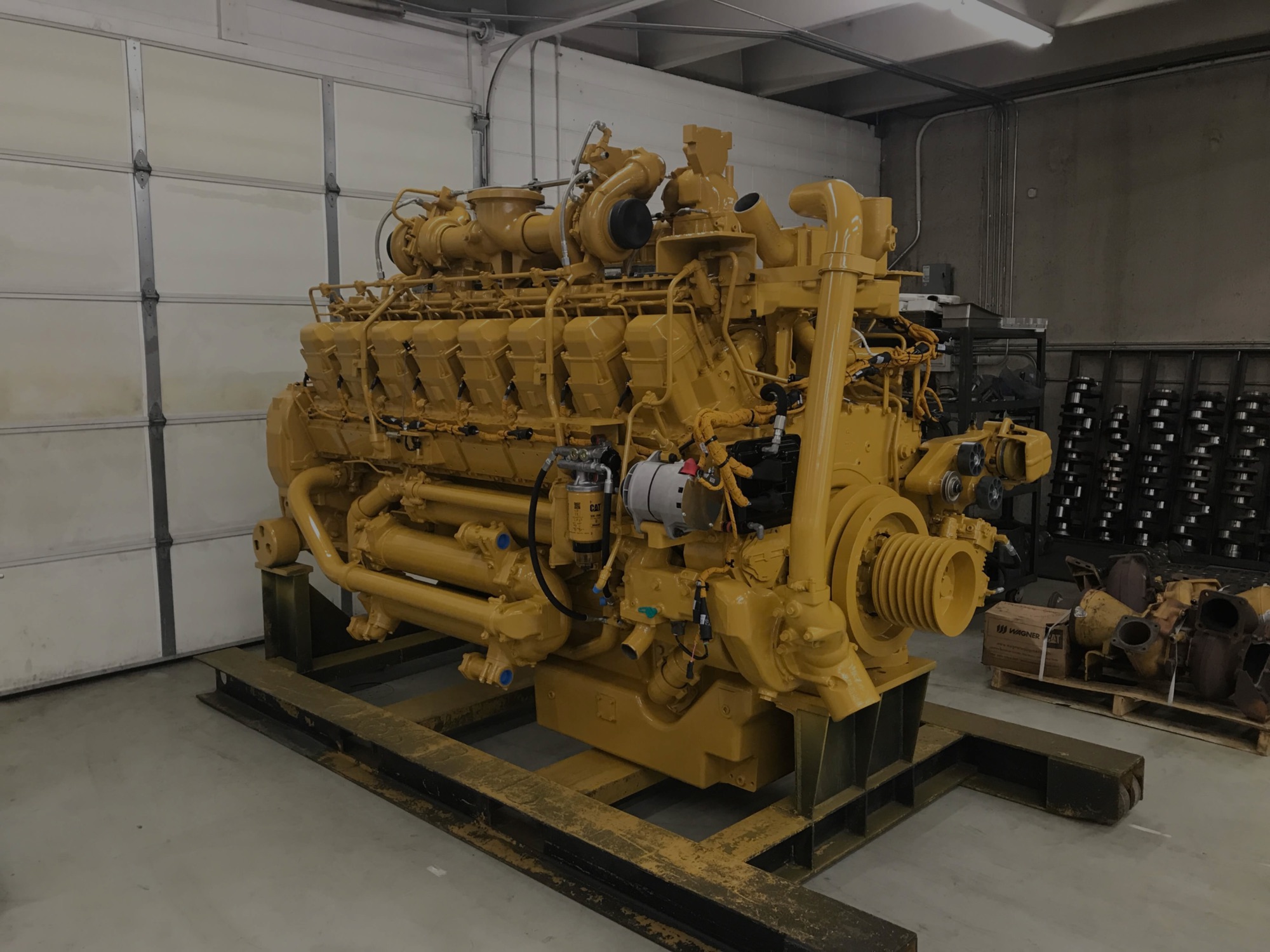
We do not service car engines. No cars, no light 4x4s, no vans. If that is what you have, we will tell you on the phone in ten seconds rather than waste an afternoon of yours. Established 2011, with over 25 years of experience, on heavy-duty diesel only.
What actually kills plant and truck engines here
The UAE is a hard place to run a diesel engine, and the failures arrive in a recognisable order.
Heat. Ambient temperature is doing half the cooling system's job against it before the machine starts work. A radiator packed with dust, a slipping fan drive, a scaled core or a tired water pump does not cause a problem in a cool climate and causes a warped head here. Most "sudden" head gasket failures on plant are a cooling fault with a date stamp.
Dust. Quarry, crushing and earthmoving work loads the air intake continuously. An air filter serviced by knocking it out, a leaking intake hose after the filter, or a cracked charge air pipe puts abrasive straight into the bore. That shows up as bore polishing, high oil consumption and blow-by long before anything dramatic happens.
Fuel. Site tanks, bowsers and drums mean water and sediment. Modern high-pressure injection equipment is unforgiving of both, and the repair bill is in the injection equipment, not the engine.
Hours nobody counts. An excavator's hour meter records the machine, not the loading. A machine on continuous rock work at high ambient reaches an overhaul condition far earlier than the hours imply, and the operator has no reason to know that.
Idling. Machines left running through breaks and loading waits accumulate hours at almost no load, which glazes bores and carbons valves exactly as it does on a lightly loaded generator.
Operations we do on truck and plant engines
- In-frame and out-of-frame overhaul — liners, pistons, rings, bearings and heads with the engine in the machine, or the engine out and stripped to the block. Which one is right is a measurement, not a preference.
- Cylinder head reconditioning — stripped, cracks tested, valves and seats reconditioned, deck surfaced, pressure tested.
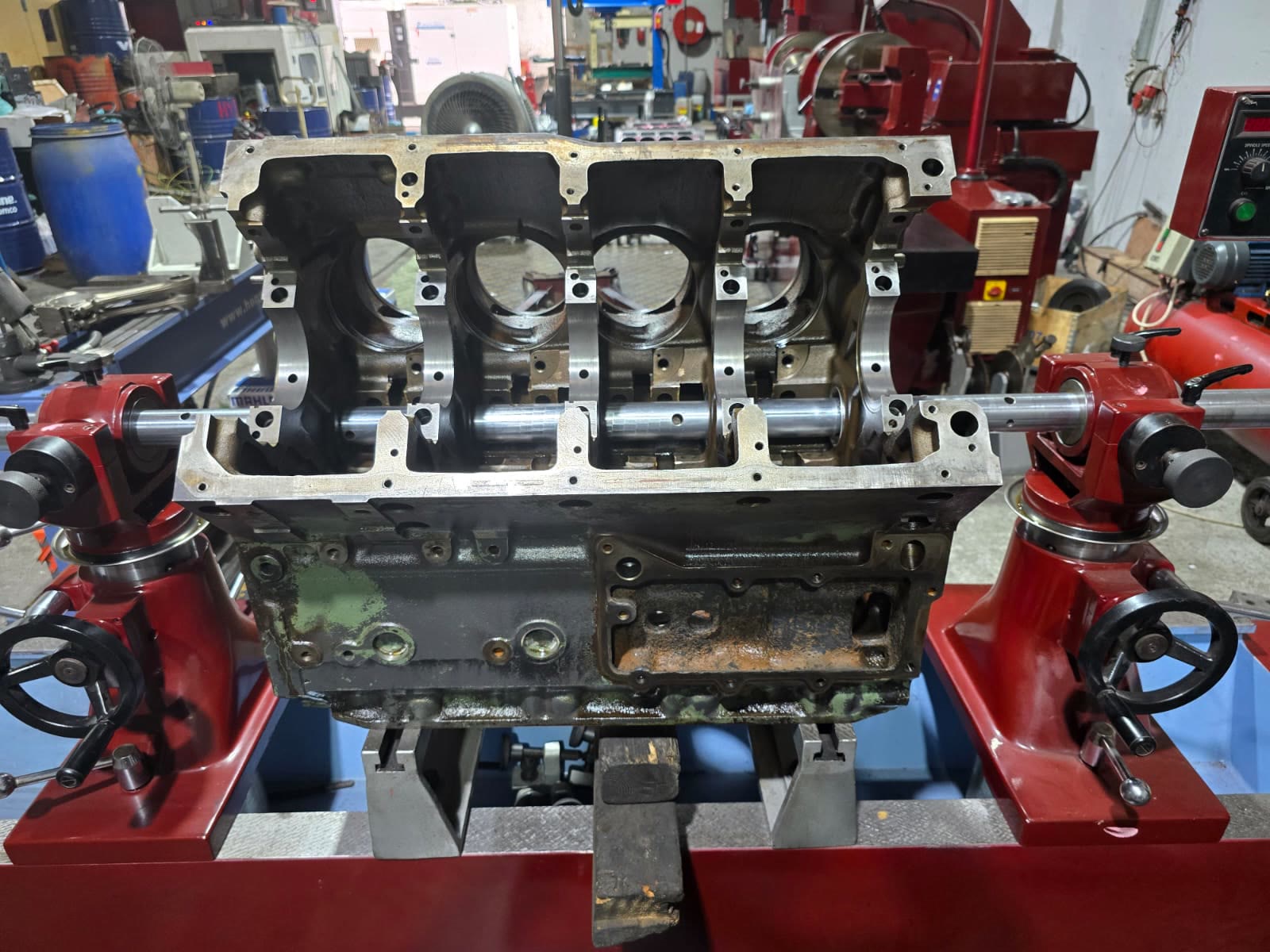
- Crankshaft grinding and main bearing bore line boring where the bottom end is involved.
- Cylinder reboring, liner replacement and honing.
- Connecting rod reconditioning — bend, twist and big-end bore corrected.
- Fuel injection work — injectors and pumps stripped, tested and calibrated on our own benches (fuel systems).
- Turbocharger repair, rebuild and balancing.
- Cooling system work — radiators, oil coolers, charge air coolers, water pumps and thermostats, diagnosed and repaired rather than replaced by default.
- Starter motor and charging alternator overhaul with bench testing.
- Electronic engine diagnostics — fault code reading and live data on electronically controlled engines, with the circuit verified before a control unit is condemned.
- Diagnosis on site — compression and crankcase pressure readings, boost, exhaust and oil pressure taken where the machine is, so it only moves if it needs to.
The machining detail behind these operations lives in the machine shop section. This page will not repeat it.
On site, or bring the machine in
Both work, and the right answer depends on what has failed.
On site — diagnosis, injector and pump changes, turbo changes, cooling repairs, top-end work, starter and alternator swaps, and running checks. A machine parked in a yard or working on a contract usually does not need to move to be diagnosed. See on-site and in-situ repair.
In the workshop — anything needing a machine tool. In practice a plant job most often splits: the engine comes out on site, the block and head travel to Sharjah, and the rebuilt engine goes back into the machine. A truck can be driven in; an excavator engine usually arrives on a flatbed with the machine, or on a pallet on its own.
Tell us the weight and how the item can be lifted at your end when you call. That one question decides what turns up and whether it goes straight onto a machine or waits in the yard.
Downtime is the real cost, and the numbers are not close
On a truck or a plant machine the repair bill is rarely the biggest number in the decision. The biggest number is the machine standing.
That changes what "cheapest" means. A workshop without machine tools has two answers to an out-of-round crankshaft or a bowed head: order a part, or send the component out. Both put your machine's return date into somebody else's queue. We have a third answer — measure it, and if it is within limits, machine it here — and it is usually days rather than weeks, on components that would otherwise be a slow import.
That is not an argument for repairing everything. A crankshaft already at final undersize gets replaced and we will say so. It is an argument for finding out which situation you are in before you order anything.
Engines and machines we work on
Trucks and prime movers — the heavy commercial engines that run this market, including Cummins, Caterpillar, Volvo, Mercedes, MAN, Scania, Isuzu, Hino and Iveco units.
Earthmoving and construction plant — excavators, wheel loaders, backhoes, dozers, graders and rollers, largely Caterpillar, Cummins, Perkins, Deutz, Komatsu, Isuzu and Mitsubishi engines. Sector view on construction plant and site equipment.
Materials handling — diesel forklifts, reach stackers and yard equipment.
Crushing, screening and quarry plant, and the site gensets and compressors that run alongside them.
Brand detail for the two makes we see most is on Caterpillar engine repair and Cummins engine repair.
We don't hold any brand dealership. The images and names are only for customer reference.
Fleets, and why the second opinion is worth taking
A fleet or plant operator running the same engine family across several machines has an advantage a single-machine owner does not: what one engine's measurements show usually predicts the others. When we strip one engine of a family, the wear pattern tells you where the rest of the fleet is, and that turns unplanned failures into planned ones.
That is also the honest case for having a component measured rather than quoted. If three machines are approaching the same condition, knowing it now is worth more than a discount on the one that has already stopped.
Fleet servicing and maintenance agreements are offered and are arranged against your machines and your working pattern rather than sold from a list. Call and describe the fleet.