
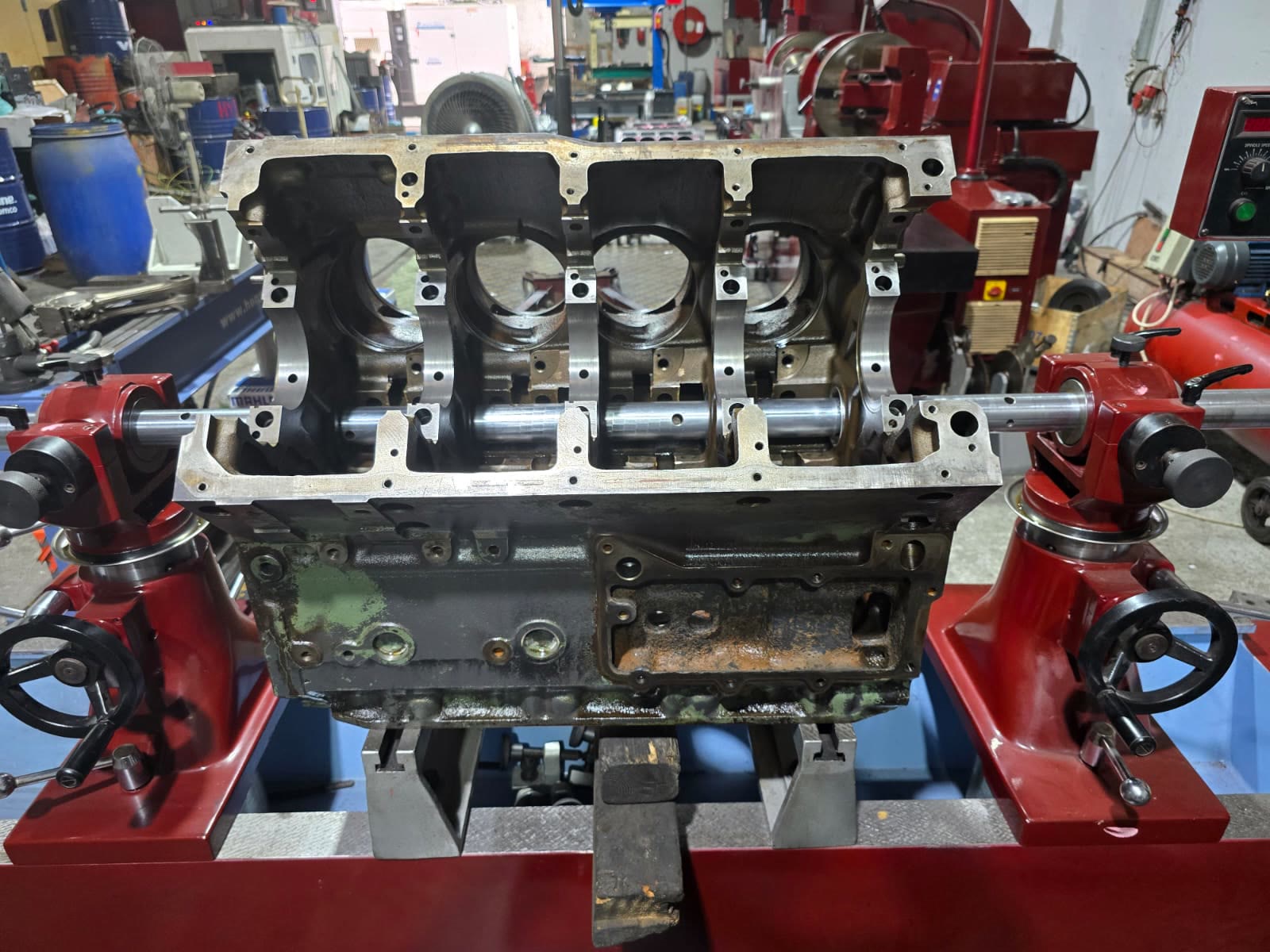
We answer that with measurements, and we can act on the answer because the block, crankshaft, heads and rods are machined in our own shop behind Yerevan Steel Factory, Industrial Area 15, Sharjah. Established 2011, with over 25 years of experience. Heavy-duty diesel only.
Reconditioning or overhaul — you are probably on one page or the other
The two words get used interchangeably in this trade and it costs people money, because they are different decisions with different starting points.
Engine overhaul is planned work on a running engine. It has reached its hours or its condition, you know its history, you have a downtime window, and the objective is to restore a known engine to specification. The variable is scope.
Reconditioning is a rescue. The engine has failed, or its history is unknown, and the objective is to establish whether it can be brought back at all — and whether doing so beats buying a replacement. The variable is not scope, it is viability, and that has to be settled before anything else is discussed.
If your engine still runs and you are planning work, you want the overhaul page. If it has stopped, seized, or is a complete unknown, you are in the right place.
The four situations that bring an engine here
1. A catastrophic failure. A spun bearing, a dropped valve, a broken connecting rod, a run-dry engine, a hydraulic lock from water ingress. Damage has propagated beyond the part that failed and nobody yet knows how far.
2. A seized or long-standing engine. A machine parked for years, a standby unit that was never run, a vessel laid up. Rust in the bores, seized rings, corroded liners and injection equipment that has cemented itself solid. These engines look far worse than they usually are — and occasionally far better.
3. An engine of unknown history. A used machine, a truck bought at auction, a generator that came with a plot, a vessel bought as seen. It runs, or it half runs, and there is no service record anywhere. You are being asked to plan around an engine nobody can describe.
4. An engine somebody else has given up on. A repair that did not hold, a workshop that returned it saying the block is scrap, or a quotation for a replacement engine that made you want a second opinion. This is a larger share of the work here than most people expect, and it is the case where a machine shop changes the answer.
The assessment comes before the quotation
On a failed engine, the assessment is the product. Everything else follows from it.
1. History and failure narrative. What it was doing, what it sounded like, whether it was shut down or ran on, whether it was cranked afterwards. That narrative predicts where the damage went.
2. Oil, coolant and filter evidence. What is in the sump and on the filter element tells you which component failed and what it distributed through the engine before it stopped.
3. Controlled strip. A failed engine is dismantled in an order that preserves evidence. Photographs of everything before it is disturbed, because a claim, an insurer or an argument with a previous supplier may need them later.
4. Damage mapping. Where the debris went, what it scored, whether the oil galleries are contaminated, whether the failure reached the block, the crankshaft, the camshaft, the head or the turbo.
5. Crack detection and hard measurement. Crack testing on the block, heads, crankshaft and rods. Then the readings: crankshaft journal ovality, taper and bend; hardness; liner or bore wear, taper and ovality; head flatness and seat condition; main bearing bore alignment; rod bend, twist and big-end stretch. Each one against the manufacturer's limits.
6. The verdict, in writing. Recoverable, recoverable with reservations, or not recoverable — with the readings and the limits that put it in that category.
That verdict is what you are actually buying at this stage, and it is the thing nobody selling you a replacement engine wants you to have.
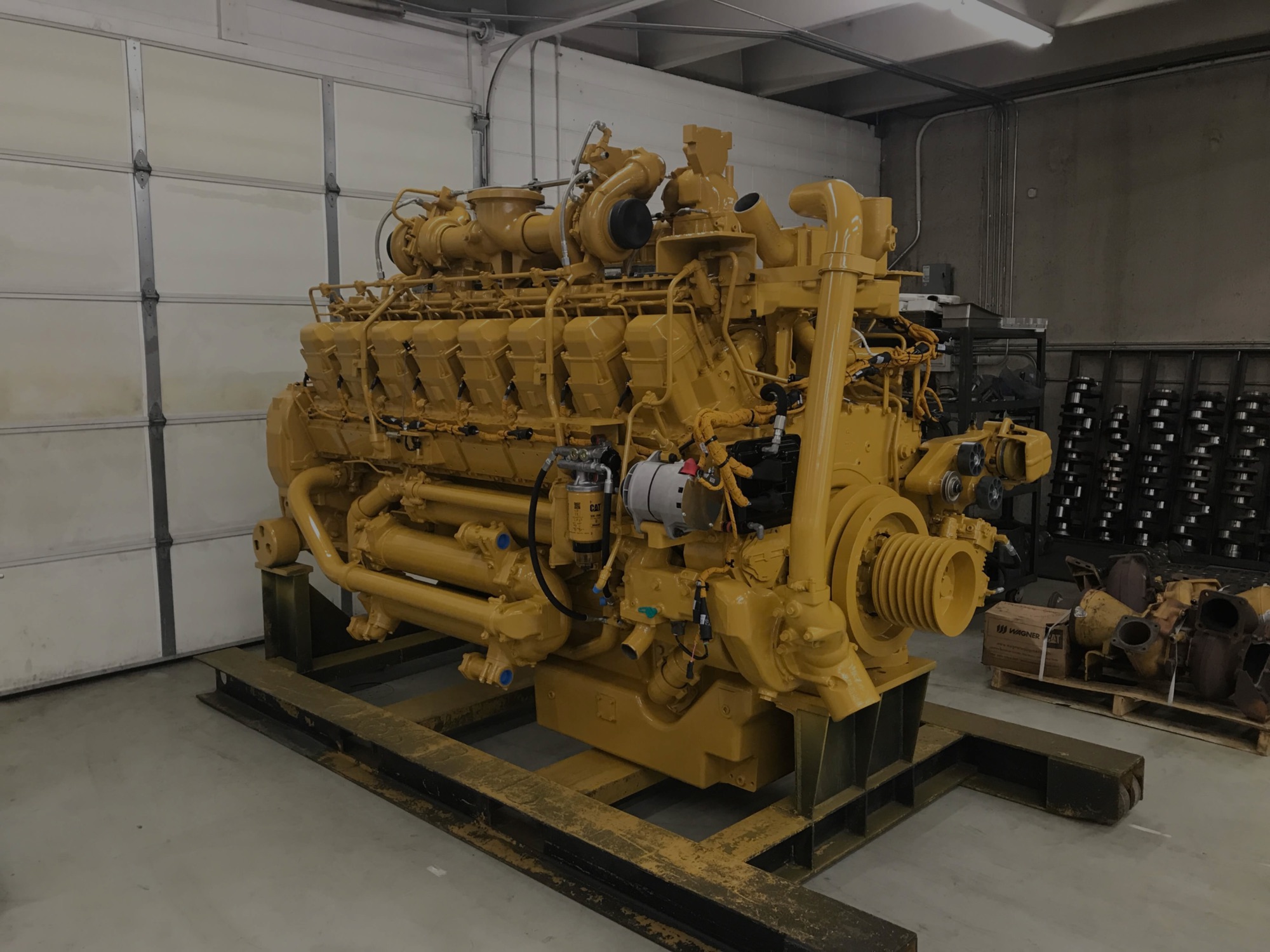
What makes an engine genuinely unrecoverable
An honest reconditioning page has to say when the answer is no. In our experience the engine is finished when:
- The crankshaft is already at its final permitted undersize and is out of limits again, or cracked in the fillet radius, or bent beyond what can be recovered
- The block is cracked into a water jacket or a main bearing web in a position that cannot be reliably repaired, or the main bearing bore alignment cannot be brought back
- The liner landings or counterbores are damaged beyond machining recovery on a wet-liner engine
- Debris has gone everywhere — oil galleries, camshaft, turbo, cooler and injection equipment all contaminated, so the parts bill approaches a replacement engine on its own
- The engine is obsolete enough that parts arrive slowly and expensively, and the next failure will be worse than this one
- Several of the above at once. One recoverable-but-expensive item is a decision; four is an answer.
We will tell you which of those applies, with the readings. A wrong rescue costs more than a right replacement, and saying so is part of the job.
What reconditioning actually involves
Where the verdict is favourable, the work is machining-led — which is why this page exists at a workshop that owns machines.
- Block — decks skimmed, bores measured and rebored or resleeved, counterbores machined where liner landings have suffered, main bearing bores line bored back to alignment. See engine block machining and line boring.
- Crankshaft — crack tested, straightened where recoverable, journals ground to an undersize that takes a standard bearing shell, fillets and oil holes attended to, then polished. See crankshaft grinding.
- Cylinder heads — stripped, crack tested, valve seats and guides renewed or reconditioned, decks surfaced, pressure tested.
- Connecting rods — bend and twist corrected, big-end bores rebored to size, small-end bushes renewed.
- Renewed as standard on a rescue job — all bearing shells, all gaskets and seals, rings, and any component contaminated by debris. On a failed engine, a part that "looks fine" and was in the oil path when the failure happened is not fine.
- Fuel system — injectors and injection pumps stripped, tested and calibrated on our own benches, which on a long-standing engine is frequently where most of the recovery work sits. See fuel systems and calibration.
- Ancillaries — turbocharger, coolers, starter and charging alternator all dealt with rather than reused on trust.
- Rebuild and run. Clearances and torque figures recorded on build. The engine is run before it leaves, and the running readings recorded, because an engine rescued on paper is not a rescued engine.
The machining operations themselves live in the machine shop section — this page will not duplicate them.
Recondition, or buy a replacement engine?
This is the decision the page exists for, so here it is without the sales gloss.
Reconditioning usually wins when the block and crankshaft come back inside limits, the engine family still has parts availability, and a replacement unit is a long-lead import. You end up with an engine of known condition, documented, in weeks rather than months — and you keep an engine whose provenance you can see, rather than one whose history is a seller's description.
Reconditioning also wins on the engines nobody stocks. The older marine auxiliary, the long-serving genset engine, the plant engine that is out of production. These are precisely the engines where a dealer's only answer is a replacement, and precisely the ones a machine shop is for.
Buying a replacement usually wins when the assessment lands in the unrecoverable list above, when the engine is a current model with a unit sitting locally on a shelf, or when the machine is losing so much money per day that any machining timeline is worse than any purchase price.
A word on "reconditioned" engines offered for sale. A unit described as reconditioned is worth exactly what its measurement record proves, and most arrive without one. If you are comparing our assessment against a bought-in reconditioned engine, ask the seller the same questions we would expect you to ask us: what was measured, what undersize is the crankshaft at, what was machined and what was renewed. An engine with those answers is a different product from one without.
Before you order a replacement engine, let us measure this one
The measuring is a small job. The decision it settles is not.
Bring us the engine, or the block and crankshaft, and you get the readings with the manufacturer's limits beside them and a written verdict on viability. That is a far smaller thing to ask for than a quotation, and it is the only version of this decision that is not somebody's opinion.
If your engine has not actually failed and you are planning work rather than reacting to it, start instead at diesel engine overhaul. If it is running badly but running, start at diagnostics — cheaper than either.
What you get back
- A rebuilt engine, run and checked, with the build figures recorded
- The assessment record: what failed, how the damage spread, and what was found on each major component against its limits
- The machining record: what was machined and to what size, including the crankshaft undersize and the bearing shells it now takes
- A parts list stating genuine or aftermarket for each item, and which items were renewed because of contamination rather than wear
- The photographs taken during the controlled strip, which matter if there is an insurance claim or an argument with a previous supplier
- A written warranty position on your quotation and invoice, stated for the work actually done
That record is not paperwork. On an engine with no history, it is the history from now on — which is most of what you were missing when it arrived.