
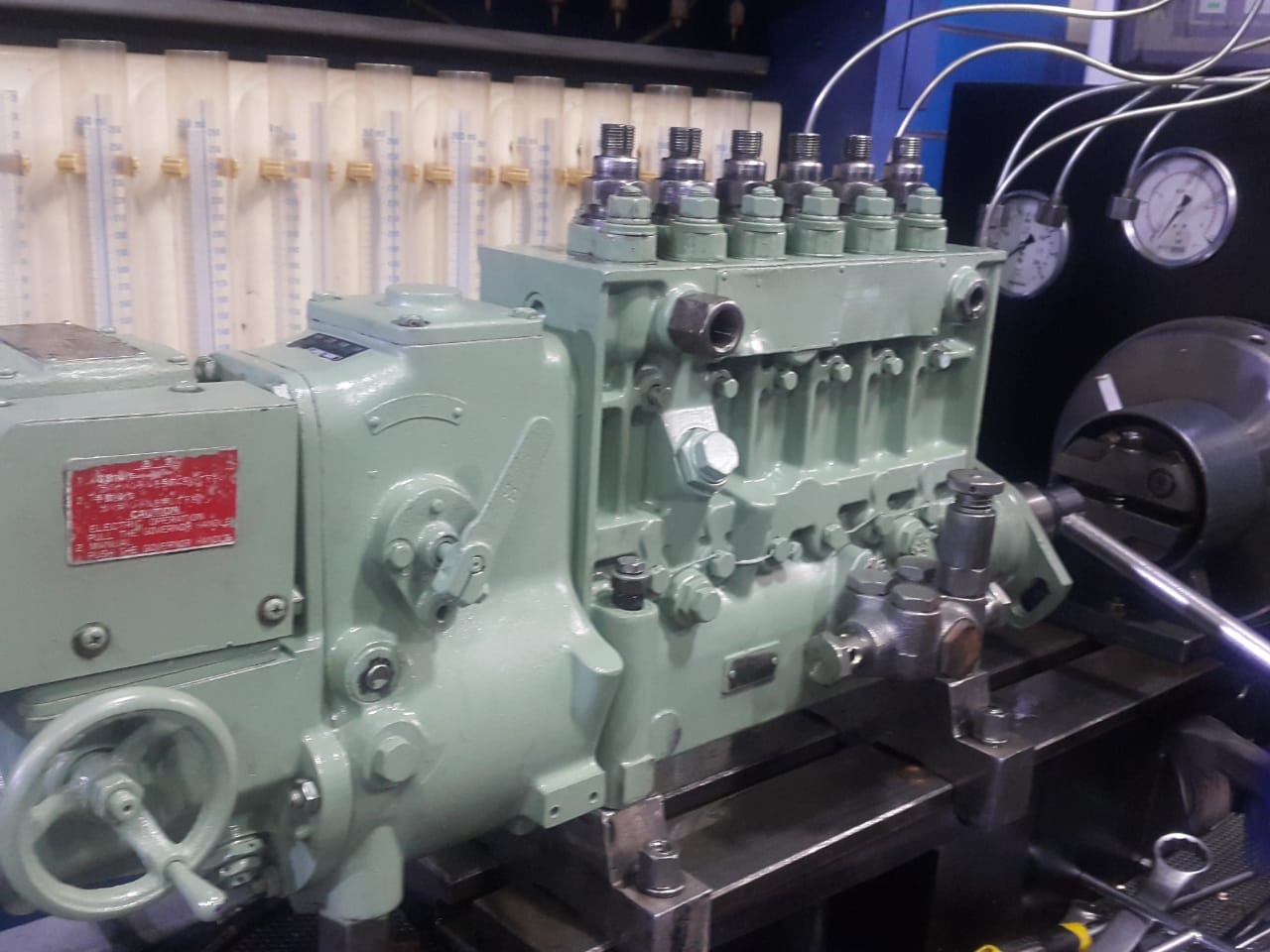
Stanadyne equipment arrives here on a distinctive class of machine: North American agricultural and industrial plant. Tractors, backhoes, loaders, telehandlers, irrigation and utility pumps, welders, lighting towers and — more often than people expect in this market — American-built generator sets. It is the injection equipment of machines that were built to be repaired rather than exchanged, and that is exactly how they should still be treated.
Why this equipment is worth repairing
The single most useful thing to know about a Stanadyne rotary pump is that it is one of the most rebuildable injection pumps ever put into volume production. It was designed for agricultural service in places a long way from a dealer, its wearing components are supplied as service parts, and the design has been continuously supported for decades under the Roosa Master, Hartford and Stanadyne names.
That has a direct commercial consequence, and it is the reason this page exists. The machines this pump is fitted to — a twenty- or thirty-year-old tractor, a backhoe on its second life, a genset in a farm compound — are exactly the machines whose owners get told that a fuel fault means the end of the machine. On this family that advice is almost always wrong. The pump can nearly always be brought back, and it is usually the cheapest single thing you can do to a tired machine.
The name on the plate is not a problem either. Roosa Master was the original brand of the opposed-plunger distributor pump; the same product line was later built and supported under Stanadyne. A pump wearing the older name is not an orphan.
The Stanadyne families we see
The DB-series rotary distributor pumps — the workhorse. A single rotor carrying opposed plungers is driven against an internal cam ring; one pumping element serves every cylinder in turn through a rotating distributor, and the governor, the automatic advance and the transfer pump all live inside the same housing. Four-, six- and eight-cylinder variants across agricultural tractors, industrial engines, gensets and light plant. The later variants of the same architecture carry revised advance and metering arrangements but strip and set on the same principles.
Larger and later mechanical variants on heavier industrial and agricultural engines.
Electronically controlled versions of the same pump — the mechanical hydraulics with an electronic actuator and control instead of a purely mechanical governor. As with any electronically controlled pump, these fail in two independent halves, and the hydraulic half is often perfectly serviceable when the unit is condemned. Testing the two separately tells you which half you are actually buying.
Stanadyne injectors, including the pencil nozzle — dealt with in its own section below, because it is genuinely different from everything else on this pillar.
Send a photograph of the pump with its plate visible plus the engine make, model and serial before you remove or transport anything. The number on the pump's own plate is what identifies the build and the setting data — not the tractor model, not the engine model.
The pencil injector, and why it needs its own paragraph
Most of the injectors on this site are the familiar squat nozzle holder: a body, a spring, a shim stack, a cap nut and a nozzle. The Stanadyne pencil injector is not that. It is a long, slim assembly that drops into a bore in the cylinder head, clamped rather than screwed in, and its opening pressure is set by an adjusting screw at the top of the body rather than by a stack of shims. It appears across North American agricultural and industrial engine families.
Three practical consequences:
- It is adjustable, which is an advantage and a trap. Opening pressure can be set precisely on the bench, which is good. It can also be adjusted by someone with a spanner and an opinion, which is how a set ends up wildly out of balance with no record of what was changed.
- Fitting matters as much as setting. These injectors seal against the head bore with a seal and are held by a clamp. A distorted clamp, a reused seal or an over-torqued fastener produces a leak past the injector that reads as a head or gasket fault.
- A set must be balanced against itself, not just passed individually. Six injectors can each sit inside the manufacturer's window and still be spread apart from one another, and an engine feels the spread rather than the window. Because the bench is ours, a set is worked until the units match each other as closely as they can be made to, rather than being signed off the moment each one individually passes — the same discipline described under injector repair and calibration.
Nozzle work — replacement, seat and tip condition, spray pattern, seat tightness — is covered under nozzle testing and reconditioning.
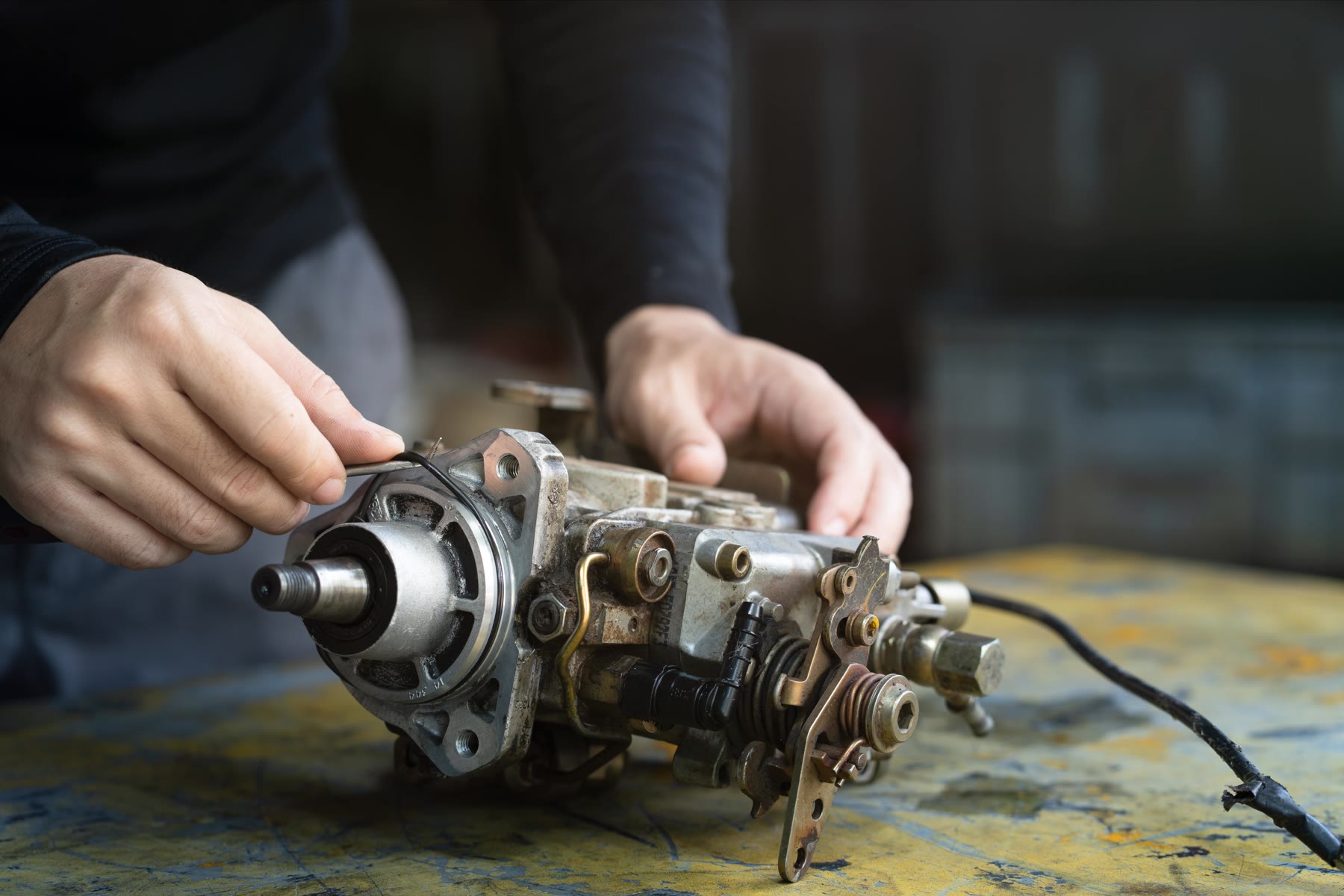
Where this equipment turns up in the UAE
Agricultural and landscape machinery. Tractors, loaders, irrigation pump sets and utility equipment across the farms, nurseries, municipal contracts and landscape operations of the Northern Emirates and the interior. Much of this equipment is imported second hand, arrives without history, and is expected to run for another decade.
Construction and yard plant. Backhoes, small loaders, telehandlers, compressors, welders and lighting towers. Machines that spend their lives in dust, are refuelled from drums and bowsers, and are worked hard by operators who are not their owners.
Generator sets, particularly American-built ones. Stanadyne pumps appear under a number of the industrial engines used in US-built genset packages. If your set is one of them, the fuel-side work is here and the set-side work has its own pages — Onan generator repair and Kohler generator repair.
Pumps, compressors and standby drives in industrial and utility service, where the engine drives something that is not a vehicle and nobody looks at it until it stops.
How Stanadyne pumps fail here
Like every rotary distributor pump, a Stanadyne is lubricated entirely by the diesel passing through it. There is no separate oil supply and nothing to check. Nearly every failure follows from that.
The head and rotor is the wear pair. The rotor turns in the hydraulic head at close clearance and every particle, and every dry moment, attacks that clearance. As it opens, the pump leaks internally: delivery falls off, hot starting becomes difficult, power drops at the top end, and the fault is always worse when the fuel is hot and thin. This is the component the overhaul decision turns on, and it is measurable.
The governor. The flyweights inside these pumps are carried in a retainer, and on the long-serving variants that retainer is a known age-related casualty. When it breaks up, the debris goes exactly where you would not want it and the governing becomes erratic — surging, hunting, a machine that will not settle to a steady speed. It is a small part with a large consequence, and it is one of the reasons a pump on a decades-old machine is worth opening before it strands someone. Governing behaviour is set and verified on the bench — see governor repair and calibration.
Transfer pump blades and the regulator. The vane pump that raises fuel to transfer pressure feeds the governing and the advance as well as the pumping element. Worn blades produce symptoms that read exactly like a governor fault and get treated as one.
The automatic advance. A seized or leaking advance piston means injection timing stops moving with speed. The result is smoke, noise, poor economy and hard cold starting, with nothing showing on any gauge.
Water, dust and drum refuelling. Condensation in half-empty tanks in a humid climate, abrasive dust in the air, and fuel decanted through whatever was to hand. Water removes the lubricating film between the rotor and the head; abrasives do the same damage faster.
Modern low-sulphur fuel. These pumps were designed around fuel with more inherent lubricity than today's. It is not a reason for alarm, but it is a reason to take filtration and water separation seriously on old equipment, and it is why a pump on a long-serving machine wears faster now than its first twenty years would suggest.
Long stands. Seasonal and standby machines sit for months. What is left in the pump gums, and the first run after a long stand is when the pump works with the least lubrication it has ever had.
Stanadyne operations we perform
- Incoming bench test as received, recorded before anything is opened
- Full strip, clean and component inspection
- Head and rotor assessment, and replacement where the clearance has gone
- Transfer pump blade, liner and regulator renewal
- Governor components, retainer and linkage renewal
- Automatic advance piston, springs and seals overhaul and setting
- Cam ring, roller and shoe inspection and renewal
- Drive shaft, seal and bearing replacement
- Metering valve and metering circuit assessment
- Shut-off solenoid and cold start device testing
- Maximum fuel, low idle and high idle settings made to the pump's own setting data
- Delivery calibration across the speed range, and cylinder-to-cylinder balancing
- Electronic pump control side and hydraulic side tested independently
- Pencil injector strip, clean, nozzle renewal and opening pressure set by adjuster
- Conventional injector and nozzle holder overhaul
- Set matching, so injectors come back balanced against each other
- Final verification run and a signed test report on every unit
Nothing on that list is priced before the incoming test, and nothing is stripped or ordered until you have agreed the work. Nothing is done until you say yes.
Repair or replace, on a machine somebody has told you to scrap
This is the honest economics of an old agricultural or industrial machine, and it is worth setting out plainly because it is where most of the bad advice in this market lives.
A tired Stanadyne pump produces exactly the symptoms that make an owner believe the engine is finished: hard starting, smoke, low power, hunting, poor fuel consumption. Those are fuel symptoms, they are cheap symptoms, and they are frequently the only thing wrong. Replacing a machine, or overhauling an engine, on the strength of them is an expensive mistake.
The way to avoid it is to test the pump and the injectors before anyone forms a view on the engine. That gives you a clean division: either the fuel system explains the symptoms, in which case the machine has years left in it for the cost of an overhaul; or the fuel system tests within specification, in which case you now know the problem is mechanical and you have not wasted anything finding out. If the engine does turn out to be the problem, the machine shop and the engine bays are in the same building.
And where a pump genuinely is past economic recovery, you will be told so in writing with the readings attached — see what our calibration reports contain.