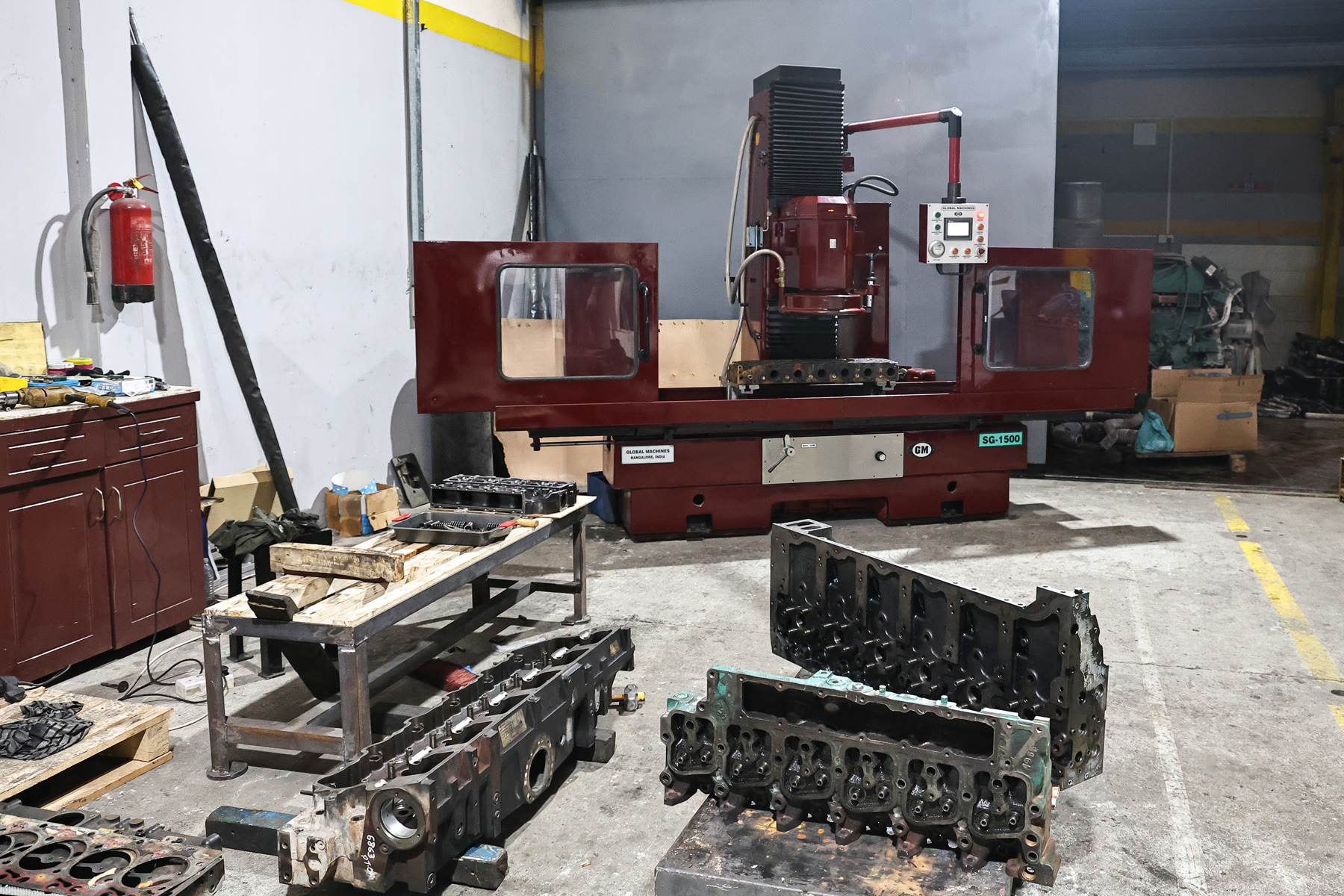
Our machine shop is behind Yerevan Steel Factory in Industrial Area 15, Sharjah, which is thirty to fifty minutes from most of Dubai's industrial belt depending on the hour. Established 2011, over 25 years of experience.
The question a Dubai buyer should actually ask
Not "is there a machine shop in Dubai?" — but "who physically cuts my crankshaft, and where?"
Ask that of any workshop you are comparing and the answer sorts the market in one sentence. A great many workshops in Dubai quote machining and subcontract it. That is not dishonest, it is just how the trade is structured: the boring bars, the crankshaft grinder and the head surfacer are expensive machines that only earn their keep when they run all week, so they concentrate in a handful of shops and everyone else buys from them.
The consequence for you is that the component travels either way. If you give a crankshaft to a Dubai workshop with no machines, that crankshaft leaves Dubai anyway — you simply are not told when it left, where it went, how long the queue is at the other end, or who to ring when it is late. You have paid for a margin on top of a subcontract, and you have added a handover to the chain.
The alternative is to send it to the shop that owns the machine and to know that is what you have done. That is the only real argument this page makes.
What travels and what stays
On a machining job, the component travels and the engine stays. That is the whole logistics of a Dubai job and it is why the distance matters far less than people assume.
Comes to Sharjah — crankshafts, cylinder heads, blocks, connecting rods, camshafts, liners, flywheels, shafts, and anything else that has to sit on a machine tool. A single component is a normal job here; you do not need to send an engine to get one part machined.
Stays in Dubai — the vehicle, the vessel, the genset, the plant item, and everything bolted to it. Where the engine itself has to be worked on where it stands, that is a different service and it is covered on diesel engine repair in Dubai; this page is about the machining half.
The practical effect is that a Dubai job is one road trip for a component, not a recovery operation. A crankshaft goes on a pickup. A head goes in the back of a van. Blocks and large marine components need lifting arranged at both ends, and that is worth a phone call before anything is loaded rather than after.
How a Dubai job is normally run
- Photograph and message first. WhatsApp a photo of the component and the engine data plate to +971 50 767 9050 with the fault as you understand it. You get a same-working-day view on whether it is a job for this shop — before you pay to move anything. For a Dubai customer that call is worth more than it is for a Sharjah one, because you are the one funding the journey.
- The component travels. Most Dubai customers send their own transport, and it is the fastest route. Collection from Dubai can usually be arranged — tell us the component, the weight and how it can be lifted at your end, and we will confirm what is possible and when.
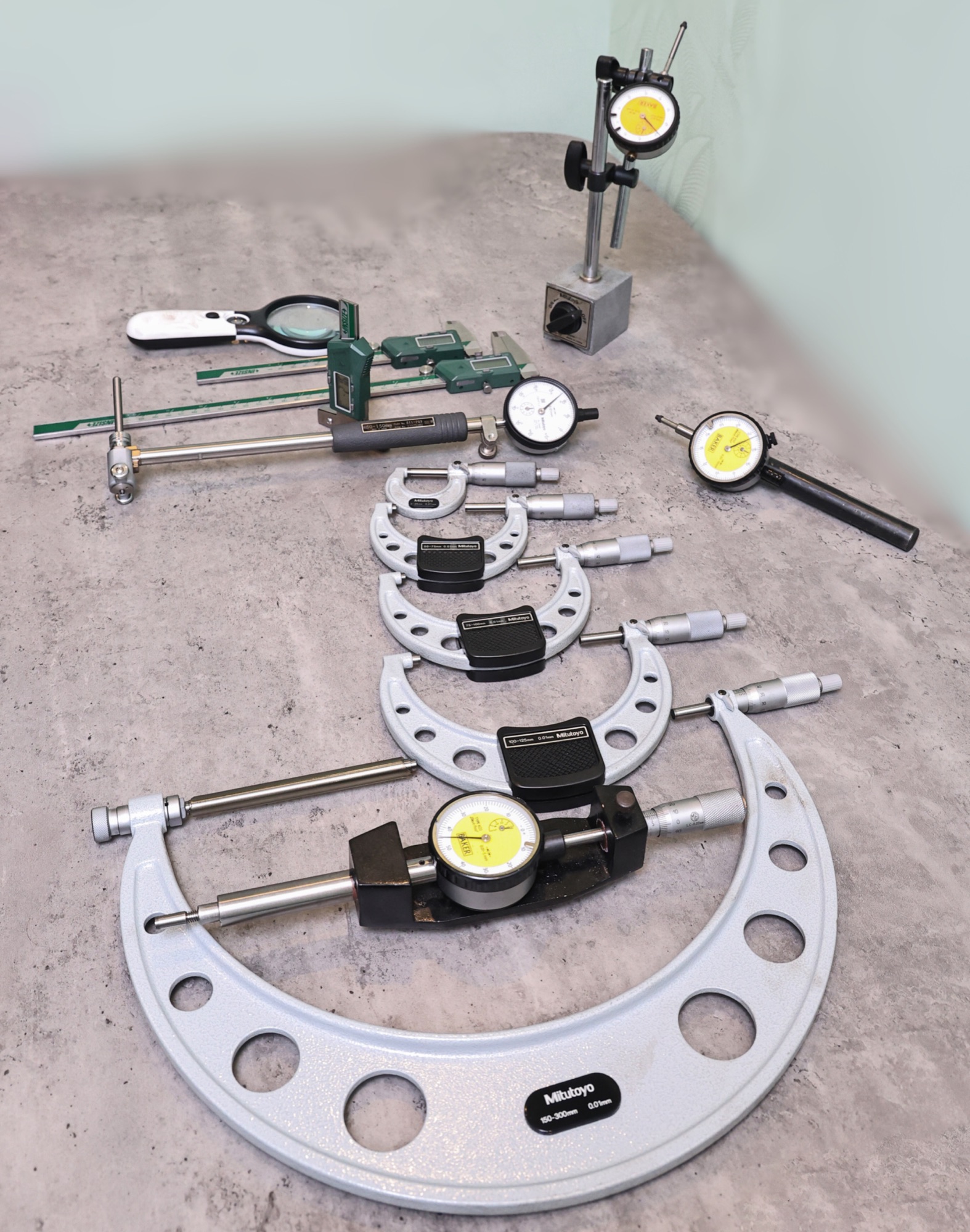
- It is measured. Cleaned, inspected, and measured against the engine maker's limits. You get the readings, not an opinion.
- You approve. Machining scope and price, set against what a replacement part costs and how long it would take to land in the UAE. Nothing is cut until you say yes, and if the scope changes once the part is open you get a phone call before the machine restarts.
- It goes back with its measurement sheet. Before and after figures for every dimension we touched, and the size of the bearing shells, pistons or bushes you now need to order.
For Dubai workshops and garages
A significant part of this work is trade. If you run a workshop in Al Quoz, Ras Al Khor, DIP, Jebel Ali or the Al Aweer yards and you take in engine work but do not own machines, this shop is the other end of the subcontract — and dealing with it directly rather than through a broker means you know the queue, you get the measurements to show your own customer, and you can tell them honestly where their crankshaft is.
Trade customers get the same measurement sheet as anyone else, which is the document that settles the conversation with the vehicle owner. Where a component turns out not to be repairable, you get that in writing with the readings attached, which is a considerably easier thing to hand over than a verbal "the shop says it's scrap".
Why Dubai customers send machining out of the emirate at all
Because the decision is not about geography. It is about whether the part can be saved.
A Dubai fleet supervisor holding a worn crankshaft has two quotes in front of him: a replacement shaft, usually a factory order with weeks attached, and a regrind. Which is correct depends entirely on measurements — ovality, hardness, bend, crack depth, and how much material remains above the lowest undersize bearing shells are actually made in. Those readings decide the job, and they can only be taken by somebody with the instruments and the machine.
So the useful first step for a Dubai customer is not to find the nearest workshop. It is to get the part measured by a shop that could machine it if the answer comes back favourably — and to get told plainly when the answer is "buy a new one". That verdict costs you the inspection and nothing else, and it is the reason components make the drive up from Dubai.
What we machine for Dubai customers
Crankshaft grinding and straightening, line boring of main bearing bores, cylinder reboring and honing, engine block machining, crack repair and pressure testing, cylinder head reconditioning, surfacing, valve and seat work, connecting rod resizing, camshaft repair, liner fitting, press work, and lathe and turning work for one-off parts — including general job-shop work that has nothing to do with engines. The full operation list is on the diesel engine machine shop page.