Diesel engine and plant repair for industrial facilities
For the engineering manager who owns a mixed bag of diesel plant that nobody in the building specialises in — and who finds out how good the supplier was on the day production stops. We are in an industrial area, working for the industrial areas around us.
The gap
The diesel plant in a factory, and why it is nobody's specialism
A production facility does not think of itself as running diesel engines, but it usually runs several.
- The standby generator set, sized against the plant and started monthly by someone with a clipboard
- The diesel fire pump, which is inspected as part of a fire system rather than as an engine
- Air compressors and pump drives, diesel-driven where the electrical supply will not carry them or where mobility matters
- Forklifts, yard trucks and material handlers, on high hours and hard duty
- Dewatering, washdown and process pump sets around the site
- Mobile welding and lighting plant, and any hired-in equipment that becomes yours the moment it fails on your floor
Each belongs to a different supplier, a different budget line and, in most factories, a different person. The engine inside them is the same class of machine, and it is the part that is never anyone's specialism.
The arithmetic
What downtime costs a factory
- A stopped compressor or pump drive stops production — and production stopped for a shift costs more than any engine repair on this site
- A standby set that fails on a real outage costs you the outage in full: scrap on whatever was in process, restart time, and the conversation about why the insurance you paid for did not work. See standby and critical power
- A fire pump out of service is a compliance and insurance problem before it is an engineering one, and it belongs with your fire protection contractor and an engine specialist together — fire protection and FM
- A forklift down in a store does not stop the plant, but it quietly costs a shift's throughput every day it stands
So the thing to buy is not the cheapest quotation. It is the shortest honest time back into service, and the confidence that the job will not have to be done twice.
The single most under-used opportunity
The annual shutdown is when this work should happen
A shutdown is the only time an engine can be taken properly apart without an argument.
It is when a standby set can be load-proved, a compressor engine can be overhauled rather than patched, a fire pump can be assessed honestly, and a component that has been marginal for two years can go on a machine instead of being watched for another twelve months. Work planned into a shutdown costs a fraction of the same work done as an emergency, because nothing is being paid for twice — no temporary plant, no overtime, no production loss.
What makes shutdown work go wrong is always the same thing: a component that has to go somewhere else. A head that needs surfacing, a crankshaft that needs grinding, a liner bore that needs machining, an injection pump that needs a bench. If those leave your site for a workshop that then sends them on to a third party, the shutdown window closes before they come back.
Our machining is in the same building as our engine bays — crankshaft grinding, cylinder boring and honing, head surfacing, connecting rod boring, line boring, turning, milling and press work all at Industrial Area 15. The scope can then be planned against a real schedule rather than around somebody else's queue. Before the scope is fixed, not after.
- Walk round before the scope is fixedWhat is on the site, what is marginal, and what is worth opening.
- Assess and measureFuel, cooling, injection equipment and the engine's ability to make power — measured rather than assumed.
- Identify what has to travelSo it travels once, on the first attendance, rather than twice.
- Machining and bench workIn our own building, on our own schedule.
- Refit, run and recordWhat was measured, what was changed, and what it was proved to.
Scope
What we do for factories
When something has stopped
- Breakdown attendance when something on the floor has stopped — phone rather than email
- On-site diagnosis and repair, where the plant is fixed where it stands
Engines and gensets
- Engine overhaul, in your plant room or in our workshop, with machining under the same roof
- Generator set work, engine and electrical, including load proving and control faults
Fuel injection
- Pumps, injectors and governors stripped, tested and calibrated on our own benches
- Where low power, smoke and hunting complaints are actually settled rather than argued about
Machining for plant that is not an engine
- Factories run shafts, bushes, pins, sleeves, couplings, pulleys and housings that fail, and replacements for older machinery are frequently unobtainable or slow
- Where a part can be made or reclaimed on a lathe or a mill rather than waited for, that is ordinary work here
- Often the most useful thing we do for a factory, and the last thing anyone thinks to ask about
Scheduled servicing and maintenance agreements across a site's diesel plant are offered, and each is set against the equipment list and the production calendar rather than sold from a table. We hold no brand dealership; manufacturer names identify the equipment serviced.
Proximity
We are your neighbours, and that is not a small thing
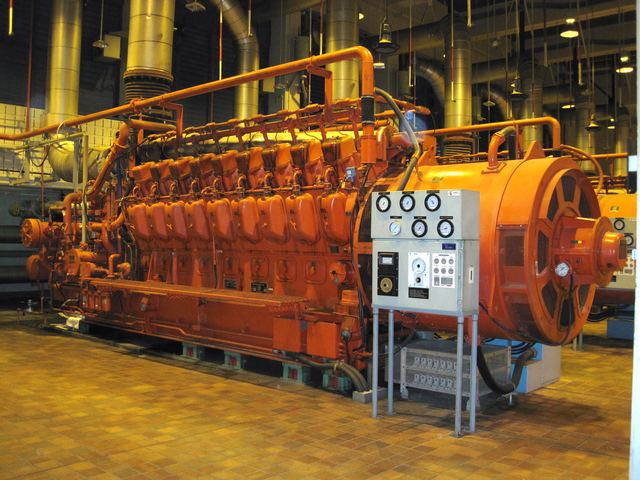
Industrial Area 15
Inside the same industrial belt as the factories it works for
The workshop is behind Yerevan Steel Factory in Industrial Area 15, Sharjah. Sharjah's industrial areas, Al Sajaa, Hamriyah and SAIF Zone are a short run, and the Dubai and Ajman industrial districts are an ordinary drive.
What it changes for you. A component can leave your plant in the morning and be on a machine the same day. And a part you have had made or reclaimed here can be collected the moment it is finished rather than shipped back to you. On a shutdown window measured in days, that is the difference between a job that lands inside it and one that does not.
The decision that costs a factory real money is whether a component is still serviceable, and it is a reading rather than an opinion. On an engine, a crankshaft turns on ovality, hardness, bend and crack depth and the material remaining above the manufacturer's bottom permitted undersize; a block on liner bore wear, taper, ovality and main bearing bore alignment; a head on flatness, seat recession and cracks. On general plant, a worn shaft or housing is usually a dimension and a fit rather than a write-off. Bring the part in and let us measure it — you get the figures with the limits beside them, and the decision follows from the figures. If it is past recovery you will be told so, which is a cheaper answer to receive before a rebuild than after one.
Straight answers
Frequently asked questions
Do you work on machinery other than engines?
Engines are the specialism, but machining and turning work for general plant — shafts, bushes, sleeves, pins, housings — is ordinary work here, and it is often what a factory needs most when a spare part is unobtainable. Bring the part or a drawing.
We have a shutdown coming up. When should we talk to you?
Before the scope is fixed, not after. Anything that needs machining has to be sequenced into the window, and early notice is the difference between a job that finishes inside the shutdown and one that does not.
Can you take on all of our diesel plant rather than one machine?
Yes. Maintenance agreements across a site's diesel equipment are offered and are built around the equipment list and your production calendar, so it starts with a conversation and a walk round.
Something has stopped the line right now. What should we do?
Phone +971 50 767 9050 rather than email, and have the engine make, model and the symptom ready. Do not keep cranking or keep running an engine that has lost oil pressure or overheated — most of the expensive damage happens after the fault, not during it.
Do you work on car or light vehicle engines used around the site?
No. This workshop is heavy-duty diesel only — plant, generators, marine, industrial and truck engines.
Are you certified?
Abra Diesel is ISO 9001:2015 certified, certificate number 211495. Established 2011, with over 25 years of experience. We hold no manufacturer dealership and do not claim one.
Talk to us about your plant
The equipment type, the engine make and model, and what it is doing. For a shutdown, send the dates and the scope you are considering.